Alligators and crocodiles are big reptiles. They look alike, but they are not the same. Both have long tails, strong jaws, and sharp teeth. They live near water. They can swim very well.
Have you ever seen an alligator or a crocodile on TV? Did you know how to tell them apart? It can be hard because they look so much alike.
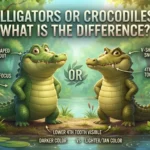
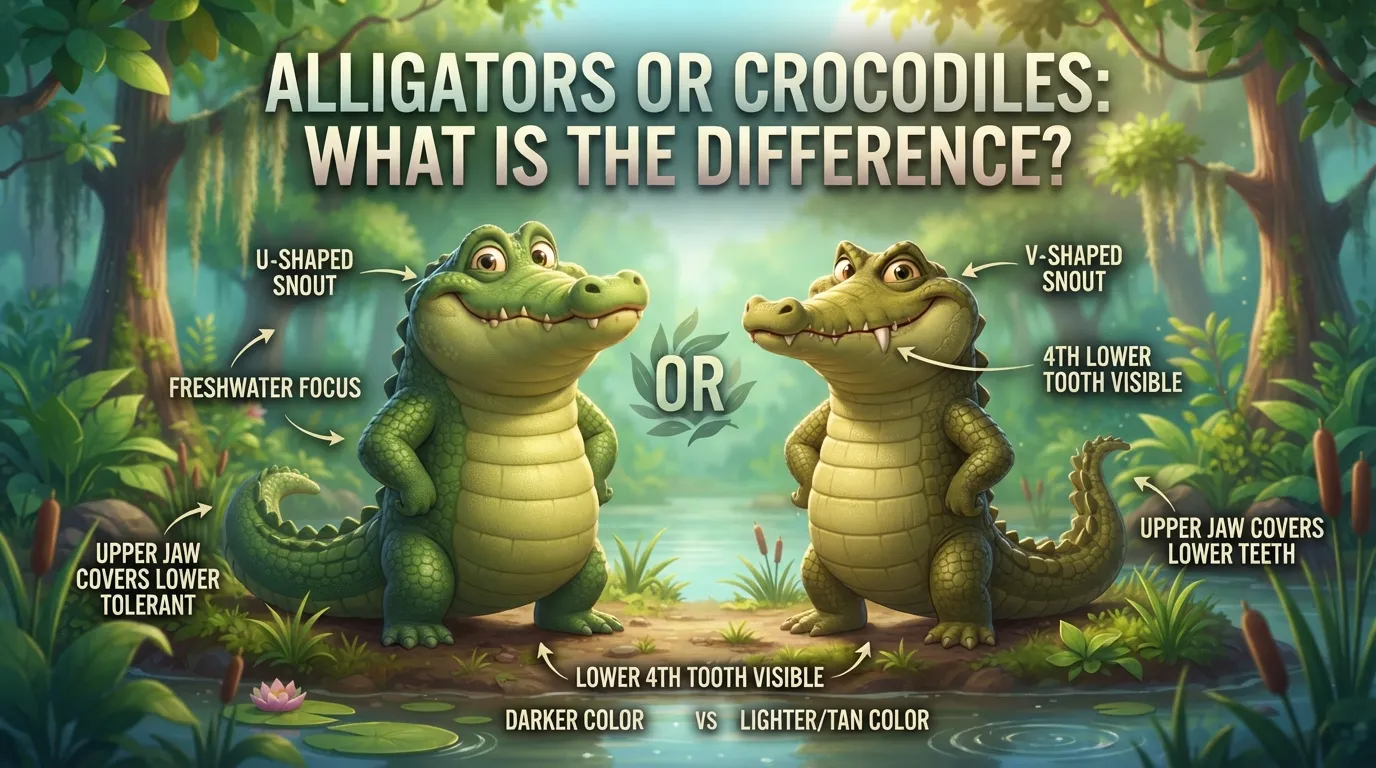
But there are some easy ways to know the difference. An alligator has a wide, round snout. A crocodile has a long, narrow snout. An alligator often lives in fresh water, like lakes and rivers. A crocodile can live in fresh water and salt water.
Both animals eat meat. They may eat fish, birds, and other small animals. They are good hunters, so people should stay away from them.
Pronunciation of Alligator and Crocodile
- Alligator: AL-ih-gay-ter
- Crocodile: KROK-uh-dyle
Both words name large reptiles. Now, let us learn how they are different.
Difference Between Alligators and Crocodiles
1. Shape of the Snout
An alligator has a wide snout. It looks like the letter U.
A crocodile has a narrow snout. It looks more like the letter V.
Examples:
- The alligator has a wide snout.
- The crocodile has a narrow snout.
2. Teeth
An alligator hides most of its lower teeth when its mouth is closed.
A crocodile often shows some lower teeth when its mouth is closed.
Examples:
- The alligator closed its mouth.
- The crocodile showed some teeth.
3. Skin Color
Alligators are often dark grey or black.
Crocodiles may be grey, brown, or green.
Examples:
- The alligator has dark skin.
- The crocodile has grey skin.
4. Where They Live
Alligators mostly live in fresh water. They can live in lakes, rivers, and swamps.
Crocodiles can live in fresh water and salt water. Some live near the sea.
Examples:
- The alligator lives in a lake.
- The crocodile lives near the sea.
5. Where They Are Found
Alligators live in the United States and China.
Crocodiles live in many places. They are found in parts of Africa, Asia, Australia, and the Americas.
Examples:
- An alligator lives in Florida.
- A crocodile lives in Australia.
6. Size
Some crocodiles grow very big. The saltwater crocodile is the biggest living crocodile.
Alligators can also grow very large.
Examples:
- The crocodile is very big.
- The alligator is big, too.
7. How They Act
Both animals can be dangerous. They may attack if they feel scared or want to protect their young.
People should never go close to them.
Examples:
- The alligator rests near the water.
- The crocodile swims in the river.
8. How They Move
Both animals are good swimmers. They can also move fast on land for short distances.
They use their strong tails to help them swim.
Examples:
- The alligator swims in the lake.
- The crocodile moves through the water.
9. What They Eat
Alligators and crocodiles eat meat. They may eat fish, birds, frogs, and small animals.
They use their strong jaws to catch food.
Examples:
- The alligator eats a fish.
- The crocodile catches a bird.
10. Salt Water
Alligators like fresh water best. They cannot live in salty water as well as crocodiles.
Some crocodiles can live in salt water because their bodies help remove extra salt.
Examples:
- The alligator lives in fresh water.
- The crocodile can live near the sea.
You can also discover https://lengovia.com/tux-or-suit/
Nature and Behaviour
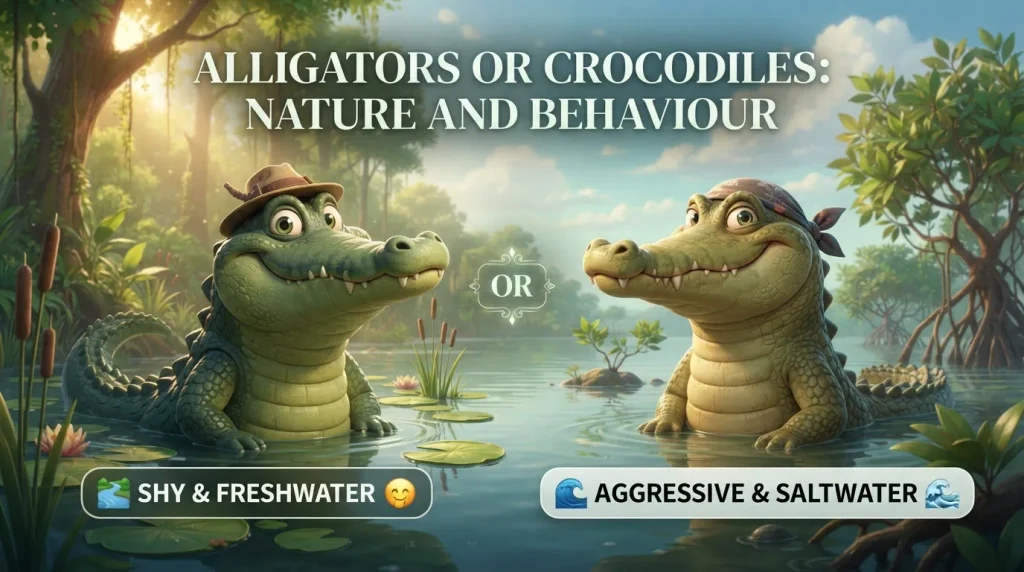
Alligators and crocodiles are reptiles. They have hard skin, strong tails, and sharp teeth.
They spend much of their time in or near water. Those can rest in the sun to keep warm.
Both animals hunt other animals for food. They may wait quietly in the water before catching their prey.
They can be dangerous, so people must stay far away from them.
Why Do People Get Confused?
People often mix up alligators and crocodiles. They have long bodies, short legs, and big tails.
Both live near water. Both have sharp teeth. They can also have similar skin colors.
But their snouts can help us tell them apart. An alligator has a wider snout. A crocodile often has a narrower snout.
Comparison Table
| Feature | Alligator | Crocodile |
| Snout | Wide | Narrow |
| Teeth | Most lower teeth are hidden | Some lower teeth show |
| Color | Often dark grey or black | Often grey, brown, or green |
| Home | Mostly fresh water | Fresh water and salt water |
| Food | Fish and other animals | Fish and other animals |
| Size | Can grow very big | Some grow even bigger |
| Swimming | Very good | Very good |
| Danger | Can be dangerous | Can be dangerous |
Origin of the Words
The word alligator came into English through Spanish.
The word crocodile came from old Greek and Latin words.
Today, we use these words to name two kinds of reptiles.
British vs American English
People in the United States and the United Kingdom use the words alligator and crocodile.
The words mean the same thing in both places.
Examples:
- The alligator lives in a lake.
- The crocodile lives near a river.
Both sentences are correct in American and British English.
Which Word Should You Use?
Use alligator when you are talking about an alligator.
Use crocodile when you are talking about a crocodile.
If you are not sure which animal you see, look at its snout from a safe place. An alligator usually has a wider snout. A crocodile often has a narrower one.
Never go close to a wild alligator or crocodile.
Common Mistakes
Here are some mistakes people make.
- Wrong: Alligators and crocodiles are the same.
Right: They are different animals. - Wrong: Alligators are never dangerous.
Right: Alligators can be dangerous. - Wrong: All crocodiles are green.
Right: Crocodiles can be different colors. - Wrong: Alligators only live in one country.
Right: Alligators live in the United States and China. - Wrong: Crocodiles only eat fish.
Right: They eat fish and other animals.
Everyday Usage Examples
Here are some easy ways to use these words.
In Conversations
- “Is that an alligator?”
- “Look at the crocodile!”
In Emails
- “Our class will learn about alligators.”
- “We will read a book about crocodiles.”
On Social Media
- “I saw an alligator at the park!”
- “This crocodile is very big!”
In School Work
- “An alligator has a wide snout.”
- “A crocodile can live in salt water.”
Usage in Books and Shows
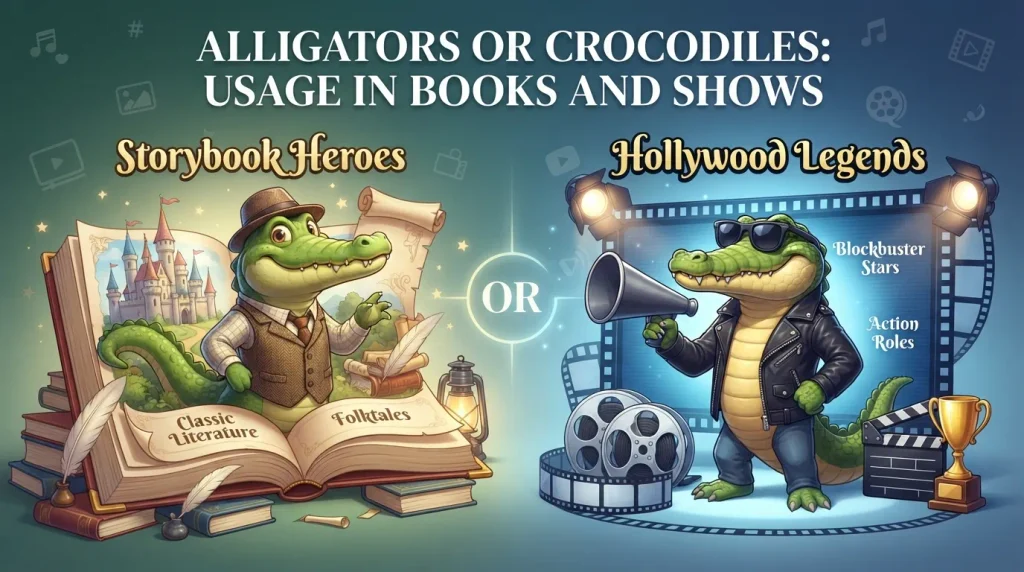
Alligators and crocodiles are often seen in books, cartoons, and nature shows.
They are popular because they are big and strong.
In Peter Pan, a crocodile follows Captain Hook. The story was written by J. M. Barrie in 1911. A cartoon film called Peter Pan came out in 1953.
Nature shows also teach us about these animals and their homes.
Metaphors and Similes
People sometimes use animal words to describe things.
- Crocodile tears: Fake tears.
- A crocodile smile: A smile that may not be real.
- Like a fish out of water: Feeling strange in a new place.
These phrases can help us learn more English words.
Idioms and Proverbs
Here are some common English phrases.
- Crocodile tears: Pretend sadness.
- Like a fish out of water: Feeling out of place.
- Big fish: An important person.
These phrases have special meanings. They do not always talk about real animals.
Why Is This Difference Important?
Knowing the difference helps us learn about animals.
It also helps us use the right words when we talk or write.
We can learn where these animals live and what they eat.
Most importantly, we learn to stay safe around them. Never try to touch or feed a wild alligator or crocodile.
Usefulness in Daily Life
Learning about these animals is fun. It can help us in school and when we watch nature shows.
We can learn new words and facts about the world.
We can also teach our friends how to tell an alligator from a crocodile.
Connotative Meaning
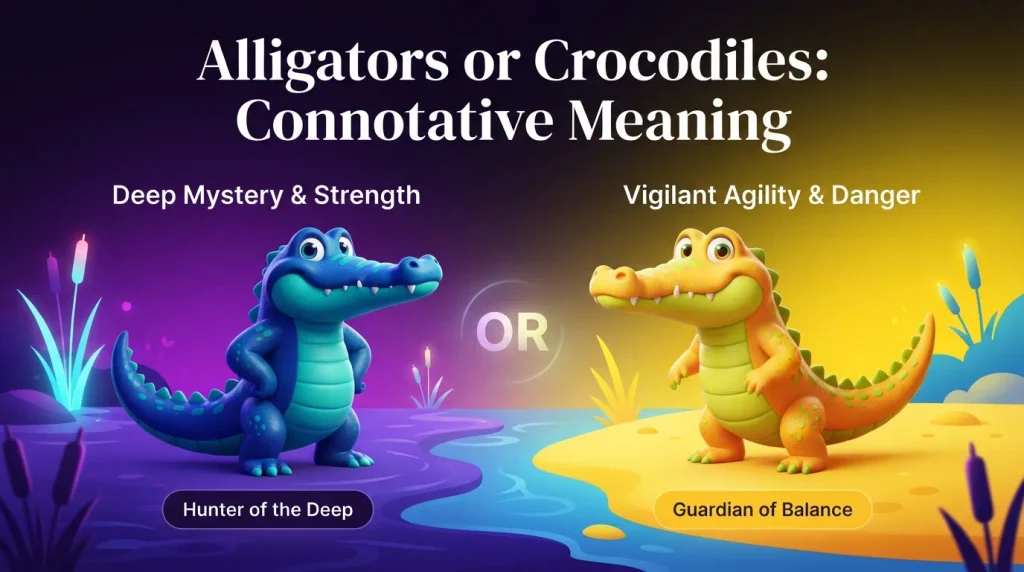
Alligators and crocodiles can make people think of danger and strength.
They have sharp teeth and strong tails. They are good hunters.
But they are also part of nature. They help keep nature in balance by eating other animals.
Which One Is Which?
An alligator usually has a wide snout and likes fresh water.
A crocodile often has a narrow snout and can live in fresh or salt water.
These clues can help you tell them apart. But remember, both animals can be dangerous. Always stay far away from them.
Fill in the Blanks
- An alligator has a ______ snout.
- A crocodile often has a ______ snout.
- Alligators and crocodiles eat ______.
- Both animals are good ______.
- We should stay ______ from these animals.
Answers: 1) Wide, 2) Narrow, 3) Meat, 4) Swimmers, 5) Away
Multiple-Choice Questions
1. Which animal usually has a wide snout?
A) Crocodile
B) Alligator
C) Cat
D) Dog
🟢 Answer: B) Alligator
2. What do alligators and crocodiles eat?
A) Only grass
B) Only apples
C) Fish and other animals
D) Bread
🟢 Answer: C) Fish and other animals
3. Where do alligators mostly live?
A) In fresh water
B) In the desert
C) In the snow
D) In trees
🟢 Answer: A) In fresh water
4. What helps these animals swim?
A) Their ears
B) Their wings
C) Their strong tails
D) Their horns
🟢 Answer: C) Their strong tails
5. What should you do if you see a wild crocodile?
A) Touch it
B) Feed it
C) Ride on it
D) Stay far away
🟢 Answer: D) Stay far away
Possible Questions
1. Are alligators and crocodiles the same?
No. They are different animals.
2. What does an alligator look like?
It has a wide snout, sharp teeth, and a long tail.
3. What does a crocodile eat?
It eats fish and other animals.
4. Can crocodiles live in salt water?
Yes. Some crocodiles can live in salt water.
5. Are alligators dangerous?
Yes. They can be dangerous, so people should stay away.
Conclusion
Alligators or crocodiles are big reptiles. They look alike, but they have some differences. An alligator usually has a wide snout. It mostly lives in fresh water. A crocodile often has a narrow snout. It can live in fresh water and salt water. Both animals have strong jaws, sharp teeth, and long tails. They are good swimmers and eat fish and other animals. They can also be dangerous. We can learn about them by reading books and watching nature shows. We can look at their snouts to help tell them apart. Always remember to stay safe. Never touch or feed a wild alligator or crocodile. In simple words, an alligator has a wide snout, while a crocodile often has a narrow snout. Both are amazing animals!

Mahnoor Afzal is an educator, researcher, and English language content specialist focused on grammar, vocabulary, word differences, and meanings. I combines research, teaching, and SEO expertise to create clear and reliable English learning content at Lengovia.