A tux and a suit are both smart clothing choices. However, they are designed for different occasions. A tux is usually worn at very formal events, while a suit can be worn at work, weddings, meetings, and many other events.
Imagine you are going to a wedding. You want to look smart and stylish, but you are not sure what to wear. You see two choices in your closet: a tux and a suit. So, which one should you choose? The answer depends on the event, the dress code, and your personal style.
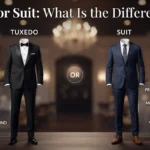
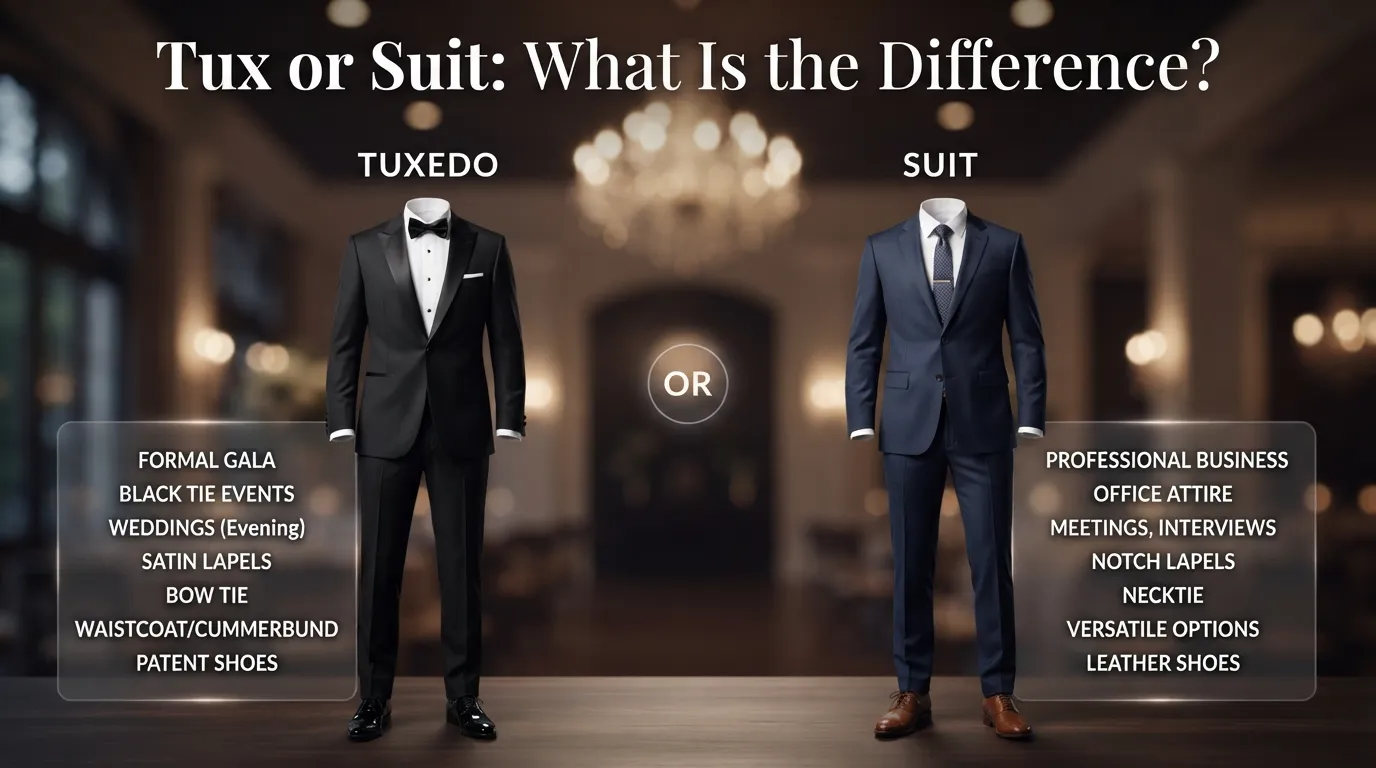
Many people get confused about tux vs. suit because both outfits include a jacket and trousers. However, there are some clear differences. For example, a tux often has shiny satin details and is usually worn with a bow tie. A suit, on the other hand, generally has a simpler design, with the jacket and trousers made from matching fabric.
Pronunciation of Tux and Suit
Knowing how to pronounce these words can also help you use them correctly.
- Tux: TUKS
- Suit: SOOT
In both American and British English, these words are generally pronounced in the same way. Now, let’s look at the main differences between a tux and a suit.
Difference Between Tux and Suit
1. Meaning
A tux is short for tuxedo. It is a type of formal outfit that is commonly worn for special occasions.
A suit, however, is a set of matching clothes. It usually includes a jacket and trousers, and it can be worn in many different settings.
Examples:
- He wore a tux to the black-tie event.
- She bought a new suit for work.
2. Formality
A tux is usually worn at very formal events. For instance, it is a popular choice for black-tie parties, formal dinners, and elegant evening celebrations.
A suit can be worn at both formal and semi-formal events. Therefore, it is often a more flexible choice for everyday professional and social occasions.
Examples:
- The groom wore a tux at the evening wedding.
- He wore a suit to the office meeting.
3. Design
One of the main differences between a tux and a suit is the design. A tux often has satin on its lapels, buttons, or trouser sides. As a result, these details give it a distinctive and elegant appearance.
A suit usually has a simpler design. Its jacket and trousers are often made from the same fabric, and the material typically has a consistent finish.
Examples:
- His tux had shiny satin lapels.
- My brother wore a plain grey suit.
4. Tie Style
A tux is often worn with a bow tie. This combination is especially common at black-tie events because it creates a traditional formal look.
A suit, by contrast, offers more options. You can wear it with a necktie, a bow tie, or no tie at all, depending on the occasion and your personal style.
Examples:
- He wore a black bow tie with his tux.
- She chose a blue tie to wear with her suit.
5. Occasions
Tuxedos are often worn at formal dinners, award ceremonies, and elegant evening weddings. In particular, a tux is a suitable choice when the invitation specifies a black-tie dress code.
A suit is suitable for business meetings, interviews, office work, and many weddings. However, some weddings and other celebrations may require a tux, so it is always wise to check the invitation first.
Examples:
- They wore tuxedos to the award ceremony.
- I wore a suit to my job interview.
6. Colors
Black is a popular color for tuxedos, although other options are available. For example, tuxedos can also come in white, blue, and other colors.
Suits, meanwhile, are available in a wide range of colors, including black, grey, brown, and navy blue. Because of this variety, it is easy to find a suit that matches your taste or the event.
Examples:
- He chose a black tux for the party.
- She bought a navy-blue suit.
7. Price
A tux may cost more than a basic suit because of its special details and formal style. However, the price depends on the brand, fabric, design, and whether the outfit is bought or rented.
A suit can also be expensive, especially if it is custom-made. On the other hand, affordable suits are available, so the best option depends on your budget and how often you plan to wear it.
Examples:
- He rented a tux to save money.
- She bought an affordable suit for work.
8. Comfort
Both tuxedos and suits can be comfortable when they fit well. The fabric, cut, and quality of the tailoring can all affect how an outfit feels.
A tux may be less suitable for everyday wear because it is designed mainly for special occasions. A suit, however, can be a practical option for long workdays or events where you need to move around comfortably.
Examples:
- His tux fit well for the dinner.
- My suit was comfortable during the meeting.
9. Accessories
A tux is often paired with a bow tie, formal shoes, and sometimes a cummerbund or waistcoat. These accessories help create a polished, formal appearance.
A suit can be paired with a necktie, belt, watch, and different types of formal shoes. In addition, you can change the accessories to make the same suit look more formal or more relaxed.
Examples:
- He completed his tux with black formal shoes.
- She wore a watch with her suit.
10. Best Choice
A tux is a good choice when an invitation says “black tie.” In this situation, a tux can help you follow the dress code and achieve a classic formal look.
A suit is often better for work, interviews, and events without a strict black-tie dress code. Still, some suits are very formal, so the event’s requirements should guide your decision.
Examples:
- Wear a tux to a black-tie dinner.
- Choose a suit for a business meeting.
You can also discover https://lengovia.com/eczema-or-scabies/
Nature and Behaviour
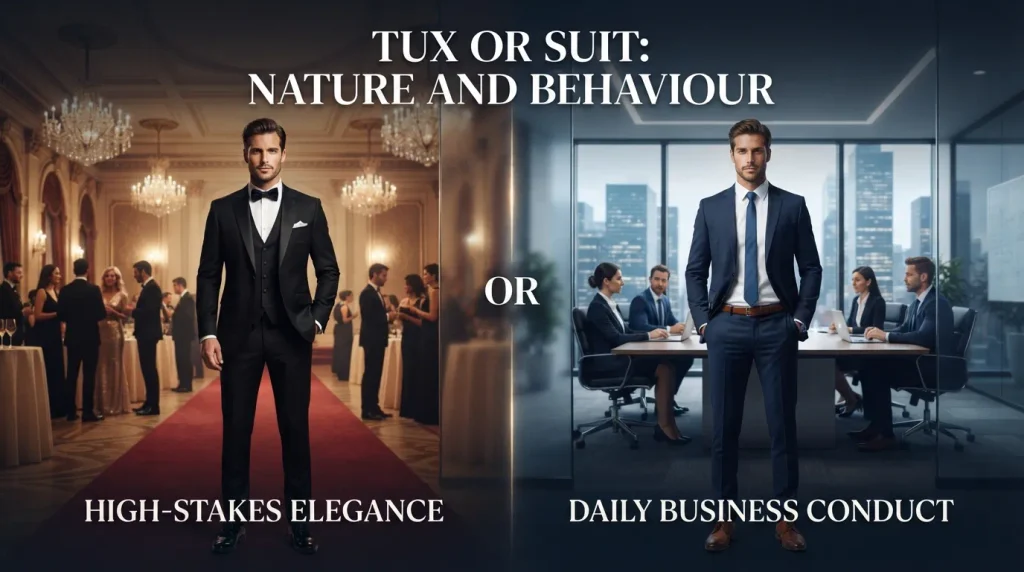
A tux gives a person a classic and elegant look. It is often linked to special events, evening parties, and formal celebrations.
A suit, in comparison, gives a smart and professional look. It can also look stylish at weddings, dinners, and other celebrations.
Both outfits can make a person look neat and confident when they fit well. Ultimately, the best choice depends on the event and how you want to present yourself.
Why People Get Confused
People often confuse a tux with a suit because both have a jacket and trousers. Additionally, both outfits can be worn at weddings and formal events, which makes the difference less obvious.
However, the main differences are their design and typical use. A tux often has satin details and is linked to black-tie events, while a suit usually has a simpler design and can be worn in many settings.
It is also important to remember that a suit can be very formal. Therefore, the event’s dress code is usually the best guide.
Comparison Table
| Feature | Tux | Suit |
|---|---|---|
| Full name | Tuxedo | Suit |
| Main use | Very formal events | Work and many other events |
| Design | Often has satin details | Usually has matching fabric |
| Tie | Often a bow tie | Necktie, bow tie, or no tie |
| Style | Elegant and formal | Smart and versatile |
| Colors | Black and other colors | Many colors |
| Accessories | Formal shoes and bow tie | Tie, belt, watch, or formal shoes |
| Best for | Black-tie events | Meetings, interviews, and many weddings |
Origin of Tux and Suit
The word tuxedo is linked to Tuxedo Park, a village in New York, USA. Over time, the name became associated with a formal style of evening clothing.
The word suit, on the other hand, refers to a set of matching clothes. As matching jackets and trousers became common, suits were increasingly used for work, formal events, and everyday smart dressing.
Today, both outfits remain popular around the world. However, their typical uses are still different.
British vs. American English
In American English, people commonly use the word tuxedo. They may also use the shorter word tux.
In British English, people often call the outfit a dinner jacket. The full outfit may also be called a dinner suit. Meanwhile, the word suit is common in both American and British English.
Examples:
- American English: He wore a tux to the party.
- British English: He wore a dinner jacket to the party.
- Both: She bought a new suit.
Which One Should You Use?
Choose a tux when you attend a black-tie event or a very formal evening celebration. In these situations, its traditional design is usually a good fit for the dress code.
Choose a suit for work, interviews, business meetings, and many weddings. It offers more flexibility, especially when the invitation does not specify black tie.
Although “tux” and “tuxedo” are standard terms in the United States, people in the United Kingdom typically refer to the same garment as a “dinner jacket.” In other words, the name may change by region even when the clothing is similar.
Different regions may use local terms for formal menswear, yet the underlying clothing styles remain very similar. For this reason, it helps to know both terms when discussing formal clothing.
Always check the invitation before choosing your outfit.
Common Mistakes
Here are some common mistakes people make when talking about tuxedos and suits. Knowing these differences can help you choose the right clothes and use the words correctly.
Mistake: A tux and a suit are exactly the same.
Correct: They are similar, but their designs and uses can differ.
Mistake: Every tux must be black.
Correct: Tuxedos can come in different colors.
Mistake: A suit is only for work.
Correct: Suits can also be worn at weddings and parties.
Mistake: A tux is always more expensive.
Correct: Prices depend on the brand, fabric, and design.
Mistake: You must wear a bow tie with every suit.
Correct: A suit can be worn with different tie styles or no tie.
Everyday Usage Examples
Here are some examples of how to use these words in daily life. They show how “tux” and “suit” may appear in conversations, emails, and other situations.
In Conversations
- “Should I wear a tux or a suit?”
- “A suit will be fine for this meeting.”
In Emails
- “Please confirm whether the event requires a tuxedo.”
- “I plan to wear a dark suit to the interview.”
On Social Media
- “Feeling smart in my new suit!”
- “Ready for a special night in my tux.”
In Formal Writing
- “The guests wore tuxedos to the black-tie dinner.”
- “The manager wore a navy suit to the meeting.”
Usage Trends
Suits have long been popular for offices, interviews, and formal events. Today, many people wear them in different styles, colors, and fits.
Tuxedos remain popular at black-tie dinners, award ceremonies, and formal weddings. Some people rent them for special occasions instead of buying them, especially if they do not expect to wear one often.
Fashion trends may change over time, but both outfits remain useful choices for different events.
Metaphors and Similes
People sometimes use clothing-related expressions to describe a person’s appearance or behaviour. These expressions are not limited to tuxedos or suits, but they can help you understand everyday English.
- “Dressed to impress” means wearing clothes to make a good impression.
- “Sharp as a tack” describes someone who is very clever, although it can also suggest being quick and alert.
- “Looking like a million dollars” means looking very good or stylish.
These expressions can describe many kinds of smart clothing. However, their meanings depend on the context in which they are used.
Connotative Meaning
A tux often suggests elegance, celebration, and luxury. For example, it may remind people of award shows, formal dinners, and special weddings.
A suit, meanwhile, often suggests professionalism, confidence, and responsibility. People may connect it with business meetings, job interviews, and important events.
However, these meanings can change depending on the situation. A colorful suit may look playful, while a simple tux can look classic and traditional.
Idioms and Proverbs
Some common English expressions relate to clothing and appearance. Learning them can make your everyday English more natural.
- Dress for success: Wear clothes that suit your goals or situation.
- Clothes make the man: Clothing can affect how others see a person.
- Fit like a glove: Fit someone or something very well.
- Put on your best clothes: Wear your finest outfit for a special event.
These expressions can be used when discussing suits, tuxedos, and other types of clothing. Still, the meaning of each expression depends on the sentence and situation.
Literature and Movies
Formal clothing often helps show a character’s role or personality in books and films. As a result, a tux or suit can help communicate a character’s style, status, or profession.
In the James Bond films, Bond is often seen wearing a tuxedo. His formal clothing supports his polished and elegant image.
In The Great Gatsby (1925), written by F. Scott Fitzgerald, fashionable clothing helps show wealth and social status in the story. Similarly, in films about business and professional life, suits often help create the image of a manager, lawyer, or businessperson.
These examples show how clothing can help tell a story and shape the way an audience sees a character.
Why This Difference Matters
Knowing the difference between a tux and a suit helps you dress correctly for different events. For example, wearing a suit to a business meeting is often a safe choice, while wearing a tux to a black-tie event can help you follow the dress code.
The wrong outfit may make you feel uncomfortable or underdressed. Therefore, check the invitation and consider the formality of the event before making your choice.
You do not always need to buy both outfits. If you only need a tux for one special occasion, renting one can be a useful and affordable option.
Usefulness in Daily Life
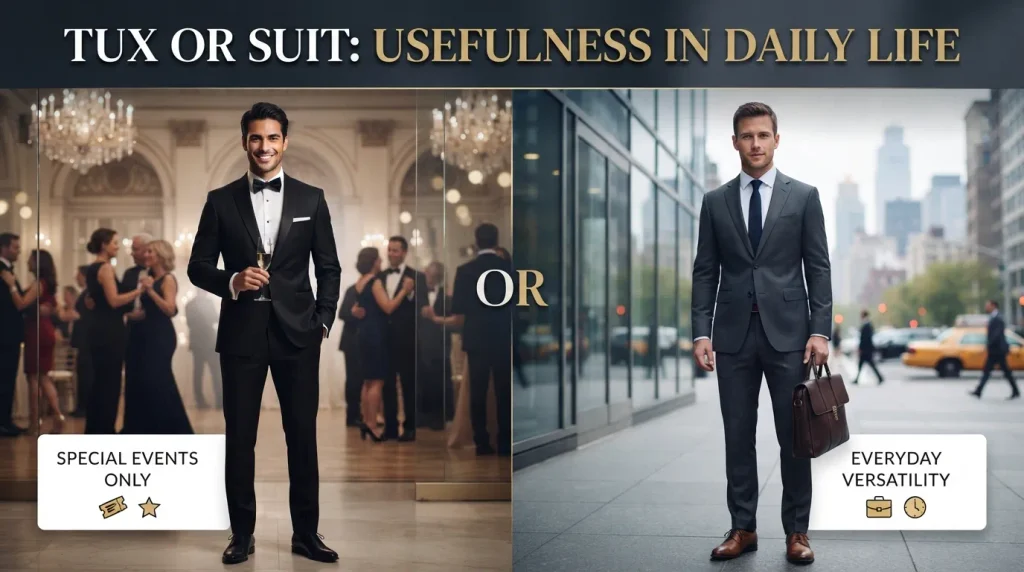
Understanding these words can help you shop for clothes, follow dress codes, and speak English more clearly. For instance, if a shop assistant asks what you need, you can explain whether you want a tuxedo for a formal event or a suit for work.
You can also use these words when discussing wedding clothes, writing invitations, or planning an outfit with friends. As a result, knowing the difference can make both clothing choices and everyday conversations easier.
Situational Preference
A tux is usually the better choice for a black-tie dinner, a formal award ceremony, or an evening event that asks guests to wear tuxedos. Its satin details and traditional styling suit these occasions.
A suit, on the other hand, is often better for job interviews, office meetings, business dinners, and weddings without a black-tie dress code. It offers more choices in colors, fabrics, and styles.
However, some weddings call for tuxedos, and some suits can look very formal. Therefore, always check the dress code before deciding. A good fit and clean shoes can improve either outfit.
Fill in the Blanks
- A ______ is often worn at a black-tie event.
- Many people wear a ______ to a job interview.
- A tux often comes with a bow ______.
- A ______ can be worn at work or a wedding.
- In American English, tux is short for ______.
Answers: 1) Tux, 2) Suit, 3) Tie, 4) Suit, 5) Tuxedo
Multiple-Choice Questions
1. What is a tux short for?
A) T-shirt
B) Tuxedo
C) Tracksuit
D) Tie
Answer: B) Tuxedo
2. Which outfit is commonly worn at a black-tie event?
A) Sportswear
B) Pajamas
C) Tux
D) Shorts
Answer: C) Tux
3. What is a common feature of a tux?
A) Satin details
B) A hood
C) Sports stripes
D) A zipper on every jacket
Answer: A) Satin details
4. Which outfit is a popular choice for a job interview?
A) Bathrobe
B) Suit
C) Swimsuit
D) Nightdress
Answer: B) Suit
5. What should you check before choosing a tux or suit?
A) The weather on another continent
B) The color of your phone
C) The event’s dress code
D) Your favorite movie
Answer: C) The event’s dress code
Possible Questions
1. Is a tux the same as a suit?
No. Both are formal outfits, but a tux often has satin details and is commonly worn at black-tie events.
2. Can I wear a suit to a wedding?
Yes. A suit is suitable for many weddings. However, you should check the dress code first.
3. Can a tux be blue?
Yes. Tuxedos come in colors other than black, including blue and white.
4. Is a tux always more expensive than a suit?
No. The price depends on the fabric, brand, design, and whether you buy or rent the outfit.
5. What is a tux called in British English?
It is often called a dinner jacket, while the full outfit may be called a dinner suit.
Conclusion
Choosing between tux or suit depends on the occasion, dress code, and personal style. A tux is a great choice for black-tie events, formal dinners, and special celebrations because its satin details and bow tie create a classic, elegant look. On the other hand, a suit is more versatile and works well for business meetings, job interviews, weddings, and many other occasions. Before deciding between a tux vs. suit, check the event invitation and consider the level of formality. Also, pay attention to the fit, color, comfort, and accessories to complete your outfit. Both options can help you look stylish and confident when chosen correctly. In short, choose a tux for many black-tie events and a suit for a wider range of occasions. By understanding the difference between a tux and a suit, you can select the right outfit and feel prepared for your next event.

Mahnoor Afzal is an educator, researcher, and English language content specialist focused on grammar, vocabulary, word differences, and meanings. I combines research, teaching, and SEO expertise to create clear and reliable English learning content at Lengovia.