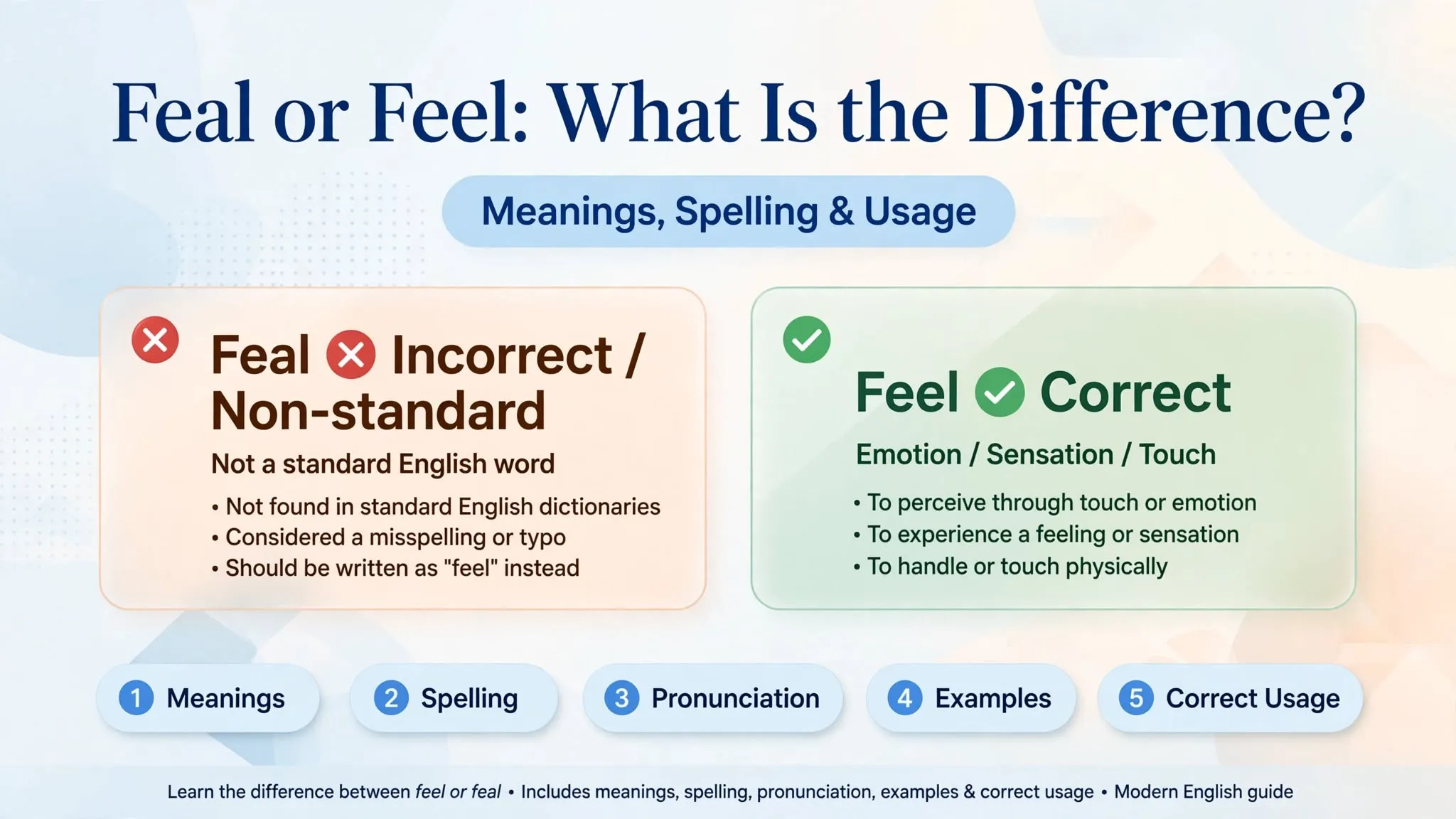
Feel is the correct and common English word, while feal is a rare old word with a different meaning.
Have you ever typed feal or feel and stopped because both words look almost the same? This mistake can happen because one small letter changes the word. The word feel is very common in English. We use it when we talk about emotions, touch, health, or opinions.
For example, you can say, “I feel happy,” or “This cloth feels soft.” You can also say, “I feel tired today.”
The word feal is very different. It is an old and rare word. It can mean loyal or faithful, especially in old English use. You will not often see feal in normal daily English.
So, if you want to say that you have an emotion, sense something, or think something, use feel. Do not use feal in these cases.
Pronunciation of Feal and Feel
- Feal: /fiːl/
- Feel: /fiːl/
Both words have the same pronunciation in English.
This makes the two words easy to confuse. However, their meanings are not the same.
Difference Between Feal or Feel
1. Meaning
Feel means to sense something or have an emotion.
Feal is a rare old word. It can mean loyal or faithful.
Examples:
- I feel happy today.
- He was feal to his king.
2. Common Use
Feel is very common in modern English.
Feal is very rare. Most people do not use it in daily speech or writing.
Examples:
- I feel cold.
- The old text called him feal.
3. Modern English
People use feel in modern English all the time.
The word feal mainly appears in old texts or special word lists.
Examples:
- I feel better now.
- Feal is rarely used today.
4. Emotion
Feel can describe an emotion.
Feal does not mean to have an emotion.
Examples:
- I feel sad.
- She feels happy.
5. Touch
We use feel when we talk about touch.
Feal does not have this meaning.
Examples:
- Feel the soft cloth.
- I can feel the cold air.
6. Opinion
Feel can also mean to have an opinion.
Feal cannot normally replace it.
Examples:
- I feel that this is right.
- We feel this plan will work.
7. Loyalty
Feal can mean loyal or faithful in old use.
Feel does not have this meaning.
Examples:
- The knight was feal to his king.
- The old poem describes a feal servant.
8. Part of Speech
Feel can work as a verb and a noun.
For example, you can say, “I feel happy.” You can also say, “I like the feel of this fabric.”
Feal is mainly an old adjective.
9. Everyday Speech
You will hear feel in normal conversations.
You will almost never hear feal in everyday speech.
Examples:
- How do you feel?
- I feel great today.
10. Spelling
The correct spelling for the common word is feel.
The spelling feal is only correct when you mean the rare old word.
Examples:
- I feel tired. ✅
- I feal tired. ❌
You may also read https://lengovia.com/hercules-or-bauer/
Nature and Behaviour
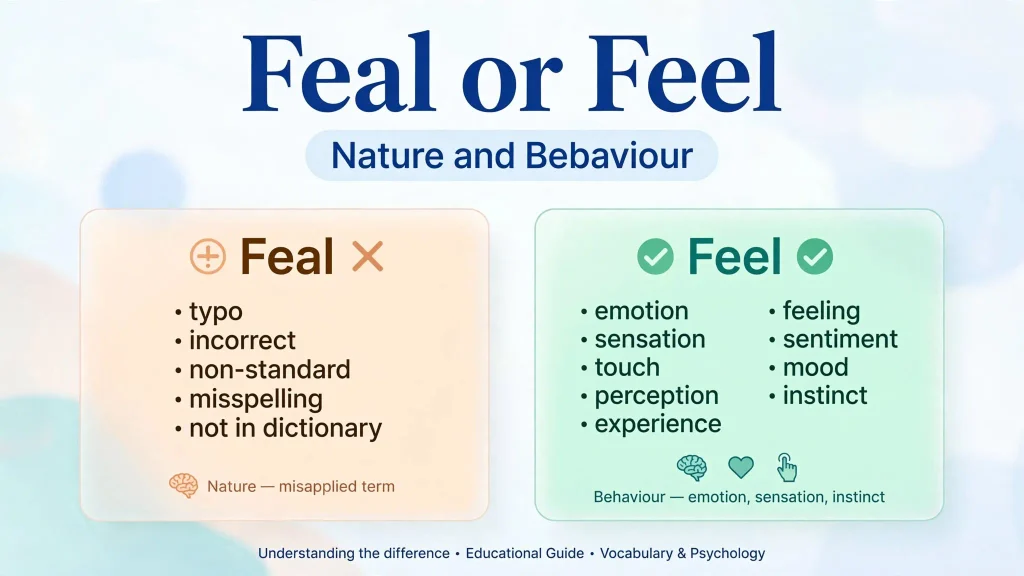
Feel is an active and useful English word. It can describe a physical sense, an emotion, or an opinion.
You can feel something with your hands. You can also feel happy, sad, tired, or worried.
The word feal has a very different nature. It is rare and old. It mainly means loyal or faithful.
Because of this, most English learners should use feel in normal writing.
Why People Get Confused
People confuse feal and feel because they look and sound almost the same.
Both words have the same pronunciation: /fiːl/.
The main difference is the letter a or e.
For example:
- feel = sense, emotion, or opinion
- feal = loyal or faithful in old use
Modern English uses feel much more often.
Comparison Table
| Feature | Feal | Feel |
| Meaning | Loyal or faithful | Sense, emotion, or opinion |
| Common today? | No | Yes |
| Pronunciation | /fiːl/ | /fiːl/ |
| Main use | Old English | Modern English |
| Part of speech | Adjective | Verb and noun |
| Used for emotions? | No | Yes |
| Used for touch? | No | Yes |
| Used in daily speech? | Rarely | Very often |
Origin of Feal or Feel
The word feel comes from Old English. It has a long history in the English language. Its meaning has stayed linked to sensing, touching, and emotions.
The word feal also has an old history. It is linked to words that mean loyal or faithful.
Over time, feel became a normal word in modern English. Feal became rare.
British vs American English
There is no major British and American spelling difference between feal and feel.
The common word is:
- feel in American English
- feel in British English
For example:
US: I feel happy.
UK: I feel happy.
US: This feels soft.
UK: This feels soft.
The spelling stays the same.
Which One Should You Use?
Use feel in almost all normal English writing and speech.
Use feal only when you are talking about the rare old word meaning loyal or faithful.
For example:
- I feel tired. ✅
- I feal tired. ❌
Another example:
- She feels happy. ✅
- She feals happy. ❌
So, if you are unsure, feel is almost always the word you need.
Common Mistakes
| Incorrect Version ❌ | Correct Version ✅ | Key Difference |
| Hercules means farmer. | In German, Bauer can mean farmer. | Occupation vs. Mythological figure |
| Bauer is the Greek hero. | In mythology, Hercules is the famous hero. | Greek/Roman origin vs. German origin |
| Hercules and Bauer are synonyms. | However, these names have different meanings and origins. | Unrelated words |
Everyday Usage Examples
The word feel appears in many daily conversations.
You may use it when talking about emotions:
- “I feel happy.”
- “I feel sad.”
- “I feel worried.”
- “I feel better now.”
You can also use it for touch:
- “Feel this fabric.”
- “The water feels cold.”
- “This pillow feels soft.”
It can also show an opinion:
- “I feel this is a good idea.”
- “We feel that you are right.”
The word feal is not normally used in these sentences.
Usage Trends
Feel is one of the common words in modern English. People use it in speech, books, emails, social media, and many other forms of writing.
Feal is much less common. You may see it in old books, historical texts, or dictionaries.
Modern writers usually choose feel when they want to talk about emotions, touch, or opinions.
Therefore, English learners should learn feel first.
Metaphors and Similes
Feel appears in many creative sentences.
For example:
- “I feel like a bird.”
- “The room feels like home.”
- “Her words felt like a warm hug.”
These examples use feel to describe emotions or experiences.
The rare word feal does not have many common modern metaphors or similes.
Connotative Meaning
Feel can create many different feelings because it connects with emotions and senses.
For example, “I feel happy” has a positive meaning. “I feel sad” has a negative meaning.
The word feal can suggest loyalty because its old meaning relates to being faithful.
However, most modern readers may not know the word feal.
Idioms and Proverbs
The word feel appears in many common English expressions.
Some examples include:
- Feel at home
- Feel free
- Feel under the weather
- Feel like a million dollars
For example:
“Please feel free to ask questions.”
The word feal does not appear in common modern English idioms.
Literature and Movies

The word feel is common in books, poems, songs, movies, and TV shows.
Writers use it to show emotions and physical senses.
For example, a character may say:
- “I feel scared.”
- “I feel happy.”
- “I feel cold.”
The word feal may appear in older literature. Writers may use it to show that a person is loyal or faithful.
Because feal is old and rare, it can give a sentence an old-fashioned feeling.
Why This Difference Matters
Knowing feal or feel can help you avoid spelling mistakes.
The two words sound the same, but their meanings are different.
If you write feal instead of feel, your reader may think you made a spelling mistake.
For example:
❌ “I feal happy.”
✅ “I feel happy.”
The second sentence is correct and natural.
Usefulness in Daily Life
You will need feel in many daily situations.
You can use it when you:
- Talk about emotions
- Talk about health
- Describe touch
- Give an opinion
- Describe an experience
- Talk about how something seems
For example:
“I feel tired today.”
“This shirt feels soft.”
“I feel this is a good choice.”
These are all normal uses of feel.
Situational Preference
Use feel in normal English. It is the correct choice when you talk about emotions, touch, health, or opinions. For example, say, “I feel happy,” not “I feal happy.” You can also say, “This feels soft” or “I feel tired.” Use feal only when you mean the rare old word for loyal or faithful. Most people will not need this word in daily English. Therefore, feel is the best choice for school, work, emails, social media, and normal conversation.
Quiz Questions
1. Which word is common in modern English?
A). Feal B). Feel C). Feil D). Fiel
Answer: Feel
2. What does “feel” mean?
A). To sense or have an emotion B). be loyal C). To run D). Go sleep
Answer: To sense or have an emotion
3. What can “feal” mean in old English use?
A). Happy B). Loyal or faithful C). Cold D). Soft
Answer: Loyal or faithful
4. Which sentence is correct?
A). We feal happy B). I feel happy C). We fiel glad D). I feil happy
Answer: I feel happy
5. Which word can describe touch?
A). Feal B). Feel C). Fiel D). Feil
Answer: Feel
6. Are “feal” and “feel” pronounced the same?
A). Yes B). No C). Sometimes D). Never
Answer: Yes
7. Which word should you use in daily English?
A). Feal B). Feel C). Feil D). Fiel
Answer: Feel
8. Which sentence uses “feel” correctly?
A). I feel tired B. We feal spent C). I feal soft D). I fiel tired
Answer: I feel tired
9. Which word is rare and old?
A). Feel B). Feal C). Both D). Neither
Answer: Feal
10. What is the main difference?
A). Feel is common and means to sense or have an emotion B). Feal is the common spelling C). Both always mean the same D). Feel means loyal
Answer: Feel is common and means to sense or have an emotion
Possible Questions
Is “feal” a correct word?
Yes, feal is a real but very rare old word. It can mean loyal or faithful.
Is “feel” the correct spelling?
Yes. Feel is the correct spelling when you mean to sense something, have an emotion, or have an opinion.
Are feal and feel pronounced the same?
Yes. Both are pronounced /fiːl/.
Can I use “feal” instead of “feel”?
No. Do not use feal as a spelling of feel.
What does feal mean?
Feal is an old word that can mean loyal or faithful.
What does feel mean?
Feel can mean to sense something, experience an emotion, or have an opinion.
Which one should I use?
Use feel in normal modern English. Use feal only when you need its rare old meaning.
Conclusion
The difference between feal or feel is simple. Feel is the common modern English word. It can mean to sense something, touch something, have an emotion, or have an opinion. For example, you can say, “I feel happy,” “I feel cold,” or “This feels soft.” These are all normal sentences. Feal is a rare old word. It can mean loyal or faithful. You may find it in old texts or historical writing, but you will rarely need it in daily English. The two words can confuse learners because they have the same pronunciation. Still, their meanings are different. Remember this easy rule: use feel for modern English. Use feal only for its rare old meaning of loyal or faithful.

Mahnoor Afzal is an educator, researcher, and English language content specialist focused on grammar, vocabulary, word differences, and meanings. I combines research, teaching, and SEO expertise to create clear and reliable English learning content at Lengovia.












1 thought on “Feal or Feel: What Is the Difference?”