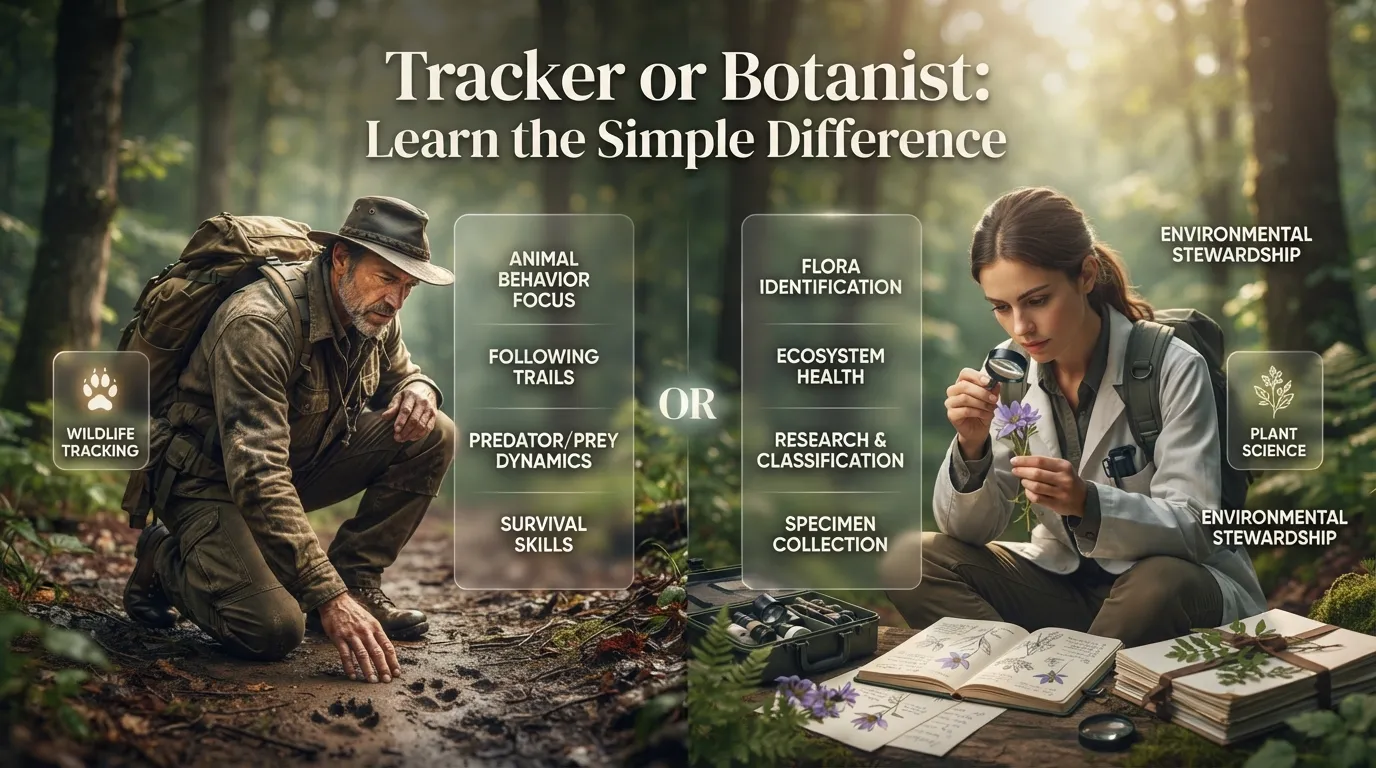
A tracker follows tracks and signs. A botanist studies plants.
Have you ever seen animal footprints on the ground? A person who follows these tracks can be a tracker. Have you ever seen a person study flowers, trees, or leaves? That person can be a botanist.
The words tracker or botanist are easy to mix up because both people may work outside. They may work in a forest, park, or field. But they do different jobs.
The tracker looks for tracks and signs. A tracker may follow an animal. A tracker may also help find a person.
A botanist studies plants. A botanist may study flowers, trees, grass, seeds, or leaves.
The word tracker comes from track. A track is a mark left by a person or animal. The word botanist comes from botany. Botany is the study of plants.
So, when you ask tracker or botanist, think about the main job. A tracker follows tracks. A botanist studies plants.
Pronunciation of Tracker or Botanist
Tracker
US: TRAK-er
UK: TRAK-er
Botanist
US: BOT-uh-nist
UK: BOT-uh-nist
Both words have simple sounds, but botanist may feel harder to say at first.
Difference Between Tracker or Botanist
1. A Tracker Follows Tracks
A tracker follows tracks and signs.
The tracks may come from a person or animal.
Examples:
- The tracker saw a footprint.
- The tracker followed the animal.
2. A Botanist Studies Plants
A botanist studies plants.
They learn about how plants grow and live.
Examples:
- The botanist studies a flower.
- The botanist looks at a tree.
3. A Tracker Looks for Signs
A tracker looks for small signs.
These signs can help show where something went.
Examples:
- The tracker saw marks on the ground.
- The tracker found a broken branch.
4. A Botanist Looks at Plants
A botanist looks closely at plants.
They may study leaves, roots, flowers, or seeds.
Examples:
- The botanist looked at the leaves.
- The botanist studied the seeds.
5. A Tracker May Follow Animals
Some trackers follow wild animals.
They use tracks and other signs to find them.
Examples:
- The tracker followed a deer.
- The tracker found bear tracks.
6. A Botanist May Study Trees
Trees are plants, so botanists can study them.
Examples:
- The botanist studied an old tree.
- The botanist looked at tree leaves.
7. Tracker Is a Wider Word
Tracker can have more than one meaning.
It can mean a person who follows tracks. It can also mean a tool that follows or records something.
Examples:
- The wildlife tracker followed the fox.
- I use a fitness tracker.
8. Botanist Has One Main Meaning
Botanist has a clear meaning.
It means a person who studies plants.
Examples:
- The botanist found a new plant.
- The botanist works with flowers.
9. A Tracker Often Works Outside
Many trackers work outside.
They may work in forests, hills, or fields.
Examples:
- The tracker walked through the forest.
- The tracker looked for tracks in the field.
10. A Botanist Can Work Inside or Outside
A botanist can work in many places.
They can work in a lab, garden, forest, or school.
Examples:
- The botanist worked in a lab.
- The botanist studied plants in a garden.
You may also read https://lengovia.com/refinance-or-not/
Nature and Behaviour
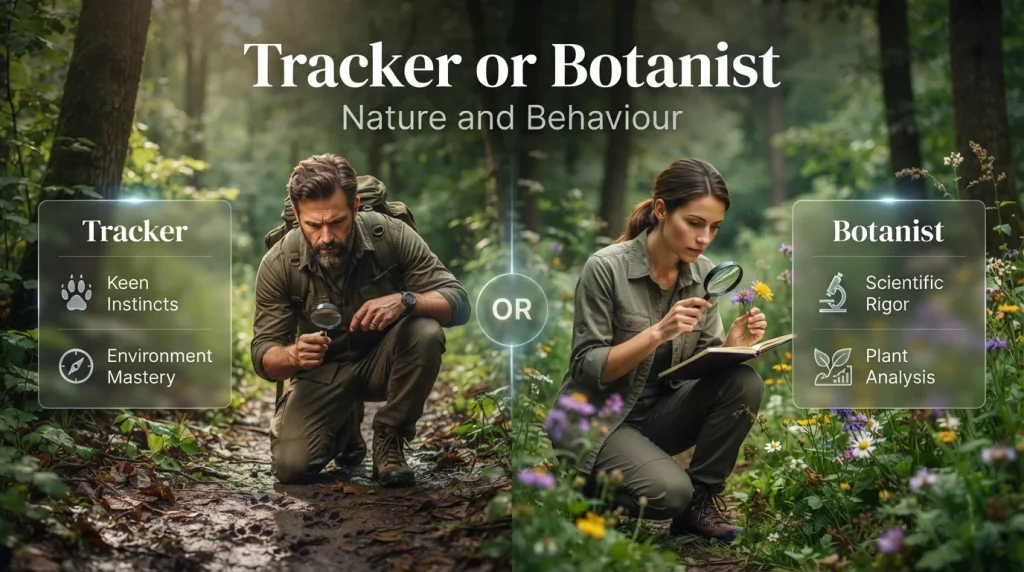
A tracker looks for tracks and signs.
A botanist looks at plants.
Both may enjoy nature. Both may spend time outside. But they do not do the same work.
Think of these two simple questions:
Tracker: Where did it go?
Botanist: What plant is this?
This is an easy way to remember the difference.
Why Do People Get Confused?
People may get confused because both trackers and botanists can work in nature.
A tracker may walk through a forest.
A botanist may also walk through the same forest.
The difference is what they look for.
The tracker looks for tracks.
The botanist looks at plants.
So, remember:
Tracker = tracks
Botanist = plants
Comparison Table
| Word | Meaning | Simple Example |
| Tracker | A person who follows tracks | The tracker found a footprint. |
| Botanist | A person who studies plants | The botanist studied a flower. |
| Tracker | Can also mean a tool that follows something | I use a fitness tracker. |
| Botanist | A plant expert | The botanist studied a tree. |
Origin of Tracker
The word tracker comes from track.
A track is a mark or path left by a person or animal.
For example:
I saw animal tracks in the mud.
A tracker uses these signs to follow something.
Origin of Botanist
The word botanist comes from botany.
Botany means the study of plants.
A botanist is a person who studies plants.
For example:
The botanist studied a rare flower.
British vs American English
Tracker has the same spelling in British and American English.
Botanist also has the same spelling in both forms of English.
Examples:
- The tracker found a trail.
- The botanist studied a plant.
There is no main spelling change between US and UK English for these words.
Which One Should You Use?
Use tracker when you mean someone who follows tracks or signs.
Use botanist when you mean someone who studies plants.
For example:
- Animal tracks → tracker
- Plant study → botanist
If someone follows a deer, use tracker.
If someone studies a flower, use botanist.
Common Mistakes
Mistake 1: Calling a plant expert a tracker
❌ The tracker studied the flowers.
If the person’s main job is plant study, use botanist.
✅ The botanist studied the flowers.
Mistake 2: Calling an animal tracker a botanist
❌ The botanist followed the animal tracks.
If the person follows tracks, use tracker.
✅ The tracker followed the animal tracks.
Mistake 3: Thinking every outdoor worker is a botanist
Not every person who works outside studies plants.
A person can work outside without being a botanist.
Mistake 4: Thinking a tracker only follows people
A tracker can follow animals too.
Everyday Usage Examples
Tracker
Tracker found a footprint.
The tracker followed the deer.
The tracker walked through the woods.
Botanist
The botanist studied a flower.
The botanist looked at the leaves.
Botanist planted seeds.
Both words
The tracker followed the deer while the botanist studied the plants.
This sentence shows the difference very clearly.
Usage Trends
The word tracker can appear in many areas.
You may see:
- animal tracker
- wildlife tracker
- fitness tracker
- search tracker
- trail tracker
The word botanist is mostly used when people talk about plants.
You may see it in:
- science books
- nature books
- plant studies
- school lessons
- research
- gardens
So, tracker has more uses than botanist.
Metaphors and Similes
These words do not have many common idioms.
But we can use them in simple comparisons.
For example:
She is like a tracker. She finds every clue.
This means she is good at finding clues.
We can also say:
He is like a botanist in the garden.
This means he knows a lot about plants.
Connotative Meaning
Tracker may make you think of:
- Tracks
- Animals
- Clues
- Forests
- Search
- Adventure
Botanist may make you think of:
- Plants
- Flowers
- Trees
- Science
- Gardens
- Nature
Both words can make us think of nature.
But they give us different pictures.
Idioms and Proverbs
There are no common idioms that use tracker or botanist.
But you may see these phrases:
- wildlife tracker
- animal tracker
- fitness tracker
- plant botanist
- field botanist
- research botanist
These phrases help explain the type of work.
Literature and Movies
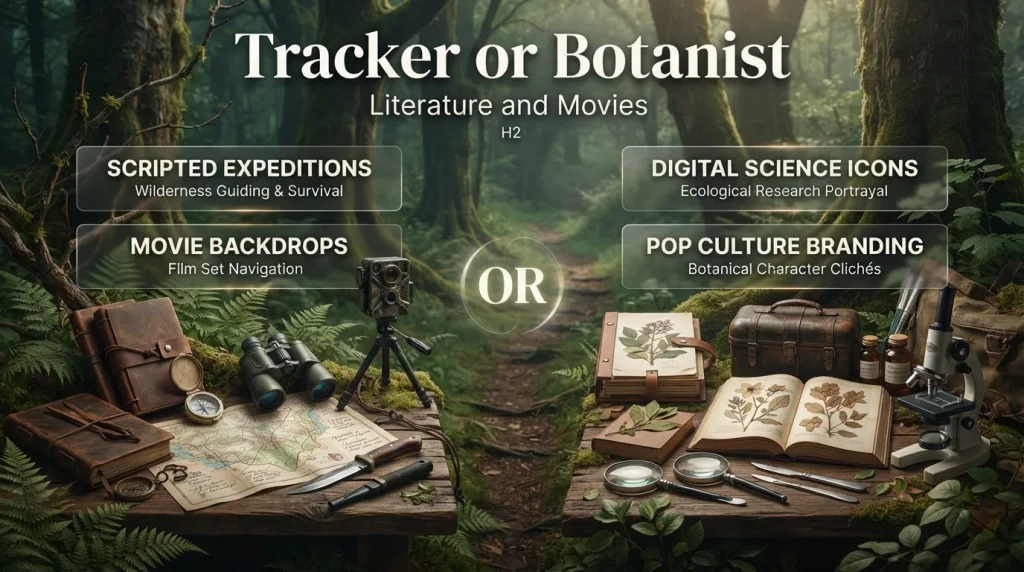
Trackers often appear in adventure and nature stories.
A tracker may follow footprints to find an animal or person. This makes the character useful in stories about forests and wild places.
Botanists can appear in science and nature stories.
A botanist may find a rare plant or study plants in a new place.
For example, The Martian, a science-fiction novel by Andy Weir, was published in 2011. The story includes plant science and growing food.
These examples show how tracking and plant study can help in stories.
Why This Difference Matters
It is important to use the right word.
If you say tracker, people think about tracks and clues.
If you say botanist, people think about plants.
Look at these sentences:
The tracker found a footprint.
The person follows tracks.
The botanist found a rare flower.
The person studies plants.
The words give us different meanings.
Usefulness in Daily Life
You may see these words when you talk about:
- Animals
- Plants
- Forests
- Nature
- Science
- Outdoor work
- Search work
You may also see them in books, films, school work, and nature shows.
Knowing these words can help you write better English.
Situational Preference
Use tracker when a person follows tracks, signs, or clues. Use botanist when a person studies plants. A tracker may follow an animal in a forest. A botanist may study a flower in that same forest. Both may work outside, but their jobs are not the same. A tracker looks for signs. A botanist looks at plants. If you see footprints, think tracker. If you see flowers, leaves, or trees, think botanist. This simple rule can help you choose the right word.
Quiz Questions
1. What does a tracker follow?
A. Flowers
B. Tracks
C. Books
D. Cars
Answer: B. Tracks
2. What does a botanist study?
A. Plants
B. Cars
C. Houses
D. Roads
Answer: A. Plants
3. Who may study a rare flower?
A. Tracker
B. Botanist
C. Driver
D. Pilot
Answer: B. Botanist
4. Who may follow animal footprints?
A. Botanist
B. Tracker
C. Teacher
D. Chef
Answer: B. Tracker
5. Which sentence is correct?
A. A botanist studies plants.
B. A tracker studies only flowers.
C. A botanist always follows animals.
D. A tracker is always a scientist.
Answer: A. A botanist studies plants.
Possible Questions
What is a tracker?
A tracker is a person who follows tracks, signs, or clues.
What is a botanist?
A botanist is a person who studies plants.
Can a tracker work with animals?
Yes. A wildlife tracker can follow animal tracks and signs.
Can a botanist work outside?
Yes. A botanist can work in forests, gardens, fields, and parks.
Can one person be a tracker and a botanist?
Yes. One person can learn both skills. But the words have different meanings.
Is tracker only used for people?
No. A tracker can also be a tool or device that records or follows something.
How can I remember the difference?
Use this easy rule:
Tracker = tracks
Botanist = plants
Conclusion
When choosing tracker or botanist, think about what each person does. A tracker follows tracks and signs to find animals or people. A botanist, on the other hand, studies plants, such as flowers, trees, leaves, seeds, and roots. Both may work in nature or even explore the same forest. However, they focus on different things. A tracker looks for tracks and clues, while a botanist learns about plants. The word tracker can also describe a device, such as a fitness tracker, that records steps or activity. In contrast, botanist means a person who studies plants. The easiest way to remember the difference is simple: a tracker follows tracks, while a botanist studies plants. Use these meanings to choose the right word for your sentence.

Mahnoor Afzal is an educator, researcher, and English language content specialist focused on grammar, vocabulary, word differences, and meanings. I combines research, teaching, and SEO expertise to create clear and reliable English learning content at Lengovia.











1 thought on “Tracker or Botanist: Learn the Simple Difference”