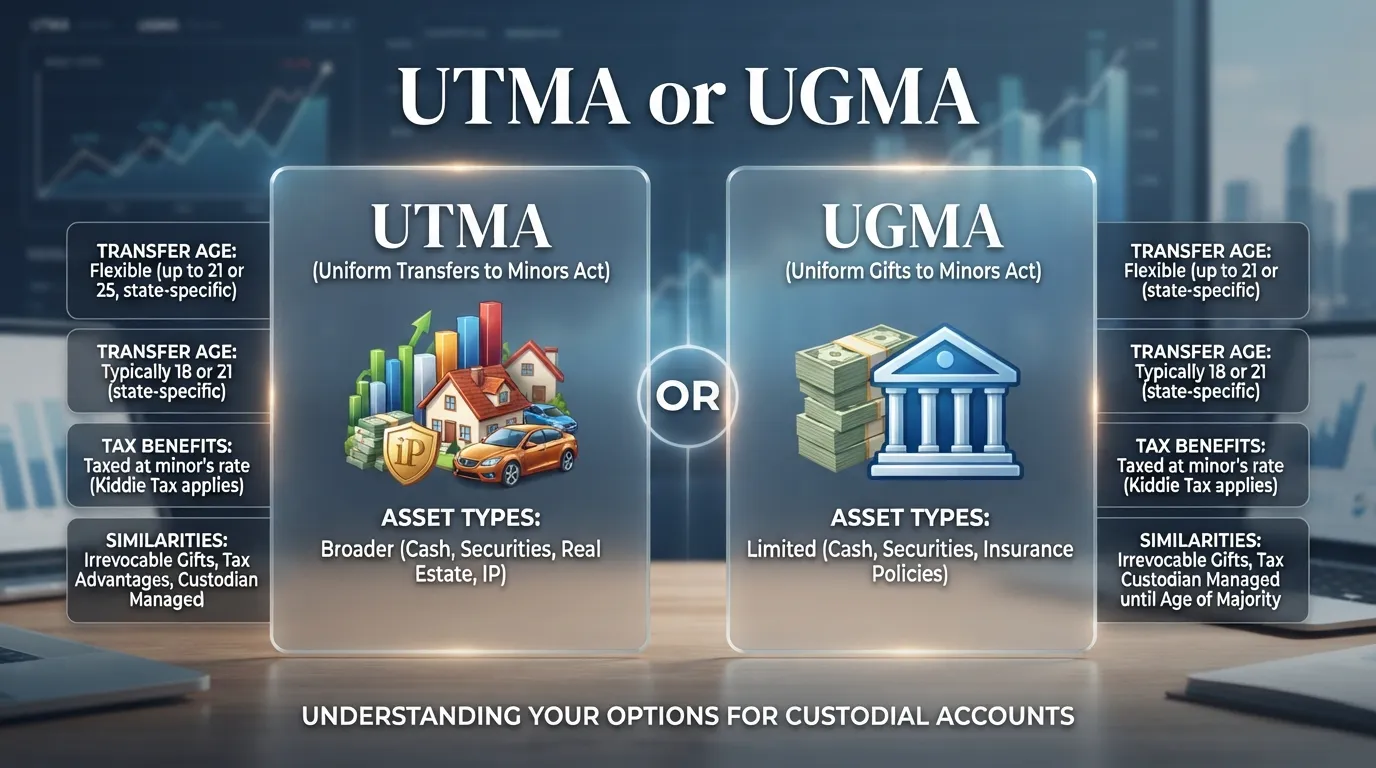
UTMA and UGMA are two types of custodial accounts that adults can open for children. Both can help a child own money or other assets. However, they differ in the types of assets they can hold.
Imagine a parent wants to save money for a child’s future. The parent may open a UTMA or UGMA account. An adult manages the account until the child reaches the age set by state law. The money and assets belong to the child.
UTMA means Uniform Transfers to Minors Act. UGMA means Uniform Gifts to Minors Act. Both accounts can hold gifts for a child, but the rules are not exactly the same.
A UGMA account usually holds financial assets, such as cash, stocks, and bonds. A UTMA account can often hold these assets and other types of property, depending on state law.
People compare UTMA or UGMA when planning savings, gifts, or investments for a child. The best choice depends on the assets, state rules, and family needs.
Difference Between UTMA or UGMA
1. Full Name
UTMA means Uniform Transfers to Minors Act.
UGMA means Uniform Gifts to Minors Act.
Examples:
- The family opened a UTMA account.
- The family opened a UGMA account.
2. Types of Assets
A UGMA account usually holds cash, stocks, and bonds. A UTMA account can often hold these and other types of property. The exact rules depend on state law.
Examples:
- A child receives stocks in a UGMA account.
- A child may receive other property through a UTMA account.
3. Account Owner
The child owns the money and property in both accounts. An adult manages the account for the child.
Examples:
- The money belongs to the child.
- The parent manages the child’s account.
4. Adult Custodian
Both accounts have an adult called a custodian. This person looks after the assets until the child takes control.
Examples:
- A mother manages her child’s UTMA account.
- A grandfather manages his grandchild’s UGMA account.
5. Main Purpose
Both accounts help adults give money or property to a child.
Examples:
- A parent saves money for a child.
- A grandparent gives stocks to a child.
6. State Rules
State law sets the rules for these accounts. The rules can differ from one state to another.
Examples:
- One state may have different account rules.
- A family checks its state law before opening an account.
7. Age to Take Control
A child takes control when the account reaches the age set by state law. The age is not the same everywhere
Examples:
- A young adult takes control of the account.
- The custodian hands over the assets at the required age.
8. Gifts Cannot Usually Be Taken Back
Money or property given to either account usually becomes the child’s property. The adult cannot simply take the gift back.
Examples:
- A parent gives money to a child.
- A grandparent gives shares to a child.
9. Use of Money
The custodian must use the assets for the child’s benefit while managing the account. The rules do not allow the custodian to use the child’s money for personal needs.
Examples:
- The custodian pays a cost that benefits the child.
- The custodian does not use the child’s money for personal shopping.
10. Best Choice
Neither account is best for every family. The right choice depends on the assets and the law in the state.
Examples:
- A family compares the rules before choosing UTMA.
- Another family checks whether UGMA is available.
You may also read https://lengovia.com/soder-or-solder/
Nature and Behaviour of UTMA or UGMA
A UTMA account can hold money and a wider range of property in states that allow it.
A UGMA account usually holds financial assets, such as cash, stocks, and bonds.
Both accounts help adults manage gifts for children. The child owns the assets, while the custodian looks after them until the law allows the child to take control.
Why People Get Confused About UTMA or UGMA
People get confused because the accounts work in similar ways. Both let adults give assets to children without setting up a formal trust.
Their names are also very similar. The main difference is the type of property each account can hold. State laws also affect which account is available and when the child takes control.
Comparison Table
| Feature | UTMA | UGMA |
| Full name | Uniform Transfers to Minors Act | Uniform Gifts to Minors Act |
| Account type | Custodial account | Custodial account |
| Owner | Child | Child |
| Manager | Adult custodian | Adult custodian |
| Cash | Usually allowed | Usually allowed |
| Stocks and bonds | Usually allowed | Usually allowed |
| Other property | Often allowed | More limited |
| State rules | Apply | Apply |
| Gift can be taken back | Usually no | Usually no |
| Main purpose | Hold assets for a child | Hold assets for a child |
The Origin of UTMA or UGMA
UGMA came first. It gave adults a way to give certain assets to children without setting up a formal trust.
Later, UTMA expanded the types of property that adults could transfer to minors. State laws set the rules for both account types. Some states use UTMA rules in place of older UGMA rules.
British vs American English
UTMA and UGMA are legal terms mainly used in the United States. They do not have different British and American spellings.
Examples:
- The parent opened a UTMA account.
- The grandparent opened a UGMA account.
If you write about these accounts, spell out each full name the first time you use it.
Which One Should You Use?
Check your state’s rules before choosing an account. A UTMA may fit a family that wants to give a child different types of property. A UGMA may fit a family that wants to give cash or financial assets, if the state allows it.
You should also think about when the child will take control. For personal advice, speak with a qualified financial or legal professional.
Common Mistakes
❌ UTMA and UGMA are the same account.
✅ They are similar, but they can hold different types of assets.
❌ The parent owns the money.
✅ The child usually owns the assets in the account.
❌ The adult can take back the gift.
✅ Gifts are usually permanent.
❌ Every state has the same rules.
✅ State rules can differ.
Everyday Usage Examples
In emails
- “Can you explain how a UTMA account works?”
- “Does our state allow UGMA accounts?”
On social media
- “We opened a savings account for our child.”
- “We are learning about UTMA and UGMA accounts.”
In news
- “Families use custodial accounts to give assets to children.”
- “State laws affect how these accounts work.”
In formal writing
- “The child owns the assets in the custodial account.”
- “The custodian manages the account for the child’s benefit.”
Usage Trends
Families may use UTMA or UGMA accounts to give money or investments to children. These accounts can be used for more than college costs.
However, parents should also consider taxes, financial aid, and the age when the child takes control. Rules can change, so it is wise to check current information before opening an account.
Metaphors and Similes
UTMA and UGMA are legal terms, so they do not have common metaphors of their own.
Still, you can explain them with simple comparisons:
- A custodian is like a caretaker for the account.
- The account is like a box that holds gifts for a child.
These comparisons help explain the idea, but they are not legal definitions.
Connotative Meaning
UTMA may suggest a wider choice of property because it can cover more types of assets.
UGMA may suggest gifts such as cash, stocks, and bonds.
Both terms connect with saving, giving, and planning for a child’s future. Neither term means that the account is always better for every family.
Idioms and Proverbs
UTMA and UGMA do not have common idioms. However, some sayings fit the idea of planning for a child’s future.
“Save for a rainy day” means keeping money for a time when it is needed.
Example:
– The family saved money for the child’s future.
Literature and Movies

UTMA and UGMA are legal terms, so they do not often appear in books or movies as key ideas.
However, many family stories show parents saving money or giving gifts to children. For example, Mary Poppins (1964, United States) includes themes of family life and money.
The movie does not explain UTMA or UGMA accounts, but it offers a family setting where money and care are part of the story.
Why This Difference Matters
Knowing the difference between UTMA or UGMA helps families make better choices. It can help them understand who owns the assets, who manages them, and when the child takes control.
It also helps prevent mistakes when giving money or property to a child.
Usefulness in Daily Life
You may see UTMA or UGMA when you:
- Save money for a child.
- Give a child stocks or bonds.
- Plan a future gift.
- Read about custodial accounts.
- Talk to a bank or financial adviser.
Understanding these terms can make money planning easier.
Situational Preference
A UTMA account may be useful when a family wants to give a child different types of property, if state law allows it. A UGMA account may work for gifts of cash and financial assets. Before choosing, check which account your state permits. Also, remember that the child usually owns the assets and will take control at the age set by law. Think about how this may affect the child’s future. A financial or legal professional can help you understand the rules for your situation.
Quiz Questions
1. What does UTMA stand for?
A. Uniform Transfers to Minors Act B. United Trust for Minors Act C. Uniform Tax Management Act D. United Transfers Money Act
Answer: A. Uniform Transfers to Minors Act
2. What does UGMA stand for?
A. United Gifts to Minors Act B. Uniform Gifts to Minors Act C. Uniform Growth Money Act D. United Government Minors Act
Answer: B. Uniform Gifts to Minors Act
3. Who usually owns the assets in these accounts?
A. The bank B. The parent C. The child D. The custodian
Answer: C. The child
4. Who manages the account while the child is young?
A. An adult custodian B. A teacher C. A friend D. A neighbor
Answer: A. An adult custodian
5. What is one key difference between UTMA and UGMA?
A. Their color B. Their name only C. The types of assets they can hold D. The child’s school
Answer: C. The types of assets they can hold
Expected Questions
1. What is a UTMA account?
A UTMA account holds money or property for a child. An adult manages it until the child takes control under state law.
2. What is a UGMA account?
A UGMA account holds gifts, such as cash and financial assets, for a child.
3. Is UTMA better than UGMA?
Not always. The best choice depends on state law and the types of assets you want to give.
4. Who owns the money in a UTMA or UGMA account?
The child usually owns the assets. The adult custodian manages them.
5. Can a parent take back a gift?
Usually, no. Gifts to these accounts are generally permanent.
6. When does a child take control?
The age depends on the rules that apply to the account and the state.
7. Can these accounts help pay for college?
Yes. Assets may help pay college costs, but the account can affect financial aid. Check the rules before making a choice.
Conclusion
UTMA or UGMA accounts help adults give money or property to a child. Both accounts allow an adult to manage assets that usually belong to the child.The main difference is the type of property each account can hold. A UGMA account usually holds cash, stocks, and bonds. In contrast, a UTMA account can often hold a wider range of property. However, the exact rules depend on state law.Before opening an account, consider what you want to give the child. Also, check the age when the child will take control of the assets. Gifts usually cannot be taken back.Neither account is best for every family. A UTMA may suit families who want to give different types of property, while a UGMA may suit those who want to give financial assets, where available. Before choosing, check your state’s rules or ask a qualified financial or legal professional for advice.

Mahnoor Afzal is an educator, researcher, and English language content specialist focused on grammar, vocabulary, word differences, and meanings. I combines research, teaching, and SEO expertise to create clear and reliable English learning content at Lengovia.








1 thought on “UTMA or UGMA: What Is the Difference?”