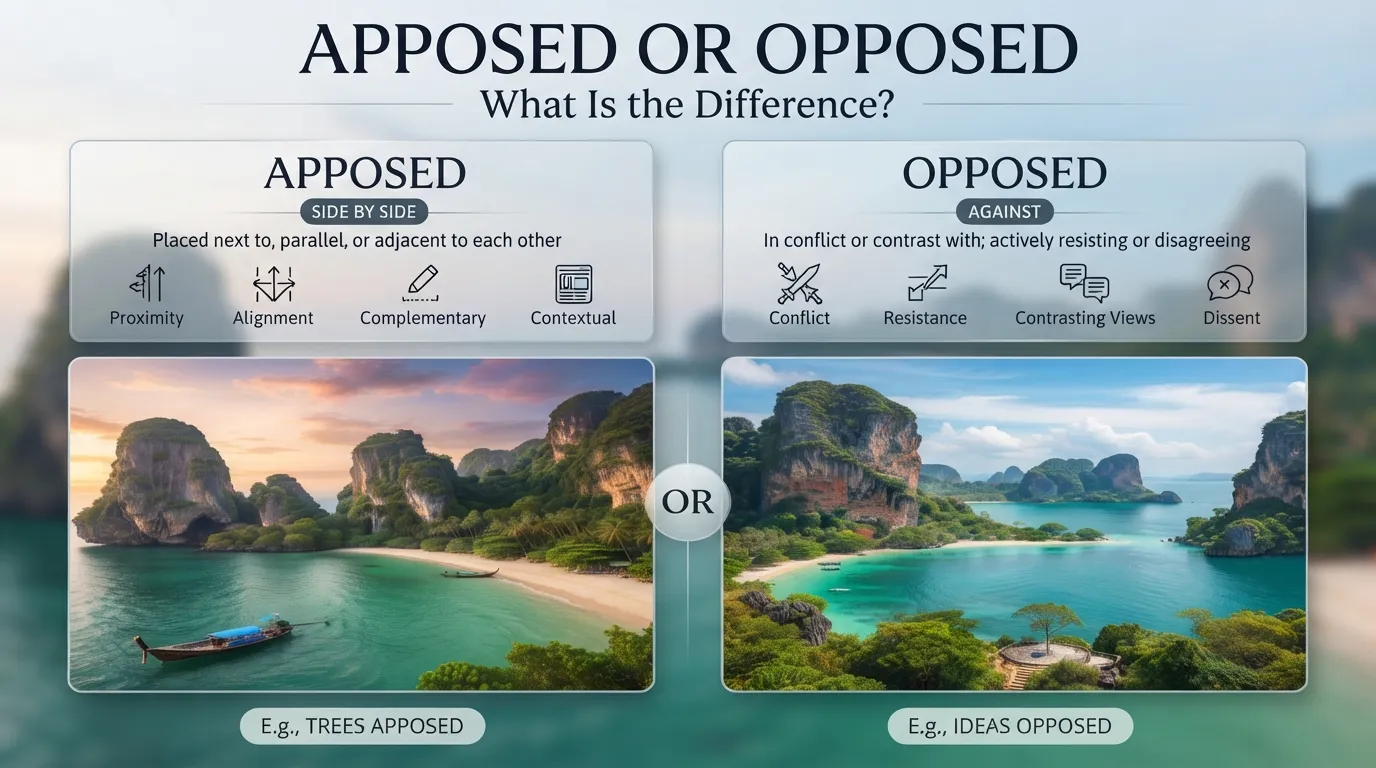
Apposed means placed next to something. Opposed means against something or not supporting it.
Have you ever seen apposed or opposed and wondered which word you should use? These two words look very similar. They also sound almost the same. However, they have different meanings. One small spelling change can change the meaning of a sentence.
Apposed is a less common word. It means that someone or something places one thing next to another. People mostly use it in grammar, biology, medicine, and other technical areas. Opposed, on the other hand, is a common English word. It means being against something or not agreeing with an idea, plan, person, or action.
For example, you can say, “The words are apposed.” This means the words sit next to each other. However, you can say, “They are opposed to the plan.” This means they do not support the plan.
Therefore, learning the difference between apposed or opposed can help you avoid spelling and meaning mistakes.
Pronunciation of Apposed and Opposed
Apposed
- US: /əˈpoʊzd/
- UK: /əˈpəʊzd/
Opposed
- US: /əˈpoʊzd/
- UK: /əˈpəʊzd/
The two words can sound very similar. Therefore, you need to check the spelling and meaning.
Difference Between Apposed and Opposed
1. Apposed Means Placed Next to Something
Apposed means that someone places one thing beside or close to another thing.
Examples:
- The researcher apposed the two parts.
- The designer apposed the labels to the pictures.
Here, the main idea concerns position.
2. Opposed Means Against Something
Opposed means that someone does not support an idea, plan, person, or action.
Examples:
- She is opposed to the plan.
- They are opposed to the new rule.
Here, the main idea concerns disagreement.
3. Apposed Is Uncommon
People do not use apposed very often in everyday English.
You may see it in technical or academic writing.
Examples:
- The researcher apposed the two structures.
- The doctor placed the two surfaces closely together.
4. Opposed Is Very Common
People use opposed much more often in daily English.
Examples:
- I am opposed to violence.
- Many people are opposed to the idea.
5. Apposed Talks About Position
When you use apposed, you usually talk about where someone places something.
Example:
- The researcher apposed the two surfaces.
This sentence tells us that someone placed the surfaces next to each other.
6. Opposed Talks About Disagreement
When you use opposed, you usually talk about disagreement or a lack of support.
Example:
- He is opposed to the proposal.
This sentence tells us that he does not support the proposal.
7. Apposed Can Appear in Grammar
In grammar, apposed can describe words or phrases that someone places next to one another.
Example:
- The writer apposed the name to the title.
The focus here stays on placement.
8. Opposed Can Describe People
We can use opposed to describe a person’s view about an issue.
Examples:
- She is opposed to the change.
- He is strongly opposed to the idea.
9. Apposed Shows Closeness
The main idea behind apposed involves placing things close together or side by side.
Example:
- The researcher apposed the two surfaces.
10. Opposed Shows Resistance
The main idea behind opposed involves resistance, disagreement, or a lack of support.
Example:
- The group is opposed to the proposal.
Therefore, remember this easy rule:
Apposed = placed next to something.
Opposed = against something.
You may read https://lengovia.com/as-or-like/
Nature and Behaviour of Apposed and Opposed

The two words have different uses.
Apposed mainly works as a technical word. It describes things that someone places close together. Therefore, you may find it in specialist writing.
Opposed is a common word. It can describe people, groups, opinions, plans, or ideas. It often appears with to.
For example:
- She is opposed to the plan.
- They are opposed to the new law.
So, when you see opposed to, it usually means “against.”
Why Do People Get Confused About Apposed and Opposed?
People often confuse these words because their spelling looks almost the same.
Compare them:
- apposed
- opposed
Only the first vowel changes.
Also, both words can sound very similar. Therefore, listening alone may not help you choose the correct word.
However, their meanings differ greatly. Apposed talks about placement. Opposed talks about disagreement.
Comparison Table
| Apposed | Opposed |
|---|---|
| Means placed next to | Means against |
| Focuses on position | Focuses on disagreement |
| Less common | Very common |
| Often appears in technical writing | Common in everyday English |
| Describes things placed together | Describes people, ideas, or groups |
| The researcher apposed the parts. | She is opposed to the plan. |
The Origin of Apposed and Opposed
Both words have links to older words about placing things.
Apposed comes from a Latin root that connects with putting something near or beside another thing. Over time, English developed the word appose, which means to place something near or next to another thing.
Opposed comes from oppose. In modern English, it means to resist, disagree with, or act against something.
Although the words look similar, they developed different meanings.
British vs American English
British and American English use the same spelling for apposed and opposed.
Both varieties use:
- apposed
- opposed
For example:
- The researcher apposed the two structures.
- She is opposed to the plan.
Therefore, British and American English do not create a major spelling difference here. The main difference comes from the meaning of each word.
Which One Should You Use?
First, ask yourself what you mean.
If you mean placed next to or close to, use apposed.
- The researcher apposed the two surfaces.
If you mean against or not supporting, use opposed.
- She is opposed to the plan.
In normal everyday English, you will probably use opposed much more often.
However, do not use opposed when you mean that someone placed two things next to each other.
For example:
❌ The researcher opposed the two parts to each other.
✅ The researcher apposed the two parts.
Therefore, always choose the word that matches your meaning.
Common Mistakes
Mistake 1: Using Opposed for Placement
❌ The researcher opposed the two surfaces.
If you mean that the researcher placed the surfaces next to each other, use apposed.
✅ The researcher apposed the two surfaces.
Mistake 2: Using Apposed for Disagreement
❌ She is apposed to the plan.
If you mean that she does not support the plan, use opposed.
✅ She is opposed to the plan.
Mistake 3: Spelling Opposed as Apposed
❌ I am apposed to the idea.
✅ I am opposed to the idea.
Many people make this mistake because the words look so similar.
Mistake 4: Thinking the Words Are Synonyms
These words do not have the same meaning.
Apposed = placed next to.
Opposed = against.
Therefore, do not use one word as a replacement for the other.
Everyday Usage Examples
In Formal Writing
- The researcher apposed the two structures.
- The committee opposed the proposal.
In Academic Writing
- The researcher placed the surfaces closely together.
- The researchers opposed the claim.
For Daily Speech
You are much more likely to hear opposed.
For example:
- I am opposed to that idea.
- She is opposed to the change.
People rarely use apposed in normal conversation.
Usage Trends
Opposed is a common English word. People use it in conversations, news, school writing, business writing, and formal documents.
Apposed, however, is much less common. Writers mostly use it in specialist or technical contexts.
Therefore, English learners should remember opposed as the common word for disagreement.
For example:
- He is opposed to the plan.
Use apposed only when you specifically mean that someone places one thing next to another.
Metaphors and Similes
Writers can use opposed when they describe two sides that disagree.
For example:
- The two groups stood opposed to each other.
This sentence can show a real disagreement or a strong difference in views.
Writers rarely use apposed in everyday metaphors or similes. Instead, they mainly use it to describe placement.
Connotative Meaning
Apposed has a neutral meaning. It simply describes position or placement.
Opposed can create a stronger feeling because it shows disagreement or resistance.
For example:
- The researcher apposed the two surfaces.
This sentence simply describes an action.
However:
- She opposed the plan.
This sentence tells us that she did not support the plan.
Therefore, opposed can show conflict or disagreement, while apposed usually describes placement.
Idioms and Common Phrases
The most useful phrase with opposed is:
Opposed to
It means against something.
Examples:
- I am opposed to the plan.
- They are opposed to the new rule.
- She is strongly opposed to the idea.
You may also see:
Be Opposed to Something
- He is opposed to the change.
People use fewer common phrases with apposed because it mainly appears in technical writing.
Literature and Movies
Writers can use opposed when they describe characters with different ideas.
For example:
- The two characters opposed each other.
This sentence can show a conflict between people or ideas.
Writers use apposed less often in ordinary stories because the word has a technical meaning. However, scientific and academic writers may use it when they discuss the position of two things.
Therefore, the two words have different roles in writing.
Why This Difference Matters
Using apposed instead of opposed can change the meaning of your sentence.
Compare:
- The researcher apposed the two surfaces.
- The two groups opposed the plan.
The first sentence talks about placement. The second sentence talks about disagreement.
Usefulness in Daily Life
The word opposed can help you talk about plans, ideas, rules, or choices.
For example:
- I am opposed to this plan.
- She is opposed to the change.
The word apposed can help you understand technical or academic material.
Therefore, you do not need to use apposed often in normal conversation. However, you should know its meaning when you see it.
Situational Preference
Use opposed when you mean “against” or “not supporting.” You will need this word in most everyday situations. For example, “She is opposed to the new plan.” On the other hand, use apposed when you mean that someone places one thing next to or close to another thing. This word is less common and often appears in technical writing. Therefore, if you talk about an opinion, idea, rule, or plan, opposed usually fits. If you describe the position of two things, apposed may fit better.
Possible Questions
1. What is the difference between apposed and opposed?
Apposed means placed next to or close to something. Opposed means against or not supporting something.
2. Is “I am apposed to the idea” correct?
No, not if you mean “I am against the idea.”
The correct sentence is:
I am opposed to the idea.
3. Is apposed a real word?
Yes. Apposed is a real word, but people use it less often. It mainly appears in technical contexts.
4. Is opposed a common word?
Yes. Opposed is a common English word.
5. What does “opposed to” mean?
Opposed to means against or not supporting something.
Example:
- They are opposed to the plan.
6. What does apposed mean?
Apposed means placed next to, close to, or beside another thing.
7. Which word should I use in everyday English?
Usually, use opposed when you mean “against.” Use apposed only when you specifically mean “placed next to or close to.”
Conclusion
The words apposed or opposed look very similar, but they have different meanings. Apposed means that someone places one thing next to, beside, or close to another thing. It is less common and often appears in technical or academic writing. Opposed, however, means against something or not supporting it. People use it often in everyday English. For example, “The researcher apposed the two surfaces” talks about placement, while “She opposed the plan” talks about disagreement. Therefore, the easiest way to remember the difference is simple: apposed = placed next to; opposed = against. Also, be careful when you write “apposed to” when you mean that you do not support an idea. In that case, write opposed to. Once you learn this simple difference, choosing between apposed or opposed becomes much easier.

Mahnoor Afzal is an educator, researcher, and English language content specialist focused on grammar, vocabulary, word differences, and meanings. I combines research, teaching, and SEO expertise to create clear and reliable English learning content at Lengovia.











1 thought on “Apposed or Opposed: What Is the Difference?”