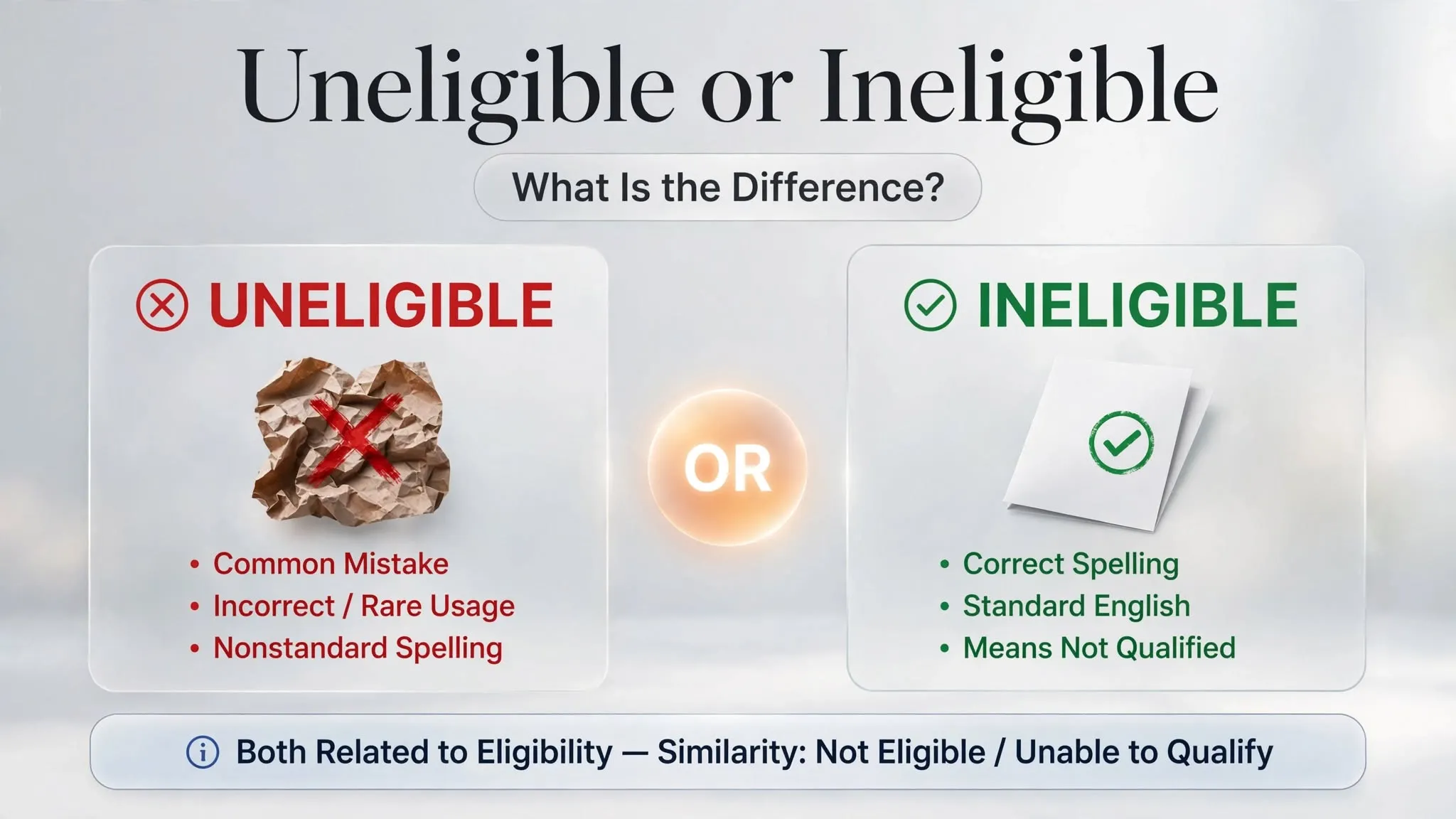
Ineligible is the correct word. Uneligible is not the usual English word.
Have you ever seen the word uneligible and wondered if it is correct? Many people make this mistake. They may think that eligible becomes uneligible when we add un-. However, English does not use this form. The correct word is ineligible.
Eligible means that someone can do, get, or join something because they meet the rules. Ineligible means that someone cannot do, get, or join it because they do not meet the rules.
For example, a student may be eligible for a school prize. But another student may be ineligible because they do not meet the rules. So, when you want to say “not eligible,” use ineligible.
Pronunciation of Uneligible or Ineligible
- Uneligible: not the usual standard word.
- Ineligible: in-EL-i-juh-bul
The word you should use is ineligible.
Difference Between Uneligible and Ineligible
1. Ineligible Is Correct
Ineligible is the correct word.
- She is ineligible for the prize.
- He is ineligible for the job.
2. Uneligible Is Not the Usual Word
Uneligible is not the normal standard form.
- ❌ She is uneligible for the prize.
- ✅ She is ineligible for the prize.
3. Eligible Means Allowed
Eligible means you can do or get something because you meet the rules.
- I am eligible for the program.
- She is eligible for the prize.
4. Ineligible Means Not Allowed
Ineligible means you do not meet the rules.
- He is ineligible for the prize.
- She is ineligible for the program.
5. It Can Talk About People
We can use ineligible for a person.
- Tom is ineligible for the game.
- Sara is ineligible for the award.
6. It Can Talk About Things
We can also use ineligible for things such as forms or entries.
- The form is ineligible.
- The entry is ineligible.
7. It Can Talk About Age
Some programs have age rules.
- He is ineligible because he is too young.
- She is ineligible for the senior program.
8. It Can Talk About Jobs
A person may not meet the rules for a job.
- He is ineligible for the job.
- She is ineligible for the position.
9. It Can Talk About Games
Sports and games have rules too.
- The player is ineligible to play.
- The team has an ineligible player.
10. Use Ineligible in Your Writing
When you mean “not eligible,” choose ineligible.
- ❌ He is uneligible.
- ✅ He is ineligible.
You may also read https://lengovia.com/erk-or-irk/
Nature and Behaviour of Uneligible and Ineligible
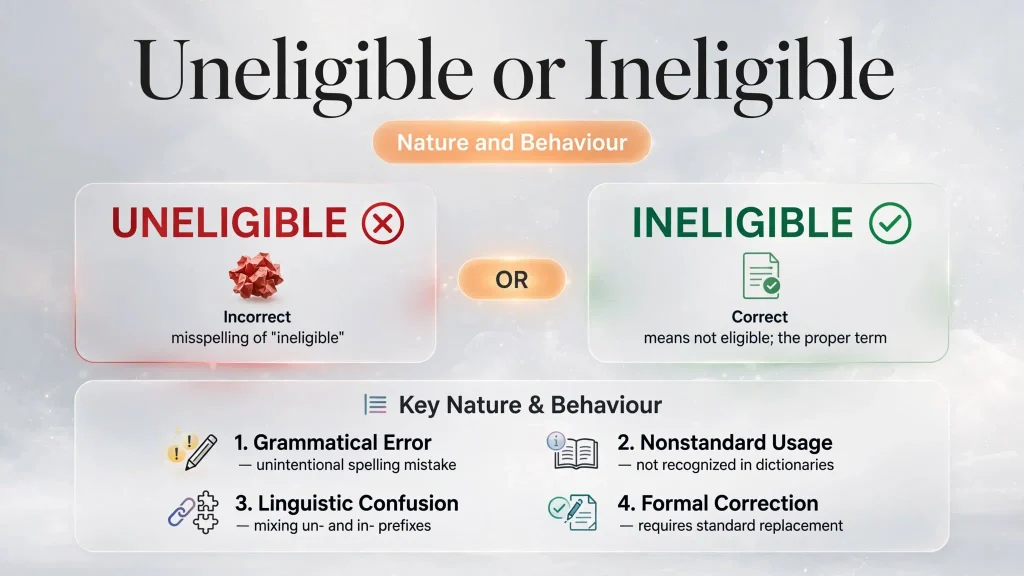
Ineligible is an adjective. It tells us about a person or thing.
It means that someone or something does not meet the rules.
For example:
- The student is ineligible for the prize.
- The player is ineligible to play.
Uneligible is not the normal word to use.
Why Do People Get Confused About Uneligible or Ineligible?
People get confused because English has many words that use un-.
For example:
- happy → unhappy
- kind → unkind
- fair → unfair
So, some people think:
eligible → uneligible
But this is not the standard form.
English uses in- here:
eligible → ineligible
Therefore, remember this pair.
Comparison Table
| Word | Correct? | Meaning |
| Ineligible | ✅ Yes | Not allowed or not qualified |
| Uneligible | ❌ No | Not the usual standard form |
Origin of Ineligible
The word ineligible comes from eligible.
Eligible means “allowed” or “qualified.”
The prefix in- gives the word a negative meaning.
So:
eligible → ineligible
This is why we say ineligible, not uneligible.
British vs American English
Both British English and American English use ineligible.
There is no different spelling for this word.
British English:
- She is ineligible for the prize.
American English:
- She is ineligible for the prize.
So, you can use ineligible in both types of English.
Which One Should You Use?
Use ineligible.
You can use it in:
- School work
- Emails
- Job applications
- Websites
- Reports
- Everyday English
Avoid uneligible in normal writing.
Common Mistakes
Here are some common mistakes:
Always write “ineligible” because “uneligible” is not a valid word in English.
He is ineligible to play in the upcoming match.
I am ineligible for the job application due to age limits.
Prizes cannot be awarded to her because she is ineligible.
She is ineligible for the prize this year.
They are ineligible for the assistance program.
Uneligible is a common spelling mistake—the correct prefix is always “in-“.
Remember:
Eligible → Ineligible
Everyday Usage Examples
You can use ineligible in many places.
At School
- Ali is ineligible for the prize.
- The student is ineligible for the program.
At Work
- She is ineligible for the job.
- He is ineligible for the company plan.
In Sports
- The player is ineligible to play.
- The team used an ineligible player.
With Money
- He is ineligible for the loan.
- She is ineligible for the discount.
In Applications
- Your form is ineligible.
- The applicant is ineligible for the program.
Usage Trends
Ineligible is the normal word used in English. You can see it in school rules, job forms, sports rules, and official papers.
People may write uneligible because they think it follows the same pattern as unhappy or unfair. However, ineligible is the correct choice.
Therefore, use ineligible when you write.
Metaphors and Similes
Ineligible is not often used in metaphors or similes.
Still, we can make simple comparisons.
- He was as ineligible as a player who broke the rules.
- The entry was like a ticket that did not meet the rules.
These examples show the basic idea of the word.
Connotative Meaning
Ineligible has a simple and mostly neutral meaning.
It does not mean that someone is bad. It only means that the person does not meet a rule.
For example:
She is ineligible for the prize.
This does not mean she is a bad student. It only means she does not meet the prize rules.
Idioms and Common Phrases
There are no common idioms with ineligible. However, the word is used in many simple phrases.
- ineligible for a prize
- ineligible for a job
- ineligible for a loan
- ineligible for a program
- ineligible to play
- ineligible to apply
- ineligible for benefits
For example:
He is ineligible to play today.
Literature and Movies
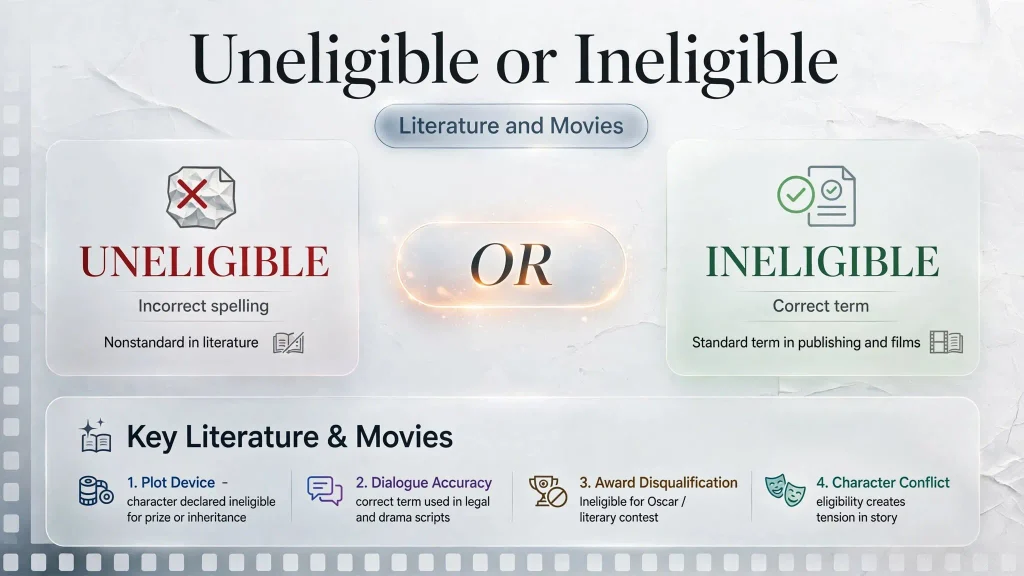
Stories often have rules. A character may not be able to join a game, win a prize, or enter a contest.
For example, a movie about a sports team may have a player who cannot play because the player does not meet the rules. The player is ineligible.
Books and movies about school, sports, jobs, and contests can also use this idea.
Why This Difference Matters
Knowing uneligible or ineligible helps you avoid a common mistake.
If you use uneligible, your sentence may look unusual. However, ineligible is clear and standard.
For example:
❌ She is uneligible for the prize.
✅ She is ineligible for the prize.
Usefulness in Daily Life
You may see ineligible when you apply for something.
For example, a school may say that a student is ineligible for a prize. A company may say that a person is ineligible for a job. A sports group may say that a player is ineligible to play.
So, this word is useful in daily life.
The easy rule is:
Use ineligible when you mean “not eligible.”
Situational Preference
Use ineligible when a person or thing does not meet a rule. You can use it at school, at work, in sports, and in daily life. For example, you can say, “She is ineligible for the prize.” You can also say, “He is ineligible to play.” However, do not normally use uneligible. It is not the standard word. If you are not sure which word to choose, pick ineligible. It is correct in both British and American English. This simple word can help you make your sentences clear and correct.
Expected Questions
Is uneligible correct?
No. Uneligible is not the usual standard word.
Is ineligible correct?
Yes. Ineligible is the correct word.
What does ineligible mean?
Ineligible means not allowed or not qualified for something.
What is the opposite of ineligible?
The opposite is eligible.
- Eligible = allowed or qualified
- Ineligible = not allowed or not qualified
Can I use ineligible in American English?
Yes. Ineligible is correct in American English.
Can I use ineligible in British English?
Yes. Ineligible is also correct in British English.
Which one should I use: uneligible or ineligible?
Use ineligible.
Conclusion
When you choose between uneligible or ineligible, use ineligible. It is the correct and standard word. Eligible means that a person can do or get something because they meet the rules. Ineligible means that they do not meet the rules. For example, a student can be ineligible for a prize, a player can be ineligible to play, and a person can be ineligible for a job. Many people write uneligible because they know words like unhappy and unfair. However, English uses in- with eligible. So, the correct pair is eligible and ineligible. This rule works in both British and American English. Therefore, whenever you mean “not eligible,” remember one simple word: ineligible.

Mahnoor Afzal is an educator, researcher, and English language content specialist focused on grammar, vocabulary, word differences, and meanings. I combines research, teaching, and SEO expertise to create clear and reliable English learning content at Lengovia.