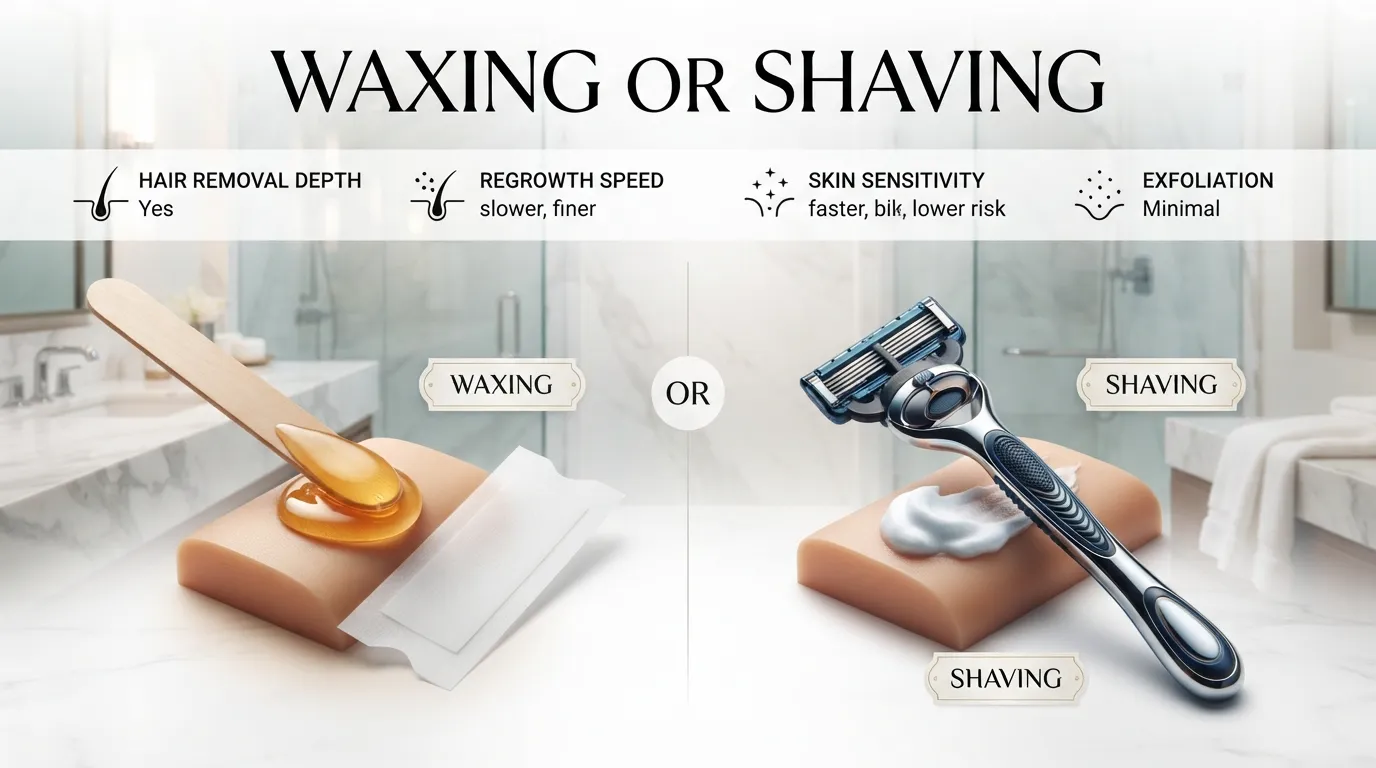
Choose waxing if you want results that usually last longer. Choose shaving if you want a quick and easy way to remove hair at home.
Imagine you have a party tomorrow. You want smooth skin, but you do not have much time. Shaving may be the easier choice. However, if you want smooth skin for a longer time, you may prefer waxing.
Waxing or shaving is a common choice for people who remove body hair. Both methods have good and bad points. Waxing may keep skin smooth for longer, but it can hurt. Shaving is often quick and simple, but hair usually grows back sooner.
Your skin type, budget, and daily routine can help you make the right choice. Some people prefer to shave at home, while others like to visit a salon for waxing. You should also think about comfort and skin care before choosing either method.
Pronunciation of Waxing and Shaving
- Waxing: WAK-sing
- Shaving: SHAY-ving
These words are used in both British and American English. Their meanings stay the same.
Difference Between Waxing and Shaving
1. Meaning
Waxing means removing hair with warm or cold wax. The wax sticks to the hair and pulls it out.
Shaving means cutting hair close to the skin with a razor or shaver.
Examples:
- “She uses waxing to remove leg hair.”
- “He uses shaving to remove his beard.”
2. How They Work
Waxing pulls hair out from the roots. Shaving cuts the hair at the skin’s surface.
Examples:
- “Waxing removes hair from the roots.”
- “Shaving cuts hair near the skin.”
3. How Long Results Last
Waxing usually keeps skin smooth for longer because it removes hair from the roots. Shaving results often last only a few days.
Examples:
- “Waxing keeps her legs smooth for longer.”
- “Shaving needs to be done more often.”
4. Pain
Waxing can hurt because it pulls hair from the roots. Shaving is usually painless when done carefully.
Examples:
- “Waxing may hurt a little.”
- “Shaving feels easy for him.”
5. Time
Shaving can be quick, especially for small areas. Waxing may take longer because you must apply the wax and remove it carefully.
Examples:
- “She shaves before work.”
- “He books time for waxing.”
6. Cost
Shaving at home can cost less at first. You may need to replace razors or buy shaving products. Waxing may cost more, especially when you visit a salon.
Examples:
- “He buys a new razor.”
- “She pays for a waxing session.”
7. Hair Growth
After waxing, hair may take longer to grow back. After shaving, hair often appears sooner.
Examples:
- “Her hair grows back slowly after waxing.”
- “He notices new hair after shaving.”
8. Skin Care
Both methods can irritate the skin. Waxing may cause redness or small bumps. Shaving may cause cuts, razor burn, or ingrown hairs.
Examples:
- “She cares for her skin after waxing.”
- “He uses a clean razor for shaving.”
9. Best Areas
People often wax their legs, arms, underarms, and other body areas. People often shave their faces, legs, and underarms.
Examples:
- “She gets her legs waxed.”
- “He shaves his face.”
10. Ease of Use
Shaving is often easier to do at home. Waxing may need more skill, especially when using hot wax.
Examples:
- “He shaves at home.”
- “She visits a salon for waxing.”
You may also read https://lengovia.com/jeeb-or-geeb/
Nature and Behaviour
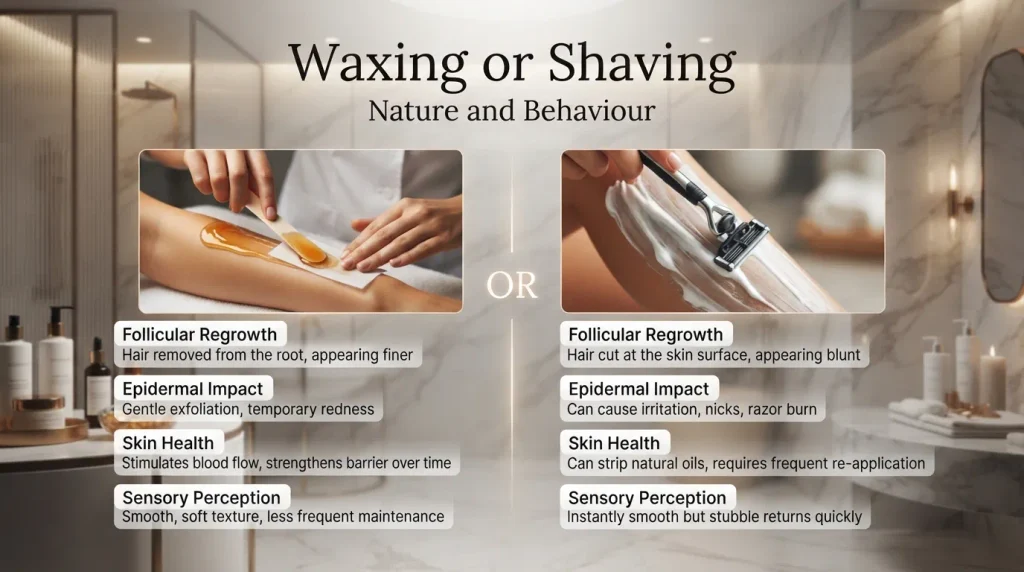
Waxing and shaving both remove unwanted hair, but they suit different needs.
Waxing may suit people who want longer-lasting results. However, it can be painful and may irritate sensitive skin.
Shaving may suit people who want a fast and simple method. However, hair often grows back sooner. Both methods need care to help protect the skin.
Why Do People Confuse Waxing and Shaving?
People often confuse these methods because both remove body hair. They may also use them for the same body areas.
The main difference is simple: waxing pulls hair out from the roots, while shaving cuts hair at the surface.
Waxing vs Shaving: Comparison Table
| Feature | Waxing | Shaving |
| How it works | Pulls hair from roots | Cuts hair at the surface |
| Results | Usually last longer | Usually last a few days |
| Pain | Can hurt | Usually painless if done carefully |
| Time | May take longer | Often quick |
| Cost | Can cost more | Often cheaper at home |
| Skin risks | Redness and bumps | Cuts and razor burn |
| Home use | Needs care and skill | Usually easy |
| Hair growth | Often slower to appear | Often appears sooner |
Origin of Waxing and Shaving
Shaving has been used for a very long time. People in ancient times used sharp tools to remove hair.
Waxing also has a long history. Different cultures used sticky materials to remove unwanted hair. Today, people use special wax products made for hair removal.
British English vs American English
The words waxing and shaving have the same meanings in British and American English.
For example:
- British English: “She is going for waxing.”
- American English: “She is going for waxing.”
In both countries, people use shaving to talk about cutting hair with a razor.
Which One Should You Use?
Choose waxing if you want results that last longer and can handle some pain. Choose shaving if you want a quick method that you can use at home.
Your skin also matters. If your skin is sensitive, test a method carefully before using it on a large area. Avoid waxing skin that is sunburned, damaged, or irritated. Use a clean razor and do not press too hard when shaving.
Common Mistakes
- Thinking waxing and shaving work in the same way.
- Believing shaving makes hair grow back thicker.
- Using a dirty or blunt razor.
- Applying hot wax without checking its temperature.
- Waxing skin that is sore or damaged.
- Forgetting to care for the skin after hair removal.
Remember: Shaving does not make hair grow back thicker. New hair may feel rough because shaving leaves a blunt edge.
Everyday Usage Examples

At home:
- “I shave my legs in the shower.”
- “I use waxing to remove unwanted hair.”
With friends:
- “Do you prefer waxing or shaving?”
- “Shaving is easier for me.”
At a salon:
- “I would like a leg waxing session.”
- “Do you offer shaving services?”
Usage Trends
People use both methods today. Some prefer shaving because it is quick and easy. Others choose waxing because it usually keeps skin smooth for longer.
The best choice depends on personal comfort, cost, time, and skin type. There is no single method that works best for everyone.
Metaphors and Similes
Waxing and shaving do not have many common idioms of their own. However, people may use simple comparisons to describe the results.
- “Her legs feel as smooth as silk.”
- “He finished shaving in the blink of an eye.”
These phrases describe smooth skin and a quick task.
Connotative Meaning
Waxing may suggest beauty care, salon visits, or longer-lasting smooth skin. Shaving may suggest a quick daily routine.
These are common ideas, not fixed meanings. People can choose either method for many reasons.
Idioms and Proverbs
There are no widely used English proverbs that focus only on waxing or shaving. However, people may use the phrase “a close shave” to describe escaping danger by a small amount.
Example: “We had a close shave when the car stopped just in time.”
This phrase does not mean removing body hair.
Literature and Movies
Waxing and shaving often appear in stories and films as part of daily grooming. Characters may shave before work or prepare for a special event.
These actions help show a character’s routine, style, or plans. They are everyday activities rather than special literary terms.
Why Does This Difference Matter?
Knowing the difference helps you choose the right method for your needs. It also helps you use both words correctly in English.
Waxing removes hair from the roots. Shaving cuts hair at the surface. This simple difference explains why the results and risks are not the same.
Usefulness in Daily Life
You may need to remove hair before a trip, party, or special event. Shaving can be useful when you have little time. Waxing may help when you want results that last longer.
Always think about your skin and comfort. Use clean tools, follow product directions, and stop if you notice strong irritation.
Situational Preference
Waxing may be a good choice when you want longer-lasting smooth skin and do not mind some pain. Shaving may be better when you need a quick and simple method at home. Your budget can also affect your choice. Some people use shaving for regular care and waxing for special events. If you have sensitive skin, choose carefully and ask a skin care professional if you are unsure. The best method is the one that suits your needs and keeps your skin comfortable.
Quiz Questions
1. Which method pulls hair out from the roots?
A. Waxing B. Shaving C. Washing D. Brushing
Answer: A. Waxing
2. Which method is often quicker at home?
A. Waxing B. Shaving C. Neither D. Both take the same time
Answer: B. Shaving
3. What can happen after waxing?
A. Hair stops growing forever B. Skin may become red C. Hair changes color D. Skin becomes thicker
Answer: B. Skin may become red
4. Does shaving make hair grow back thicker?
A. Yes, always B. No C. Only in winter D. Only on the legs
Answer: B. No
5. What should you use for safe shaving?
A. A dirty razor B. A blunt blade C. A clean razor D. A sharp stone
Answer: C. A clean razor
Expected Questions
1. Is waxing better than shaving?
Waxing lasts longer for many people. Shaving is often quicker and easier. The best choice depends on your needs.
2. Does waxing hurt?
Yes, waxing can hurt because it pulls hair from the roots. The level of pain varies from person to person.
3. Does shaving make hair grow thicker?
No. Shaving does not change the thickness or speed of hair growth. The blunt ends may feel rough as hair grows back.
4. Which method is cheaper?
Shaving at home often costs less at first. Waxing can cost more, especially at a salon.
5. Can waxing or shaving irritate the skin?
Yes. Waxing may cause redness and bumps. Shaving may cause cuts or razor burn. Careful use can help lower these risks.
6. Can I wax or shave sensitive skin?
Both methods may irritate sensitive skin. Use care, follow product directions, and avoid removing hair from damaged or sore skin.
Conclusion
Waxing or shaving are two common ways to remove unwanted hair. They may seem alike, but they work in different ways. Waxing pulls hair out from the roots, so results usually last longer. Shaving cuts hair at the skin’s surface, so hair often grows back sooner.Waxing may be right for people who want longer-lasting smooth skin. Shaving may be better for people who want a quick and easy method at home. Both methods can cause skin problems if you do not use them carefully. Clean tools and gentle skin care are important.Think about your time, budget, skin type, and comfort before you choose. You do not have to use the same method as other people. The best choice is the one that meets your needs and feels right for your skin.

Mahnoor Afzal is an educator, researcher, and English language content specialist focused on grammar, vocabulary, word differences, and meanings. I combines research, teaching, and SEO expertise to create clear and reliable English learning content at Lengovia.












1 thought on “Waxing or Shaving: Meaning, Differences, and Correct Usage”