
Sudafed may help relieve a blocked nose and sinus pressure. DayQuil may help with a cough, fever, body aches, and other cold symptoms, depending on the product.
Imagine you wake up with a blocked nose before going to work or school. You may look for a medicine that helps you breathe more easily. Another day, you may have a cough, a sore throat, and a fever. You may need a product that treats more than one symptom.
This is why it is useful to know the difference between Sudafed or DayQuil. Both brands offer cold relief products, but their ingredients and uses can vary. Some products may also share ingredients.
Pronunciation of Sudafed and DayQuil
- Sudafed: SOO-duh-fed
- DayQuil: DAY-kwil
These are brand names. Their pronunciation is generally the same in British and American English.
Difference Between Sudafed and DayQuil
1. Meaning
Sudafed is a brand that makes medicines for a blocked nose and other symptoms. Some products contain pseudoephedrine, which helps reduce nasal swelling.
DayQuil is a brand of daytime cold and flu medicines. Some products help with a cough, fever, aches, and a blocked nose.
Examples:
- “My nose is blocked.”
- “I have a cough and a fever.”
2. Main Use
Some Sudafed products focus on a blocked nose and sinus pressure.
DayQuil Cold and Flu products may help with several symptoms at the same time.
Examples:
- “She needs relief from a blocked nose.”
- “He wants relief from a cough and body aches.”
3. Ingredients
Sudafed products can contain different ingredients. Some contain pseudoephedrine.
Some DayQuil Cold and Flu products contain acetaminophen, dextromethorphan, and phenylephrine. Other products may have different ingredients.
Examples:
- “I checked the Sudafed label.”
- “I read the DayQuil ingredients.”
4. Symptoms
Some Sudafed products help with nasal and sinus congestion.
Some DayQuil products help with congestion, cough, fever, headache, and minor body aches. The exact symptoms treated depend on the product.
Examples:
- “My nose feels blocked.”
- “My cough and fever bother me.”
5. Number of Symptoms
A single-ingredient Sudafed product may focus on one main problem, such as a blocked nose.
A multi-symptom DayQuil product may treat several problems at once.
Examples:
- “She checks a medicine for nasal congestion.”
- “He checks a medicine for several cold symptoms.”
6. Form
Sudafed comes in different forms, including tablets and some liquid or nasal products.
DayQuil also comes in different forms, such as liquids, capsules, and some powders mixed with water. Available forms vary by product and location.
Examples:
- “She reads the tablet label.”
- “He measures the liquid carefully.”
7. Daytime Use
DayQuil is made for daytime cold and flu relief. However, you should still read the label and follow its directions.
Some Sudafed products may also be used during the day. However, they can cause nervousness or trouble sleeping.
Examples:
- “I read the directions before work.”
- “She checks for possible side effects.”
8. Side Effects
Sudafed products that contain pseudoephedrine may cause nervousness, dizziness, or trouble sleeping. They may also raise blood pressure.
DayQuil side effects depend on its ingredients. Products containing acetaminophen can cause serious liver harm if taken in excess.
Examples:
- “He asks about possible side effects.”
- “She follows the dose on the label.”
9. Cost
The price of Sudafed and DayQuil depends on the product, size, shop, and location. Neither brand is always cheaper.
Examples:
- “She compares the prices.”
- “He checks the pack size.”
10. Best Choice
Neither brand is always the best choice for everyone. The right medicine depends on your symptoms, health, other medicines, and the product’s ingredients.
Examples:
- “She asks a pharmacist about her blocked nose.”
- “He checks which symptoms the product treats.”
You may also read https://lengovia.com/waxing-and-shaving/
Nature and Behaviour
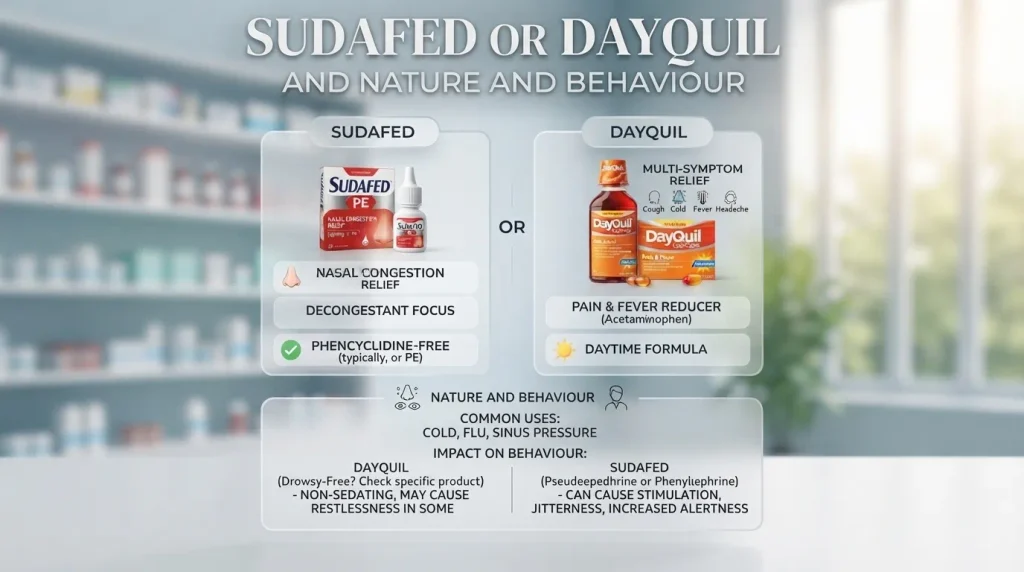
Sudafed and DayQuil are medicine brands. They can help ease symptoms, but they do not cure the cold or flu itself.
Some Sudafed products mainly help with a blocked nose. Some DayQuil products treat several symptoms. Always read the label because products with similar names may have different ingredients.
Why Do People Confuse Sudafed and DayQuil?
People often confuse these brands because both are used for cold symptoms. Both may help with a blocked nose, and some products may have similar ingredients.
However, their uses are not always the same. The product label helps you see which symptoms a medicine treats.
Sudafed vs DayQuil: Comparison Table
| Feature | Sudafed | DayQuil |
| Main focus | Often a blocked nose | Often several cold symptoms |
| Common ingredient | Pseudoephedrine in some products | Ingredients vary by product |
| Cough relief | Depends on the product | Some products help with cough |
| Fever relief | Depends on the product | Some products help reduce fever |
| Available forms | Varies by product | Varies by product |
| Side effects | Depend on ingredients | Depend on ingredients |
| Best choice | Depends on symptoms and health | Depends on symptoms and health |
Origin of Sudafed and DayQuil
Sudafed is a brand known for medicines that help with nasal congestion. DayQuil is a brand known for daytime cold and flu relief.
Both names are brand names, not general words for all cold medicines.
British English vs American English
Sudafed and DayQuil are brand names, so their names do not change between British and American English.
However, products sold in different countries may have different ingredients, names, or instructions. Always check the pack in your country.
Which One Should You Use?
The right choice depends on your symptoms and health.
- If your main problem is a blocked nose, a suitable Sudafed product may help.
- If you have several symptoms, such as a cough, fever, and body aches, a suitable DayQuil product may help.
These are general examples, not personal medical advice. Ask a pharmacist or doctor if you are unsure which medicine is safe for you.
Important: Do not take Sudafed and DayQuil together without checking with a pharmacist or doctor. Some products contain similar ingredients or medicines that may not be safe to combine. People with high blood pressure or heart disease should ask a health professional before using pseudoephedrine.
Common Mistakes
- Thinking all Sudafed products have the same ingredients.
- Thinking every DayQuil product treats the same symptoms.
- Taking two cold medicines without checking their ingredients.
- Taking more medicine than the label allows.
- Ignoring warnings about blood pressure or other health problems.
- Assuming these medicines cure a cold or flu.
Everyday Usage Examples
At home:
- “My nose is blocked.”
- “I have a cough and a fever.”
For a pharmacy:
- “Which medicine may help my symptoms?”
- “Can you check these ingredients for me?”
At work or school:
- “I feel unwell today.”
- “I need to follow the medicine directions.”
Usage Trends
People use cold and flu medicines to help manage symptoms. Some choose products that focus on a blocked nose. Others choose multi-symptom products.
There is no single product that is best for everyone. The right choice depends on the symptoms, ingredients, and health needs of the person taking it.
Metaphors and Similes
Sudafed and DayQuil do not have common idioms or similes based on their brand names.
People may use simple phrases to explain how they feel:
- “My nose feels blocked like a closed door.”
- “My head feels heavy like a stone.”
These phrases describe symptoms. They do not explain how the medicines work.
Connotative Meaning
Sudafed may make people think of a blocked nose or sinus pressure. DayQuil may make people think of daytime relief from cold and flu symptoms.
These are general ideas about the brands. The exact purpose depends on the product.
Idioms and Proverbs
There are no widely used English idioms or proverbs based on Sudafed or DayQuil.
People may say, “I am under the weather,” when they feel sick. This phrase means that a person does not feel well.
Literature and Movies

Sudafed and DayQuil are brand names, not common literary terms. They may appear in modern stories or films when a character has a cold. Their use depends on the story and does not give the brands a special literary meaning.
Why Does This Difference Matter?
Knowing the difference can help you understand medicine labels. It can also help you avoid taking the wrong product for your symptoms.
Some medicines treat one main problem. Others treat several symptoms. Reading the label helps you understand what each product does.
Usefulness in Daily Life
You may need cold relief when you have a blocked nose, a cough, or a fever. Before buying medicine, write down your symptoms and check the product label.
Ask a pharmacist if you take other medicines or have a health problem. Follow the directions and do not take more than the stated amount.
Situational Preference
Sudafed may suit a person whose main problem is a blocked nose, depending on the exact product. DayQuil may suit someone who needs relief from several cold symptoms, depending on its ingredients. However, you should not choose a medicine by brand name alone. Read the label and check the warnings. If you have high blood pressure, heart disease, or take other medicines, ask a pharmacist or doctor first. Safe use matters more than choosing one brand over the other.
MCQs: Sudafed or DayQuil
1. What do some Sudafed products help relieve?
A. A blocked nose B. A broken bone C. A tooth hole D. A skin cut
Answer: A. A blocked nose
2. What may some DayQuil products help with?
A. A cough and fever B. A broken arm C. A cut finger D. A sore foot from injury
Answer: A. A cough and fever
3. What should you check before taking cold medicine?
A. The box color only B. The price only C. The label and ingredients D. The size of the shop
Answer: C. The label and ingredients
4. Should you combine Sudafed and DayQuil without checking first?
A. Yes, always B. No C. Only at night D. Only with food
Answer: B. No
5. What should you do if you are unsure which medicine is safe?
A. Guess B. Take extra medicine C. Ask a pharmacist or doctor D. Ignore the label
Answer: C. Ask a pharmacist or doctor
Possible Questions
1. Is Sudafed or DayQuil better?
Neither is always better. It depends on your symptoms and the exact product.
2. Does Sudafed help with a blocked nose?
Some Sudafed products help relieve nasal congestion and sinus pressure.
3. Does DayQuil help with a cough?
Some DayQuil products contain a cough medicine. Check the label to confirm the ingredients.
4. Can I take Sudafed and DayQuil together?
Do not combine them without asking a pharmacist or doctor. Some products may have overlapping ingredients.
5. Can Sudafed raise blood pressure?
Sudafed products containing pseudoephedrine can raise blood pressure. Ask a health professional before use if you have high blood pressure or heart disease.
6. Do Sudafed and DayQuil cure a cold?
No. These medicines may help relieve symptoms, but they do not cure the cold itself.
Conclusion
Sudafed or DayQuil are two brands used to help with cold symptoms. However, they do not always serve the same purpose. Some Sudafed products mainly help with a blocked nose and sinus pressure. Some DayQuil products help with several symptoms, such as a cough, fever, and body aches.The best choice depends on the symptoms you have and the ingredients in the product. Do not choose a medicine by its name alone. Read the label and follow the directions. Also, do not combine cold medicines without checking with a pharmacist or doctor. This is important because some products may contain similar ingredients. If you have a health problem or take other medicines, ask for advice before use.Remember: The right medicine is the one that safely matches your symptoms. Always put safe use first.

Mahnoor Afzal is an educator, researcher, and English language content specialist focused on grammar, vocabulary, word differences, and meanings. I combines research, teaching, and SEO expertise to create clear and reliable English learning content at Lengovia.












1 thought on “Sudafed or DayQuil: Meaning, Differences, Uses, and Examples”