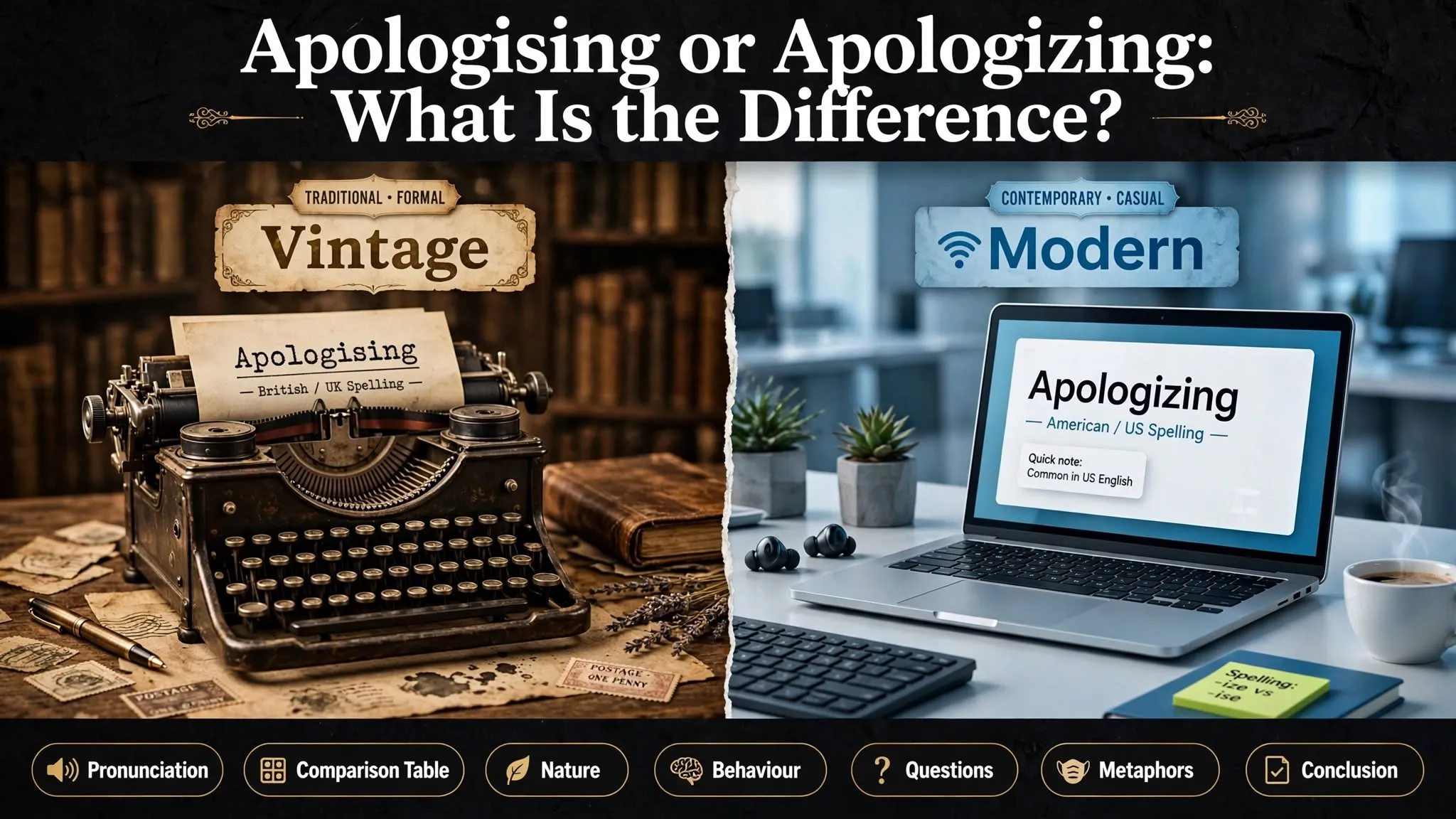
Apologising is common in British English, while apologizing is common in American English. Both mean saying sorry.
Have you ever written a message and stopped at the word apologising or apologizing? You may wonder which spelling is right. Both are correct. However, the spelling changes with the type of English you use.
For example, in British English, you may write, “I am apologising for being late.” On the other hand, in American English, you can write, “I am apologizing for being late.”
Both words have the same meaning. They come from apologise and apologize, which mean to say sorry for something you did wrong. Because of this, you do not need to learn two different meanings.
Pronunciation of Apologising and Apologizing
Both words sound almost the same.
- Apologising: uh-POL-uh-jy-zing
- Apologizing: uh-POL-uh-jy-zing
You May also read https://lengovia.com/ally-or-alley/
Difference Between Apologising and Apologizing
1. They Have the Same Meaning
First, both words mean saying sorry. Therefore, the meaning does not change when you use s or z.
Examples:
- She is apologising to her friend.
- She is apologizing to her friend.
Both sentences mean the same thing.
2. British English Uses Apologising
In British English, apologising is a common spelling. So, you may see it in British books, websites, school work, and emails.
Examples:
- I am apologising for my mistake.
- He is apologising to his teacher.
3. American English Uses Apologizing
On the other hand, apologizing is a common American spelling. You may see it in American books, websites, and messages.
Examples:
- I am apologizing for my mistake.
- He is apologizing to his teacher.
4. The Spelling Is Different
The main difference is one letter.
- Apologising → s
- Apologizing → z
However, the meaning stays the same.
For example:
British: I am apologising.
American: I am apologizing.
5. The Base Word Is Different
The base words also have two spellings.
In British English:
Apologise
In American English:
Apologize
When we add -ing, they become:
Apologise → apologising
Apologize → apologizing
So, the spelling change is easy to see.
6. Both Are Correct
Both forms are correct. However, your choice should match the English style you are using.
For example:
- British: She is apologising.
- American: She is apologizing.
Therefore, neither word is wrong.
7. The Sound Is Almost the Same
When you say the words, they sound almost the same. Because of this, people may hear the word but not know which spelling to write.
For example:
She is apologising.
and
She is apologizing.
Both sound very similar.
8. The Meaning Does Not Change
Next, remember that the spelling does not change the meaning.
- Apologising = saying sorry
- Apologizing = saying sorry
So, if someone says sorry, both words can describe the action.
9. Both Can Be Used in Emails
You can use either spelling in an email. However, you should match the style of your audience.
British:
We are apologising for the delay.
American:
We are apologizing for the delay.
10. Both Can Be Used at School
Both forms can be correct in school writing. However, your teacher or school may prefer one style.
Therefore, if your school uses British English, use apologising. If it uses American English, use apologizing.
Nature and Behaviour of Apologising and Apologizing
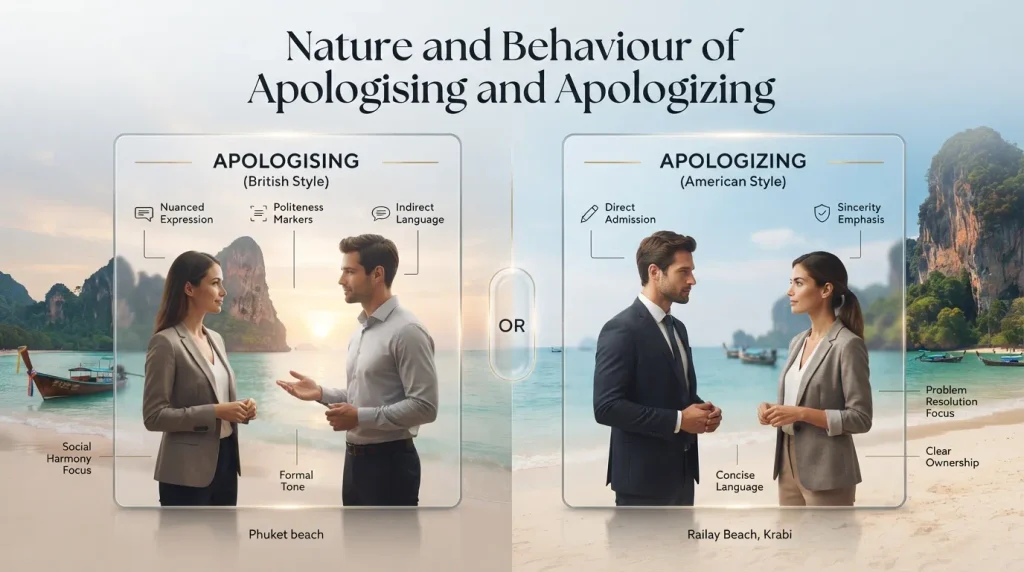
Both words talk about the same action. They show that a person is saying sorry.
A person may apologise because they:
- made a mistake
- came late
- broke something
- hurt someone
- said something bad
- gave the wrong answer
For example:
Tom is apologising to Sam.
Or:
Tom is apologizing to Sam.
As you can see, the meaning is the same.
Why Do People Get Confused About Apologising and Apologizing?
These words are easy to mix up because they look almost the same. However, one letter is different:
- s → apologising
- z → apologizing
There is also a spelling pattern in British and American English.
British English often uses -ise, while American English often uses -ize.
For example:
- apologise / apologize
- organise / organize
- realise / realize
- recognise / recognize
Because of this pattern, you may see both spellings.
Comparison Table
| Point | Apologising | Apologizing |
|---|---|---|
| English style | British | American |
| Meaning | Saying sorry | Saying sorry |
| Base word | Apologise | Apologize |
| Main spelling | s | z |
| Sound | Almost the same | Almost the same |
| Correct? | Yes | Yes |
Therefore, the main difference is spelling, not meaning.
The Origin of Apologising and Apologizing
The word has a long history. It comes from an old Greek word linked to giving an answer or defense. Over time, the word gained the meaning of saying sorry.
Later, English developed different spelling styles. British English often uses -ise, while American English often uses -ize.
As a result, we have forms such as:
apologise → apologising
and
apologize → apologizing
So, the two words have the same basic meaning even though their spelling is different.
British vs American English
The easiest way to remember the difference is:
British English → apologising
American English → apologizing
For example:
British English:
I am apologising for being late.
American English:
I am apologizing for being late.
The meaning is the same. However, the spelling is different.
Therefore, choose the spelling that matches the English style of your writing.
Which One Should You Use?
If you are writing in British English, use apologising.
If you are writing in American English, use apologizing.
For example, if your school uses British English, choose apologising. However, if your school uses American English, choose apologizing.
For a website or blog, pick one English style and use it throughout the article. This keeps your writing clear and neat.
Common Mistakes
Mistake 1: Using “apologise” after “am”
❌ I am apologise for my mistake.
✅ I am apologising for my mistake.
After am, we use the -ing form here.
Mistake 2: Mixing spelling styles
A British English article may use apologising, while an American English article may use apologizing.
Both are correct. However, it is better to keep one style throughout your writing.
Mistake 3: Leaving out a letter
❌ I am apologzing.
✅ I am apologizing.
So, make sure you spell the word correctly.
Mistake 4: Thinking one word is wrong
Some people think apologising or apologizing is wrong. However, both are correct.
The main difference is the spelling style.
Everyday Usage Examples
In Emails
British:
I am apologising for the delay.
American:
I am apologizing for the delay.
On Social Media
British:
I am apologising for my post.
American:
I am apologizing for my post.
At School
British:
I am apologising to my teacher.
American:
I am apologizing to my teacher.
At Work
British:
We are apologising for the error.
American:
We are apologizing for the error.
Thus, both forms are useful in daily writing.
Usage Trends
Apologizing is very common in American English. Apologising is very common in British English.
However, you may see both forms online because people from many countries use English.
For example, a website may use British English, while another website may use American English. Similarly, a school, book, or company may choose its own style.
Therefore, do not worry if you see both spellings.
Metaphors and Similes
These words are usually used in a simple way. For example:
She is apologising to her friend.
However, the idea of saying sorry can also be used in a more creative way.
For example:
His kind words were a bridge after the fight.
Here, bridge is not a real bridge. Instead, it means his kind words helped the two people become friends again.
Connotative Meaning
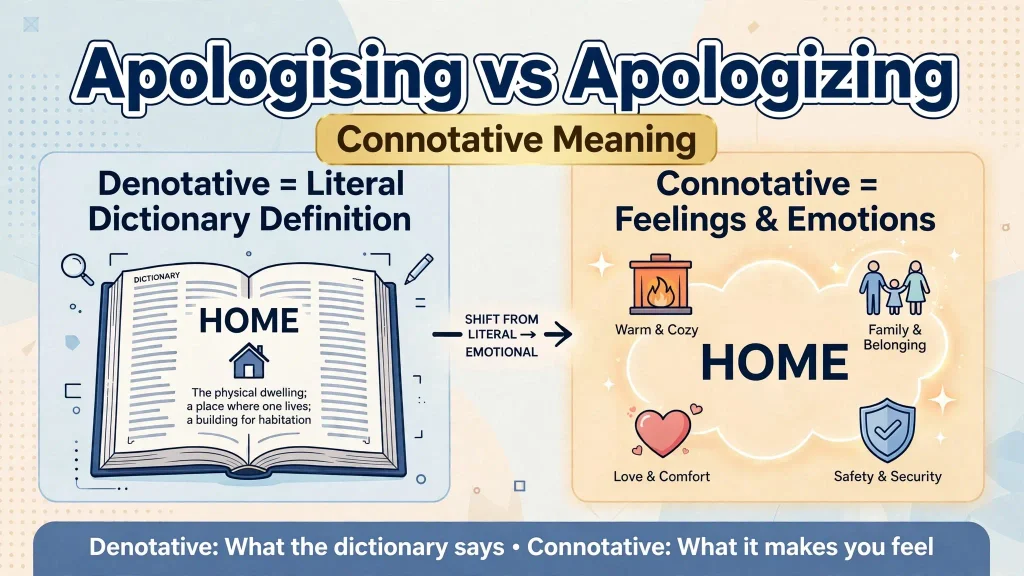
Both words can show that a person feels sorry. They may show:
- care
- regret
- respect
- kindness
For example:
She is apologising for being rude.
This tells us that she knows her words were not nice.
Likewise:
She is apologizing for being rude.
The feeling is the same. Only the spelling changes.
Idioms and Common Phrases
There are several common phrases with apologise and apologize.
Apologise for Something
I am apologising for my mistake.
In American English:
I am apologizing for my mistake.
Apologise to Someone
She is apologising to her friend.
In American English:
She is apologizing to her friend.
Sincerely Apologise
We sincerely apologise for the problem.
In American English:
We sincerely apologize for the problem.
So, the phrase stays the same, but the spelling can change.
Literature and Movies
People in books and movies often make mistakes and then say sorry. Therefore, writers may use apologising or apologizing in their stories.
A British writer may use apologising. On the other hand, an American writer may use apologizing.
For example, a story written in British English may say:
She was apologising to her friend.
An American text may say:
She was apologizing to her friend.
Thus, the spelling can help show the English style of the text.
Why This Difference Matters
Knowing this small difference can make your writing better. If you use British English, apologising fits that style. If you use American English, apologizing fits that style.
This can help in:
- school work
- emails
- blogs
- websites
- work papers
- messages
Most importantly, remember that the meaning is the same.
Usefulness in Daily Life
You may use these words when you say sorry.
For example:
I am apologising for being late.
Or:
I am apologizing for being late.
You can also talk about another person.
She is apologising to her mother.
Or:
He is apologizing to his friend.
Therefore, both forms are easy and useful in daily English.
Situational Preference
Use apologising when you write in British English. On the other hand, use apologizing when you write in American English. Both words mean “saying sorry.” If your school or teacher uses British English, choose apologising. However, if your school or teacher uses American English, choose apologizing. For a website, choose one style and use it all the way through. This keeps your writing neat and clear. You do not need to learn two different meanings. Instead, remember the spelling: s is common in British English, while z is common in American English.
Possible Questions
1. Is “apologising” correct?
Yes. Apologising is correct and common in British English.
2. Is “apologizing” correct?
Yes. Apologizing is correct and common in American English.
3. Do they mean the same thing?
Yes. Both mean saying sorry.
4. Which spelling is British?
Apologising is the common British spelling.
5. Which spelling is American?
Apologizing is the common American spelling.
6. Do they sound the same?
They sound almost the same in normal speech.
7. Which one should I use?
Use apologising for British English and apologizing for American English. However, always check the style used by your school, website, or workplace.
Conclusion
Apologising or apologizing is easy to understand once you know the spelling rule. Both words are correct, and both mean saying sorry. However, the spelling can change based on the English style.In British English, apologising is common. In American English, apologizing is common. For example, a British writer may say, “I am apologising for my mistake.” An American writer may say, “I am apologizing for my mistake.”The meaning does not change. Also, the words sound almost the same. Therefore, you only need to remember the spelling.If you write for a British audience, use apologising. On the other hand, if you write for an American audience, use apologizing. For school work, emails, blogs, and websites, it is best to follow the style used by your audience.In short:🇬🇧 British → Apologising🇺🇸 American → ApologizingBoth are right. So, choose the spelling that matches your English style.

Mahnoor Afzal is an educator, researcher, and English language content specialist focused on grammar, vocabulary, word differences, and meanings. I combines research, teaching, and SEO expertise to create clear and reliable English learning content at Lengovia.