
Alluding and eluding are two English words that sound alike but have different meanings.
Alluding means talking about something without saying it directly. For example, a person may allude to a secret without telling the whole story.
Eluding means escaping someone or something, or being hard to find, catch, or understand. For example, a runner may elude a police officer.
People often confuse these words because they look and sound similar. However, their meanings are different. Alluding is about hinting at something, while eluding is about escaping or avoiding something.
Alluding or Eluding: Pronunciation
- Alluding: uh-LOO-ding
- Eluding: ih-LOO-ding
Both words have three syllables and end with “-luding,” but they begin with different vowel sounds.
Difference Between Alluding and Eluding
1. Meaning
Alluding means making an indirect mention of something.
Eluding means escaping or avoiding someone or something.
Examples:
- She was alluding to her old job.
- The fox was eluding the dogs.
2. Main Purpose
Alluding helps a person give a hint without saying something clearly.
Eluding describes getting away from something or staying out of reach.
Examples:
- He was alluding to a past mistake.
- The thief kept eluding the police.
3. Use in Sentences
Alluding is often used when someone talks about a person, event, idea, or story indirectly.
Eluding is often used when someone escapes, avoids capture, or cannot be understood.
Examples:
- The teacher was alluding to a famous story.
- The answer was eluding me.
4. Word Form
Alluding comes from the verb allude.
Eluding comes from the verb elude.
Examples:
- She is alluding to the problem.
- He is eluding the guards.
5. Talking About People
Alluding can mean giving a hint about a person without naming them.
Eluding can mean avoiding a person who is trying to find or catch you.
Examples:
- She was alluding to her friend.
- The man was eluding the guards.
6. Talking About Ideas
Alluding can point to an idea without explaining it fully.
Eluding can describe an idea or answer that is hard to understand or find.
Examples:
- The writer was alluding to an old idea.
- The answer was eluding the student.
7. Use in Stories
Writers use alluding to give hints about people, events, or other stories.
They use eluding to show that someone or something is hard to catch or reach.
Examples:
- The story was alluding to an old legend.
- The hero was eluding his enemies.
8. Grammar
Both words often appear after helping verbs such as is, was, and were. They can also follow words such as by or for in some sentences.
Examples:
- He was alluding to the news.
- She was eluding the guards.
9. Common Meaning Clues
When you see alluding, look for a hint or an indirect mention.
When you see eluding, look for escape, avoidance, or something that is hard to reach or understand.
Examples:
- His words were alluding to a secret.
- The solution was eluding us.
10. Easy Way to Remember
Think of alluding as giving a hint. Think of eluding as getting away.
Examples:
- She was alluding to a surprise.
- The rabbit was eluding the dog.
Nature and Behaviour
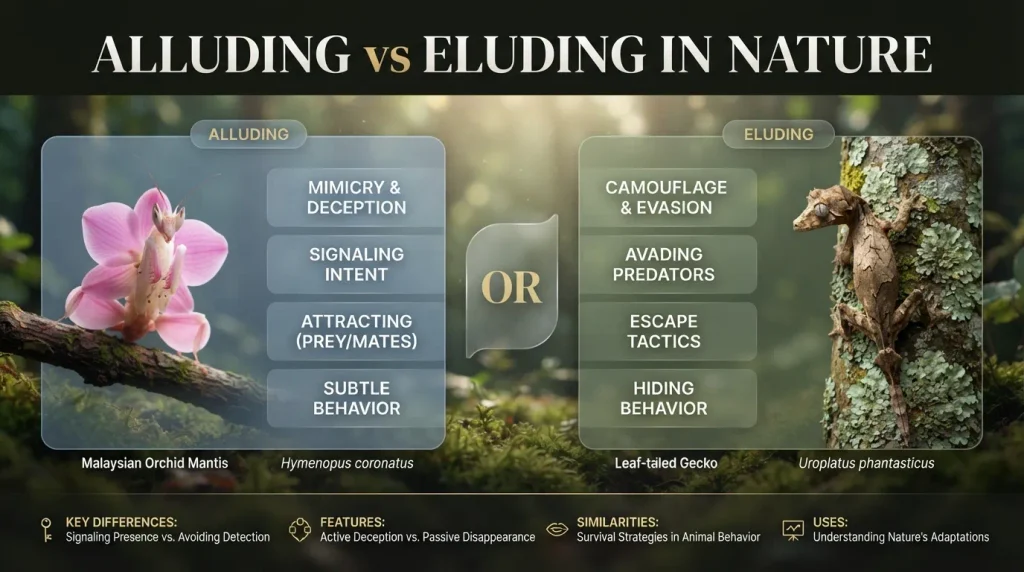
Alluding is a way of speaking or writing. A person uses it to point to something without saying it directly.
For example, a friend may say, “Someone in this room has a big secret.” The friend may be alluding to a person without naming them.
Eluding is about escaping or staying out of reach. It can describe a person, an animal, or even an answer that is hard to find.
For example, a rabbit may elude a dog. A hard question may also elude a student.
You can also read https://lengovia.com/crm-or-cms/
Why Do People Get Confused?
People confuse alluding and eluding because the words look and sound similar. Both end in “-luding,” too.
However, their meanings are different. Alluding means making an indirect mention. Eluding means escaping or being hard to catch, find, or understand.
Remember this simple rule: alluding means hinting, while eluding means escaping.
Alluding vs Eluding: Comparison Table
| Feature | Alluding | Eluding |
| Base word | Allude | Elude |
| Main meaning | Hinting at something | Escaping or avoiding |
| Main use | Speech and writing | Escape, avoidance, or difficulty |
| Common clue | An indirect mention | Something hard to catch or find |
| Example | She was alluding to a secret. | The cat was eluding the dog. |
| Related idea | Hint | Escape |
| Can describe a person? | Yes, when referring to them indirectly | Yes, when they avoid being caught |
| Can describe an answer? | Yes, when a person hints at it | Yes, when it is hard to find |
| Common setting | Talks, books, and writing | Stories, searches, and problems |
| Easy reminder | Give a hint | Get away |
Origin of Alluding and Eluding
The word allude comes from a Latin word linked to playing or making a reference. Over time, it came to mean referring to something indirectly.
The word elude also comes from Latin. It developed the meaning of escaping or avoiding something.
Today, both words are used in everyday English, books, news, and formal writing.
British vs American English
Alluding and eluding have the same meanings and spellings in British and American English.
- British English: alluding, eluding
- American English: alluding, eluding
There is no spelling change between the two forms of English.
Which One Should You Use?
Use alluding when someone hints at something without saying it clearly.
Example: “The speaker was alluding to a recent event.”
Use eluding when someone escapes or something is hard to find or understand.
Example: “The answer was eluding me.”
Before choosing a word, ask yourself what the sentence means. Is someone giving a hint, or is someone or something getting away? This simple question can help you choose the right word.
Common Mistakes
Here are some common mistakes to avoid.
– Mistake: She was eluding to a secret.
Correct: She was alluding to a secret.
– Mistake: The rabbit was alluding the dog.
Correct: The rabbit was eluding the dog.
– Mistake: Alluding means running away.
Correct: Eluding can mean escaping or avoiding.
– Mistake: Eluding means giving a hint.
Correct: Alluding means giving an indirect hint.
– Mistake: Alluding and eluding are the same.
Correct: They have different meanings.
Everyday Usage
Both words can be used in daily life, but they fit different situations.
Alluding examples:
- “Are you alluding to my last message?”
- “She was alluding to a family problem.”
Eluding examples:
- “The dog was eluding the farmer.”
- “The answer is eluding me.”
Usage Trends
Alluding often appears in writing, news, books, and talks. Writers may use it when they want to hint at a person, event, or idea.
Eluding often appears in stories, news reports, and talks about problems. It may describe a person who avoids capture or an answer that is hard to find.
Both words are useful, but they cannot be used in place of each other.
Metaphors and Similes
A metaphor describes one thing as another. A simile compares two things using words such as like or as.
You can think of alluding as leaving a small clue. A person gives a hint and lets others work out the meaning.
You can think of eluding as trying to catch a slippery fish. The fish keeps getting away.
These simple pictures can help you remember the difference.
Connotative Meaning
Alluding can suggest that a person wants to hint at something without saying it openly. The hint may be kind, funny, or serious.
Eluding can suggest that something is hard to catch, reach, or understand. It may describe a real escape or a difficult problem.
The feeling of each word depends on the sentence in which it appears.
Idioms and Proverbs
Neither alluding nor eluding has a common idiom that always uses the word. However, these phrases can help explain their meanings.
- Drop a hint: Give a small clue. This is close to alluding.
- Beat a hasty retreat: Leave a place quickly. This can relate to escaping.
- Slip through someone’s fingers: Escape or be lost when someone tries to hold on to something. This is close to eluding.
These phrases have related meanings, but they are not exact replacements for the two words.
Literature and Movies
Writers often use alluding to point to another story, person, or event without explaining it fully. For example, a writer may allude to a well-known fairy tale.
Eluding often appears in adventure, mystery, and action stories. A hero may be eluding an enemy, or a clue may keep eluding a detective.
Both words help writers explain ideas and actions in different ways.
Why Does This Difference Matter?
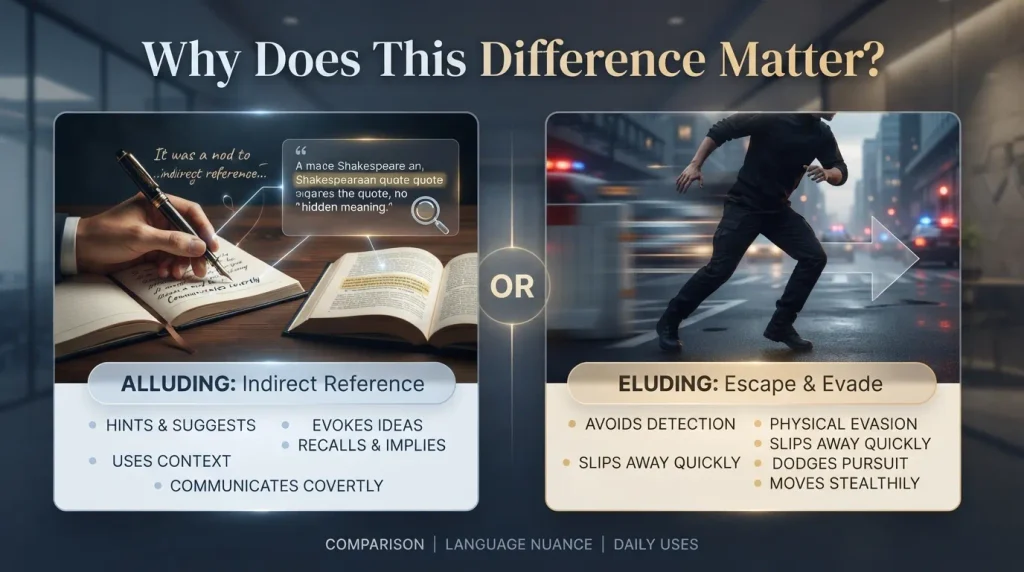
Using the right word makes your meaning clear.
If you write, “The speaker was alluding to a secret,” you mean the speaker was hinting at it.
If you write, “The secret was eluding the detective,” you mean the detective could not find or understand it.
Choosing the wrong word may change the meaning of your sentence. Learning this difference can help you write more clearly.
Usefulness in Daily Life
You may use alluding when talking about hints, stories, or indirect messages. You may use eluding when talking about escape, searches, or hard questions.
For example, a friend may be alluding to a surprise party. A missing key may be eluding you if you cannot find it.
Knowing both words can improve your reading, writing, and speaking skills.
Situational Preference
Choose alluding when a person refers to something without saying it directly. It is useful when talking about hints, hidden meanings, and stories. Choose eluding when someone escapes or something stays hard to find, catch, or understand. For example, a writer may be alluding to a famous book, while a police officer may be trying to catch a person who is eluding the police. Think about the action in the sentence before choosing the word.
Fill in the Blanks
Complete each sentence with alluding or eluding.
- The speaker was ______ to an old story.
- The rabbit was ______ the dog.
- She was ______ to a secret.
- The answer was ______ the student.
- He was ______ to the problem without naming it.
Answers: 1. alluding; 2. eluding; 3. alluding; 4. eluding; 5. alluding.
Multiple-Choice Questions
1. What does alluding mean?
A. Giving a hint B. Running fast C. Sleeping D. Shouting
Answer: A. Giving a hint
2. What does eluding often mean?
A. Writing a story B. Escaping or avoiding C. Giving a gift D. Making a meal
Answer: B. Escaping or avoiding
3. Which sentence uses alluding correctly?
A. The fox was alluding the dog. B. She was alluding to a secret. C. He alluding the bus. D. The cat alluding away.
Answer: B. She was alluding to a secret.
4. Which sentence uses eluding correctly?
A. He was eluding to a story. B. She was eluding a hint. C. The thief was eluding the police. D. They eluding a book.
Answer: C. The thief was eluding the police.
5. Which word means hinting at something?
A. Eluding B. Alluding C. Running D. Hiding
Answer: B. Alluding
Possible Questions
1. What is the difference between alluding and eluding?
Alluding means hinting at something. Eluding means escaping or being hard to catch, find, or understand.
2. Is alluding the same as mentioning?
Not quite. Alluding means referring to something indirectly rather than saying it clearly.
3. Can eluding mean something is hard to understand?
Yes. For example, “The meaning was eluding me” means the meaning was hard for me to understand.
4. What word comes after alluding?
The word to often follows alluding. For example, “She was alluding to the news.”
5. Can a person elude the police?
Yes. It means the person avoids being caught by the police.
6. Are alluding and eluding spelled the same in the UK and US?
Yes. Both words have the same spelling in British and American English.
7. How can I remember these words?
Remember that alluding means hinting and eluding means escaping.
Conclusion
Alluding or eluding look and sound alike, but they have different meanings. Alluding means making an indirect mention of something. Eluding means escaping, avoiding, or being hard to find or understand. You might allude to a secret when you give someone a hint. A rabbit might elude a dog when it gets away. These examples show why the words cannot replace each other. Remember the simple rule: alluding is hinting, and eluding is escaping.

Mahnoor Afzal is an educator, researcher, and English language content specialist focused on grammar, vocabulary, word differences, and meanings. I combines research, teaching, and SEO expertise to create clear and reliable English learning content at Lengovia.












1 thought on “Alluding or Eluding: What Is the Difference?”