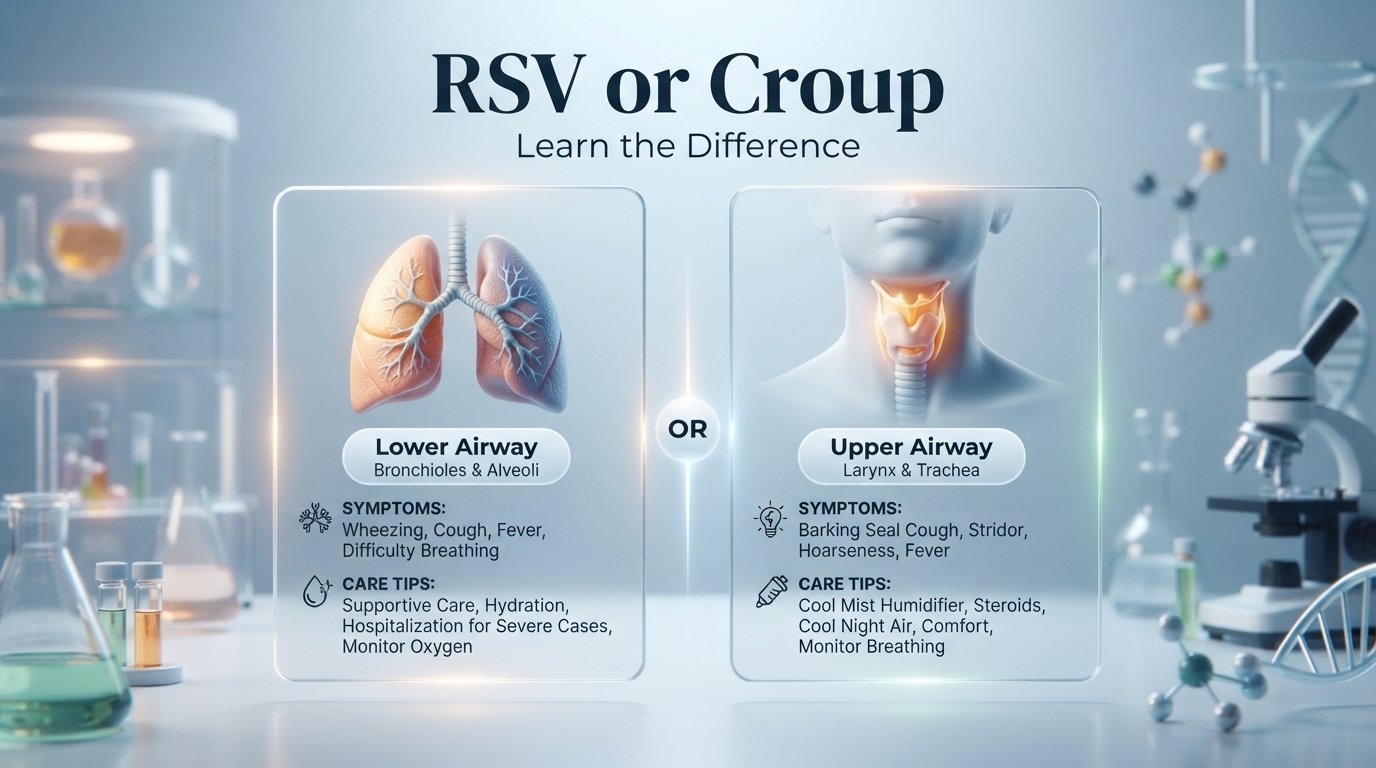
RSV or croup? Both can make a child cough and have trouble breathing. But they are not the same.
RSV is a virus. It can cause a cold and may affect the lungs. It can make some babies and young children very sick.
Croup is an illness that makes the upper airway swell. This can cause a loud cough that sounds like a dog barking. A child may also make a rough sound when breathing in.
Parents may mix up RSV or croup because both can start with a runny nose, cough, or fever. However, some signs are different. RSV may cause wheezing, while croup often causes a barking cough.
Knowing the difference can help parents understand what they see. Still, a cough alone cannot tell you which illness a child has. A doctor can check the child and suggest the right care.
Important: Get emergency medical help if a child struggles to breathe, has blue or gray lips, or is hard to wake.
RSV or Croup: Pronunciation
- RSV: Say each letter: “R-S-V.”
- Croup: Say it like “kroop.”
These words have different meanings, even though both relate to breathing problems.
Difference Between RSV and Croup
1. Meaning
RSV is short for respiratory syncytial virus. It is a virus that can affect the breathing system.
Croup is an illness that causes swelling near the voice box and windpipe.
Examples:
- The baby has RSV.
- The child has croup.
2. Main Cause
RSV is caused by the RSV virus.
Croup is usually caused by a virus, too. Several viruses can cause it. RSV can sometimes cause croup.
Examples:
- RSV is the name of a virus.
- A virus can cause croup.
3. Type of Cough
RSV may cause a wet or dry cough.
Croup often causes a barking cough. It may sound like a seal or dog barking.
Examples:
- RSV may cause a cough with a runny nose.
- Croup may cause a loud, barking cough.
4. Breathing Sounds
Some children with RSV may wheeze. Wheezing is a high sound when breathing.
Children with croup may make a rough sound when breathing in. This sound can happen when the upper airway becomes narrow.
Examples:
- The child with RSV may wheeze.
- The child with croup may make a rough sound when breathing in.
5. Who Can Get It?
People of all ages can get RSV. Babies and older adults may become very sick.
Croup is most common in young children, often between six months and three years old.
Examples:
- A baby can get RSV.
- A young child can get croup.
6. When Signs Start
Both illnesses can begin with cold-like signs.
Croup often gets worse at night. RSV signs may grow worse over several days.
Examples:
- A child with croup may cough more at night.
- A child with RSV may first have a runny nose.
7. Body Parts Affected
RSV can affect the nose, breathing tubes, and lungs.
Croup mainly affects the upper airway near the voice box.
Examples:
- RSV can affect the lungs.
- Croup can cause swelling near the voice box.
8. How Long They Last
Many children with mild RSV get better in one to two weeks.
Croup often gets better in a few days, but the cough may last longer.
Examples:
- Mild RSV may last one or two weeks.
- Croup often improves within a few days.
9. Treatment
Mild RSV often needs rest, fluids, and close care. Some children need help from a doctor.
A doctor may give medicine to reduce swelling from croup.
Examples:
- A child with mild RSV may need fluids.
- A child with croup may need medicine to reduce swelling.
10. When to Get Help
Both illnesses can become serious.
Get urgent medical help if a child has hard or fast breathing, cannot drink, or seems much worse than usual.
Examples:
- Hard breathing needs medical care.
- A child who is hard to wake needs urgent help.
Nature and Behaviour
RSV often starts like a common cold. A child may have a runny nose, cough, fever, or less interest in food. Some children may wheeze or have trouble breathing.
Croup affects the upper airway. Swelling in this area can cause a barking cough and a hoarse voice. The cough may get worse at night.
Both illnesses can be mild, but some children need medical care.
You may also read :https://lengovia.com/cryptocom-or-coinbase/
Why Do People Get Confused?
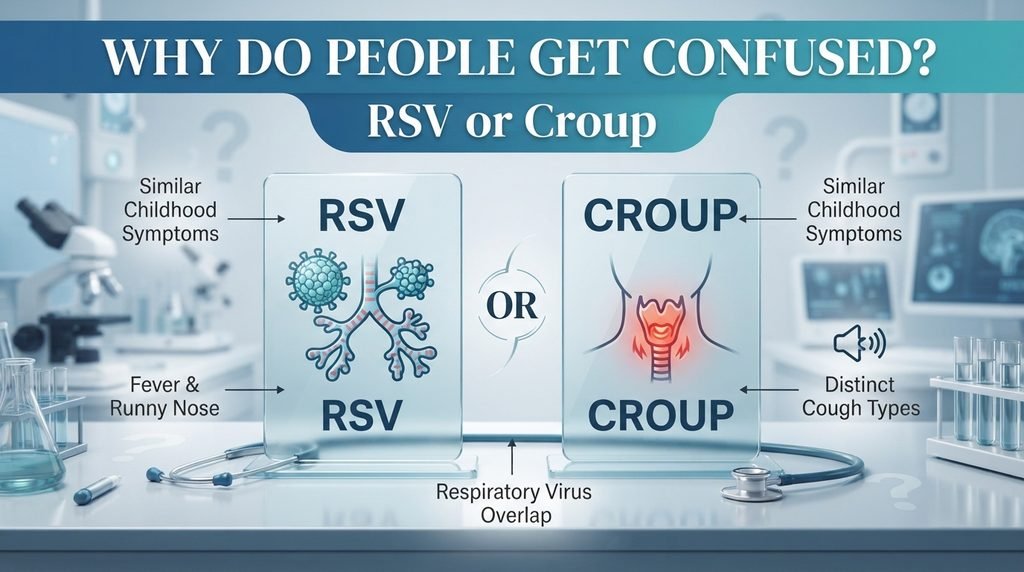
People confuse RSV and croup because both can cause a cough, runny nose, and fever.
The sound of the cough may give a clue. RSV can cause wheezing. Croup often causes a barking cough.
However, these signs can overlap. A doctor may need to check the child to find the cause.
Comparison Table
| Feature | RSV | Croup |
| What it is | A virus | An illness that causes airway swelling |
| Main signs | Runny nose, cough, fever | Barking cough, hoarse voice |
| Breathing sound | May cause wheezing | May cause a rough sound when breathing in |
| Main area affected | Nose, airways, and lungs | Upper airway |
| Who can get it? | People of all ages | Mostly young children |
| When it may get worse | Often over several days | Often at night |
| Usual care | Fluids, rest, and watching symptoms | May need medicine to reduce swelling |
| Can it be serious? | Yes | Yes |
Origin of RSV and Croup
RSV stands for respiratory syncytial virus. It is the name of a virus that affects the breathing system.
Croup is the name of an illness that causes swelling in the upper airway. Different viruses can cause it.
So, RSV names a virus, while croup names an illness. RSV can sometimes cause croup.
British vs American English
RSV and croup have the same meanings in British and American English.
- RSV: Say the letters R-S-V.
- Croup: Say it like “kroop.”
There is no spelling change between the two forms of English.
Which One Should You Use?
Use RSV when you mean the virus.
Use croup when you mean the illness that causes swelling in the upper airway and often leads to a barking cough.
For example, a doctor may say, “The baby has RSV.” A doctor may also say, “The child has croup.”
Do not try to name an illness from one sign alone. Ask a health care worker if you are worried about a child’s health.
Common Mistakes
– Mistake: RSV and croup are the same.
Correct: RSV is a virus, and croup is an illness.
– Mistake: Only babies can get RSV.
Correct: People of all ages can get RSV.
– Mistake: Every barking cough means croup.
Correct: A barking cough is common with croup, but other illnesses can cause similar signs.
– Mistake: Croup is always mild.
Correct: Some children have serious breathing problems.
– Mistake: Antibiotics cure RSV.
Correct: Antibiotics do not kill viruses.
Everyday Usage
You may hear these words at a doctor’s office, in a school message, or in a health article.
RSV examples:
- “The baby has RSV.”
- “RSV can cause a runny nose and cough.”
Croup examples:
- “The child has a barking cough from croup.”
- “The doctor gave medicine for croup.”
These sentences show how people use both words in natural, everyday English.
Usage Trends
RSV and croup are common terms in child health care. Parents may search for them when a child has a cough or trouble breathing.
People may look up RSV when they notice cold-like signs or wheezing. They may look up croup when a cough sounds like a bark.
The signs can be alike, so online information cannot always tell you which illness a child has.
Metaphors and Similes
A simile compares two things using words such as like or as.
Croup is often described with the phrase “a cough like a barking dog.” This helps people understand the sound.
RSV does not have one special simile that everyone uses. People may describe its cough as wet or dry.
These words describe sounds. They do not prove which illness a child has.
Connotative Meaning
The words RSV and croup may worry parents because both can affect breathing.
RSV may sound scary because it can make some babies very sick. Croup may sound scary because its barking cough can start at night.
But the name alone does not tell you how sick a child is. Watch the child’s signs and seek medical help when needed.
Idioms and Proverbs
There are no common English idioms that mean RSV or croup. However, these phrases may help when talking about illness:
- Under the weather: Feeling sick.
- Catch a cold: Become sick with a cold.
- A barking cough: A cough that sounds like a bark.
These phrases help people talk about symptoms. They do not tell you which illness someone has.
Literature and Movies
RSV and croup are health terms, not the names of well-known books or films.
Books about child health may explain these illnesses. Health videos may also show their signs and explain when a child needs care.
When reading or watching health content, remember that a cough alone cannot confirm RSV or croup.
Why Does This Difference Matter?
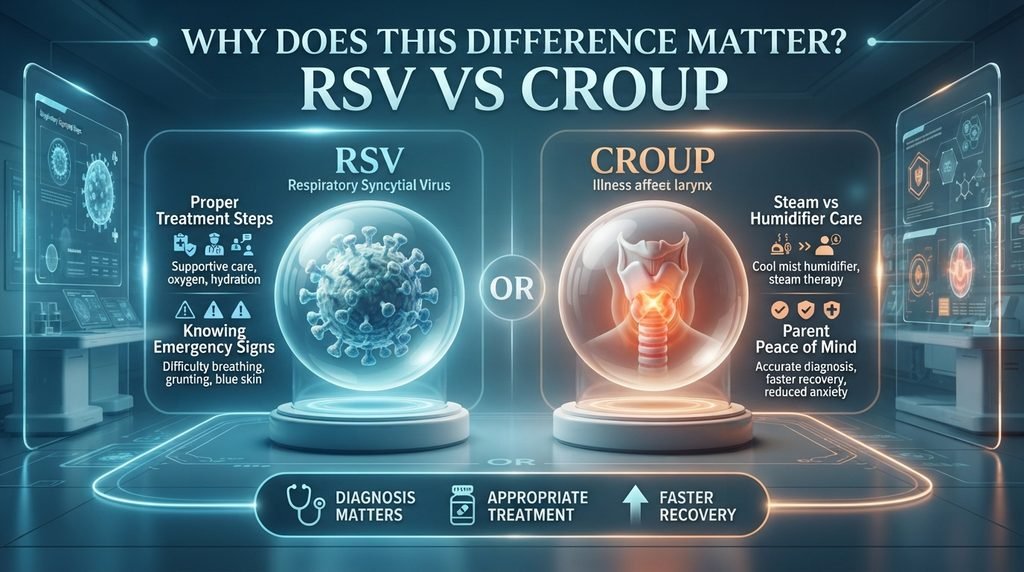
Knowing the difference helps parents understand what a doctor says.
RSV can affect the lungs and may cause wheezing. Croup affects the upper airway and often causes a barking cough.
However, RSV can sometimes cause croup, and other viruses can cause similar signs. A doctor can help find the cause.
Get emergency medical help if a child struggles to breathe, has blue or gray lips, or is hard to wake.
Usefulness in Daily Life
Parents, teachers, and caregivers may hear these words when a child is sick.
Knowing the difference helps them describe signs more clearly. It is also useful to watch whether a child can drink, breathe, and act as usual.
Washing hands and cleaning shared items can help reduce the spread of germs. Keep watching a sick child, even if the first signs seem mild.
Situational Preference
Use RSV when talking about the virus or a test result for that virus. Use croup when talking about swelling in the upper airway that often causes a barking cough. If a child has a runny nose and cough, do not assume it is RSV. If the cough sounds like a bark, do not assume it is croup. Other illnesses can cause similar signs. A health care worker can help find the cause. If a child struggles to breathe, get emergency medical help.
Quiz Questions
1. What does RSV stand for?
A. Respiratory syncytial virus B. Red skin virus C. Rapid sound virus D. Regular sleep virus
Answer: A. Respiratory syncytial virus
2. Which illness often causes a barking cough?
A. RSV only B. Croup C. Toothache D. Rash
Answer: B. Croup
3. Who can get RSV?
A. Only babies B. Only adults C. People of all ages D. Only older children
Answer: C. People of all ages
4. Can RSV sometimes cause croup?
A. Yes B. No C. Only in adults D. Never
Answer: A. Yes
5. What should you do if a child struggles to breathe?
A. Ignore it B. Wait a week C. Get emergency medical help D. Give any medicine
Answer: C. Get emergency medical help
Possible Questions
1. Are RSV and croup the same?
No. RSV is a virus. Croup is an illness that causes swelling in the upper airway.
2. Which one causes a barking cough?
Croup often causes a barking cough.
3. Can a child have RSV and croup?
Yes. RSV can sometimes cause croup.
4. Which one is more dangerous?
Both can be serious. The risk depends on the child’s age, signs, and health.
5. How long does RSV last?
Many RSV infections get better in one to two weeks.
6. How long does croup last?
Croup often gets better in a few days, but the cough may last longer.
7. When should I get medical help?
Get emergency help if a child struggles to breathe, has blue or gray lips, or is hard to wake. Contact a health care worker if the child is getting worse or is not drinking enough.
Conclusion
RSV or croup are different, but both can affect a child’s breathing. RSV is a virus that often starts with cold-like signs. It may also affect the lungs. Croup causes swelling near the voice box and often leads to a barking cough. The cough may give you a clue, but it cannot always tell you which illness a child has. RSV can sometimes cause croup, too. Use RSV when talking about the virus. Use croup when talking about the illness. If you are worried about a child’s breathing, seek medical help.

Mahnoor Afzal is an educator, researcher, and English language content specialist focused on grammar, vocabulary, word differences, and meanings. I combines research, teaching, and SEO expertise to create clear and reliable English learning content at Lengovia.











1 thought on “RSV or Croup: Learn the Difference in Simple English”