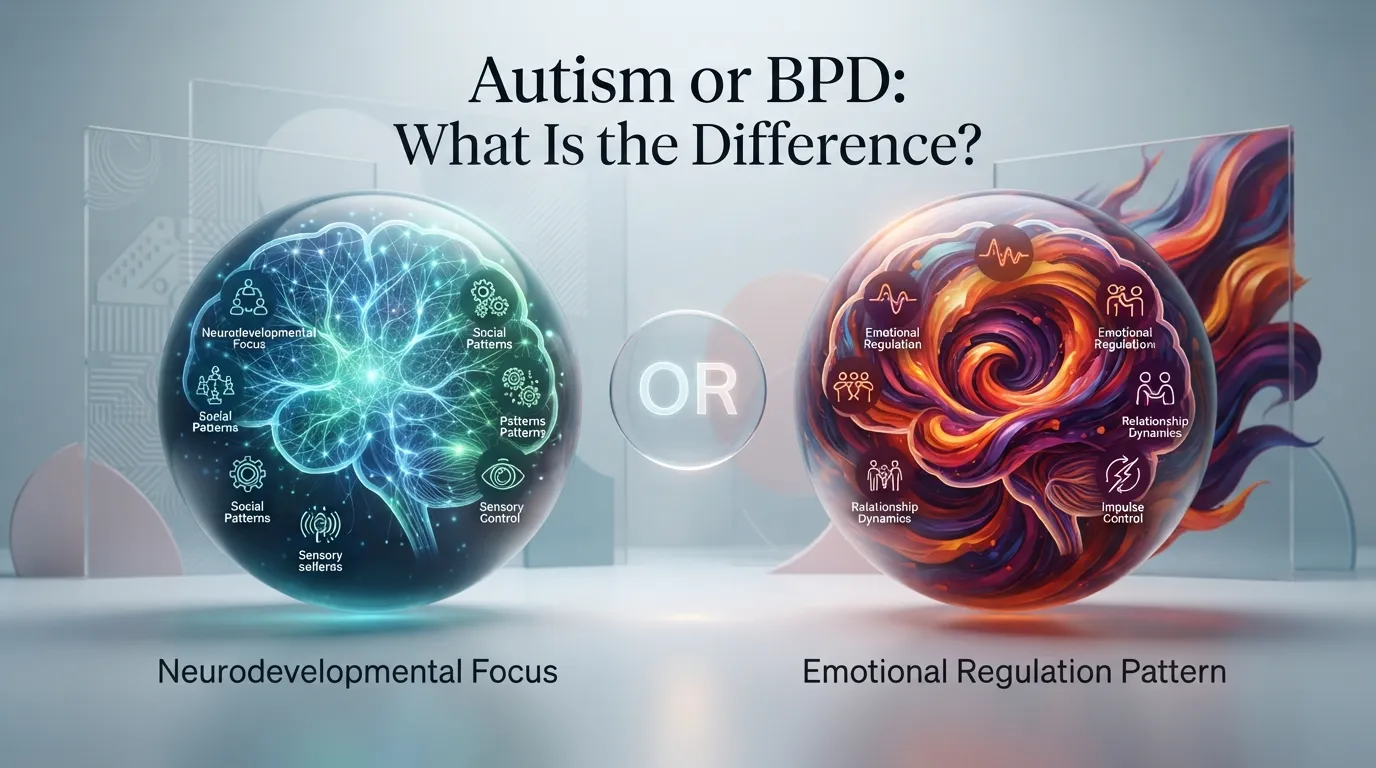
Have you heard the words autism and BPD? They may sound hard, but we can learn what they mean in simple words.
Autism is a condition that can affect how a person talks, learns, feels, and understands the world. Some autistic people like quiet places. Some may find loud sounds hard to handle. Every autistic person is different.
BPD stands for Borderline Personality Disorder. It is a mental health condition that can affect a person’s feelings, sense of self, and relationships with other people. A person with BPD may have strong feelings that change quickly. They may also worry a lot about people leaving them.
Autism and BPD are not the same. Some signs may look alike, but the reasons behind them can be different.
For example, an autistic person may feel upset because a place is too loud or a plan has changed. A person with BPD may feel upset because they fear someone they love will leave them. These are only examples. People can have different experiences.
What Is Autism?
Autism is a condition that affects how a person experiences the world.
An autistic person may talk, learn, play, or make friends in a different way. Some autistic people speak a lot. Others may speak less or use other ways to communicate.
Some autistic people like to follow the same daily plan. Others may enjoy special interests and spend a lot of time learning about them.
Autism is different for each person. Some people need extra help every day. Others live on their own and do many things without help.
Examples:
- A child may cover their ears when a room is too loud.
- A person may enjoy talking about their favorite subject for a long time.
What Is BPD?
BPD stands for Borderline Personality Disorder. It is a mental health condition that can affect feelings, thoughts, and relationships.
A person with BPD may feel very happy, sad, angry, or afraid in a short time. They may worry that people they love will leave them.
Some people with BPD may find it hard to know who they are or what they want. They may also act quickly when they feel very upset.
People with BPD can learn ways to manage their feelings. Support from trained health workers can help.
Examples:
- A person may feel very scared when a close friend does not reply.
- A person may feel upset and then calm down later.
You can also read https://lengovia.com/facebook-or-instagram/
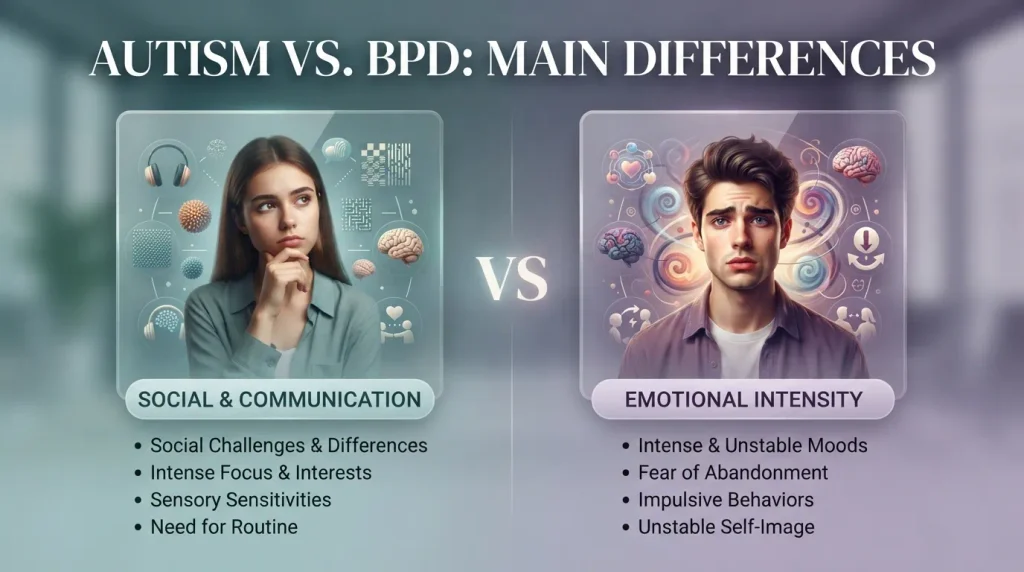
Autism vs. BPD: Main Differences
1. What They Are
Autism affects how a person experiences and understands the world.
BPD affects feelings, sense of self, and relationships.
Examples:
- An autistic person may find bright lights hard to handle.
- A person with BPD may feel afraid that a friend will leave.
2. Talking and Making Friends
Some autistic people find social rules hard to understand. They may not know when to speak or how to read facial expressions.
People with BPD may understand social rules but find close relationships hard because of strong feelings or fear of being left.
Examples:
- An autistic person may not know when someone wants to change the topic.
- A person with BPD may feel very sad after an argument with a friend.
These examples do not describe every person.
3. Feelings
Autistic people can feel strong emotions. They may find it hard to explain their feelings or calm down when they feel overloaded.
People with BPD may have strong feelings that change quickly. These feelings may affect how they see themselves and other people.
Examples:
- An autistic person may feel upset in a noisy room.
- A person with BPD may feel hurt when they think someone is angry with them.
4. Changes in Plans
Some autistic people feel safer when they know what will happen next. A sudden change may cause stress.
A person with BPD may feel upset by a change if it brings fear, worry, or problems in a relationship.
Examples:
- An autistic child may feel upset when a planned trip changes.
- A person with BPD may worry when a close friend cancels a meeting.
5. Sights and Sounds
Many autistic people have strong reactions to sounds, lights, smells, or touch. Some may not notice these things as much as other people do.
Sensitivity to sights and sounds is not a main sign used to identify BPD.
Examples:
- An autistic person may find loud music painful.
- A person with BPD may feel upset during a stressful talk, even in a quiet room.
6. Sense of Self
Autistic people may have their own way of showing who they are. Autism does not always cause a person to feel unsure about their identity.
A person with BPD may have a changing or unclear sense of self. They may not always know what they want or how they feel about themselves.
Examples:
- An autistic person may enjoy the same hobby for many years.
- A person with BPD may feel unsure about their goals or who they want to be.
7. Fear of Being Left
Autism does not by itself mean a person fears that others will leave them.
A strong fear of being left by loved ones can be a sign of BPD. However, not everyone with BPD has the same signs.
Examples:
- An autistic person may prefer time alone after a busy day.
- A person with BPD may feel very worried when someone close goes away.
8. Special Interests
Some autistic people have strong interests in certain topics. They may enjoy learning many facts about animals, trains, music, or other things.
Special interests are not a main sign of BPD.
Examples:
- An autistic person may learn everything they can about space.
- A person with BPD may enjoy space too, but this alone does not tell us if they have BPD.
9. Support and Treatment
Autistic people may benefit from help with communication, daily tasks, or sensory needs. The best support depends on the person.
People with BPD may benefit from talking therapies that help them manage feelings and relationships. A trained health worker can help choose the right care.
Examples:
- An autistic person may use ear defenders in a noisy place.
- A person with BPD may learn ways to cope with strong feelings.
10. Can a Person Have Both?
Yes. A person can be autistic and also have BPD. One condition does not always rule out the other.
A trained health worker can look at the person’s needs and life story to understand what is happening.
Examples:
- An autistic person may also have problems with strong feelings.
- A person with BPD may also have autism.
Having one or two signs does not mean someone has either condition.
Autism vs. BPD: Easy Comparison Table
| Autism | BPD |
| Affects how a person experiences the world | Affects feelings, self-image, and relationships |
| May affect social communication | May cause problems in close relationships |
| May include strong interests | May include an unclear sense of self |
| May include sensitivity to sounds or lights | May include strong changes in feelings |
| Changes in plans may cause stress | Fear of being left may cause stress |
| Support depends on the person’s needs | Talking therapy may help |
| Each person is different | Each person is different |
Why Do People Mix Up Autism and BPD?
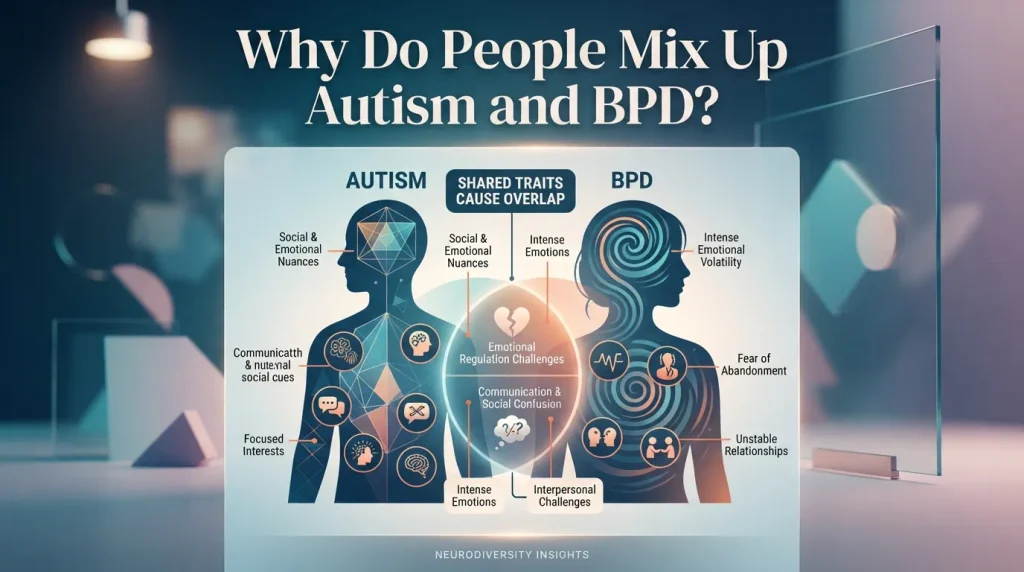
Some signs can look alike. Both autistic people and people with BPD may feel upset, find relationships hard, or feel stressed in social situations.
But the reason for the feeling may be different.
For example, an autistic person may feel stressed because a room is loud. A person with BPD may feel stressed because they think someone is going to leave them.
These are only examples. You cannot know a person’s condition just by watching one action.
Only a trained health worker can assess a person and help find the right answer.
Common Mistakes to Avoid
Mistake 1: Thinking Autism and BPD Are the Same
They are different conditions. Some signs may look alike, but the full picture matters.
Mistake 2: Giving Someone a Label
Do not decide that a person has autism or BPD because of one action. Many things can affect how people act and feel.
Mistake 3: Thinking Everyone Is the Same
Every autistic person is different. People with BPD can also have different needs and experiences.
Mistake 4: Thinking People Cannot Get Help
People with both conditions can learn new skills and find support that suits them.
How Can People Get Help?
If someone is worried about their feelings, friendships, or daily life, they can talk to a doctor or mental health worker.
The worker may ask about their life, feelings, needs, and past experiences. They may also ask about things that happen at home, school, or work.
Autistic people may need changes that make daily life easier. These could include quiet spaces, clear plans, or help with talking to others.
People with BPD may find talking therapy helpful. One type of therapy, called Dialectical Behavior Therapy (DBT), teaches skills for handling strong feelings and difficult situations.
Friends and family can also help by listening, showing care, and avoiding hurtful words.
Possible Questions
1. What is autism?
Autism is a condition that affects how a person experiences the world, talks with others, and handles some daily tasks.
2. What does BPD mean?
BPD means Borderline Personality Disorder. It can affect feelings, a person’s sense of self, and relationships.
3. Are autism and BPD the same?
No. They are different conditions, though some signs can look alike.
4. Can someone have autism and BPD?
Yes. A person can have both conditions. A trained health worker can help assess their needs.
5. Can autism affect friendships?
Yes. Some autistic people may find social rules or communication hard. Others may have close and happy friendships.
6. Can BPD be treated?
Yes. Treatment, including talking therapy, can help many people manage their feelings and relationships.
7. How can I know if I have autism or BPD?
You cannot know for sure from a list of signs online. Talk to a trained health worker for a proper assessment.
Fill in the Blanks
- Autism can affect how a person experiences the __________.
- BPD stands for Borderline Personality __________.
- Some autistic people find loud __________ hard to handle.
- Talking therapy may help people with __________.
- A trained health worker can help with an __________.
Answers: 1) world 2) Disorder 3) sounds 4) BPD 5) assessment
Multiple-Choice Questions
1. What does BPD stand for?
A) Big Personal Dream
B) Borderline Personality Disorder
C) Better People Daily
D) Basic Plan Design
🟢 Answer: B) Borderline Personality Disorder
2. What may be hard for some autistic people?
A) Loud sounds
B) Eating every food
C) Sleeping every night
D) Reading every book
🟢 Answer: A) Loud sounds
3. Can a person have both autism and BPD?
A) No, never
B) Only as a child
C) Yes
D) Only at school
🟢 Answer: C) Yes
4. Who can help assess autism or BPD?
A) A shop worker
B) A trained health worker
C) A bus driver
D) A movie star
🟢 Answer: B) A trained health worker
5. What can help some people with BPD?
A) Talking therapy
B) Ignoring all feelings
C) Never talking to anyone
D) Staying angry
🟢 Answer: A) Talking therapy
Conclusion
Autism or BPD are two different conditions. Autism and BPD are different conditions that can affect a person’s emotions, behavior, communication, and relationships. Although some signs may look similar, their causes and experiences can be different. Understanding these differences helps us treat people with kindness, patience, and respect. If someone struggles with their feelings or daily life, professional support can help them understand their needs and manage challenges. Remember: Every person is unique, and a trained health professional can help identify the right diagnosis and support.

Mahnoor Afzal is an educator, researcher, and English language content specialist focused on grammar, vocabulary, word differences, and meanings. I combines research, teaching, and SEO expertise to create clear and reliable English learning content at Lengovia.












1 thought on “Autism or BPD: What Is the Difference?”