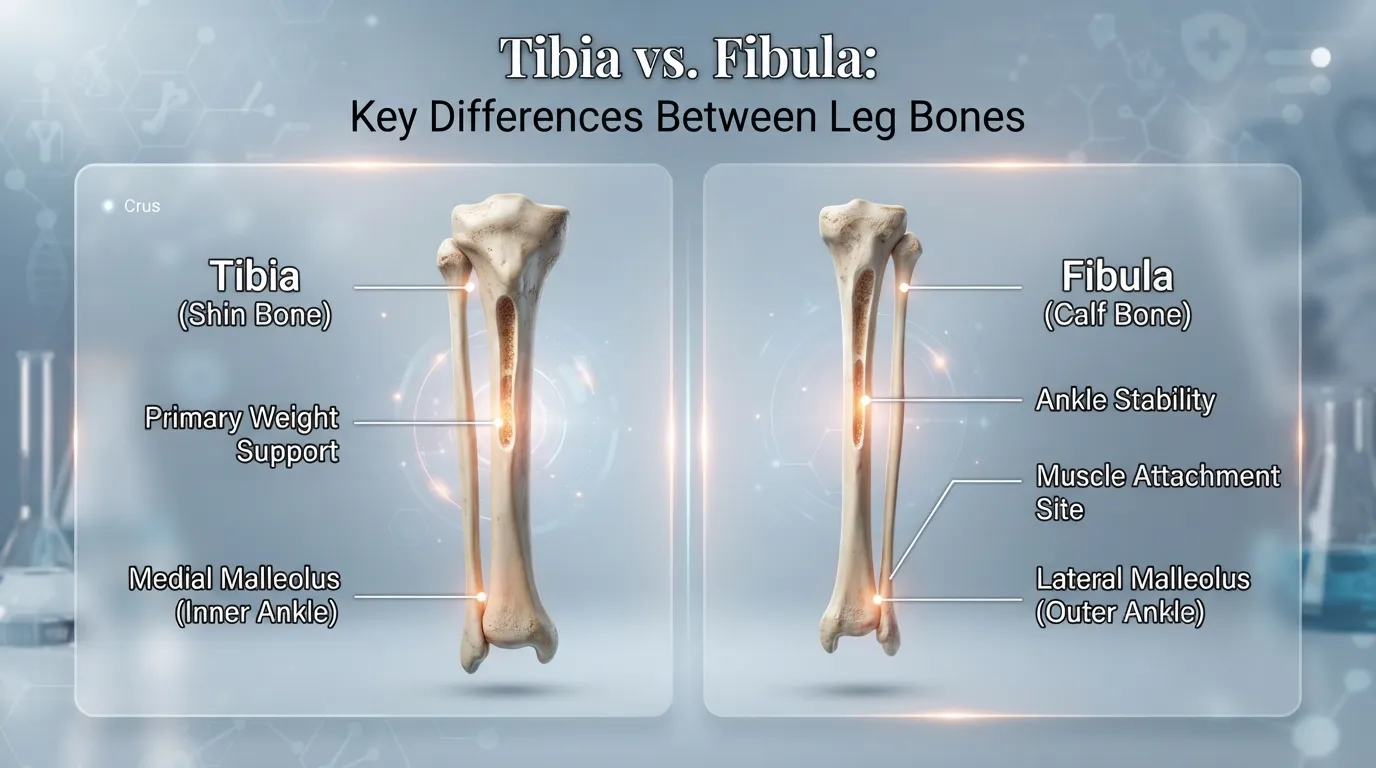
The tibia and fibula are two bones in the lower leg. They help us stand, walk, run, and jump. These bones are close to each other, but they are not the same. The tibia is bigger and stronger. The fibula is thinner and smaller.
Many people mix up tibia or fibula because both bones are in the lower leg. But each bone has a different job. The tibia carries most of the body’s weight. The fibula helps support the leg and keeps the ankle steady.
The tibia is the larger bone in the lower leg. The fibula is the smaller bone beside it.
What Is the Tibia?
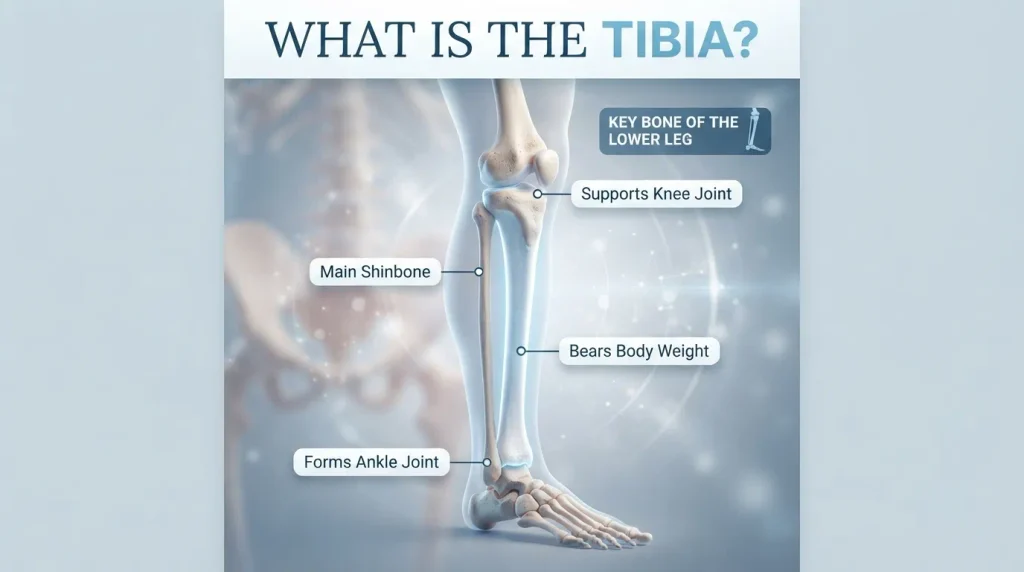
The tibia is a large bone in the lower leg. People also call it the shinbone. It is near the front of the leg.
The tibia carries most of your body weight when you stand or walk. It helps you move and stay balanced. It connects the knee to the ankle.
You can feel the front of your tibia when you touch your shin. It is the hard bone under the skin.
Examples:
- The tibia helps me stand.
- I hurt my tibia when I fell.
What Is the Fibula?
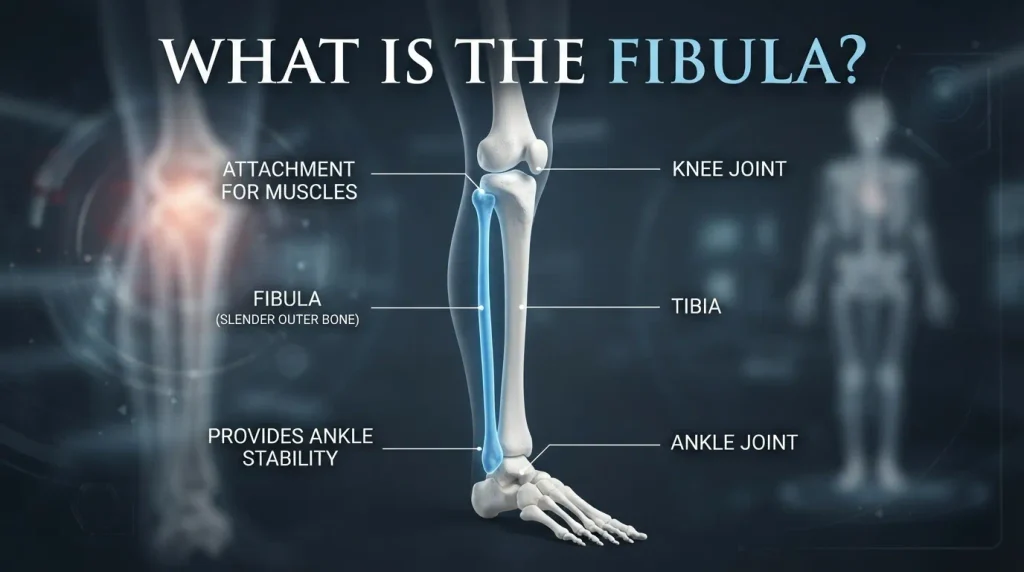
The fibula is a thin bone in the lower leg. It sits beside the tibia. It is on the outer side of the leg.
The fibula does not carry as much body weight as the tibia. It helps support the leg and keeps the ankle steady. It also gives some muscles a place to attach.
You cannot see the fibula from outside the body. It is inside your leg, beside the tibia.
Examples:
- The fibula helps support my ankle.
- The fibula is thinner than the tibia.
Difference Between Tibia and Fibula
The tibia and fibula work together, but they have different sizes and jobs.
| Feature | Tibia | Fibula |
| Size | Large | Small |
| Shape | Thick and strong | Thin and narrow |
| Place | Inner side of the lower leg | Outer side of the lower leg |
| Weight | Carries most body weight | Carries very little body weight |
| Other name | Shinbone | No common everyday name |
| Main job | Supports the body | Helps support the leg and ankle |
| Position | Between the knee and ankle | Beside the tibia |
| Touch | Easy to feel at the front of the shin | Less easy to feel along most of its length |
| Ankle | Helps form the ankle joint | Helps keep the ankle steady |
| Muscles | Gives muscles a place to attach | Also gives muscles a place to attach |
Where Are the Tibia and Fibula?
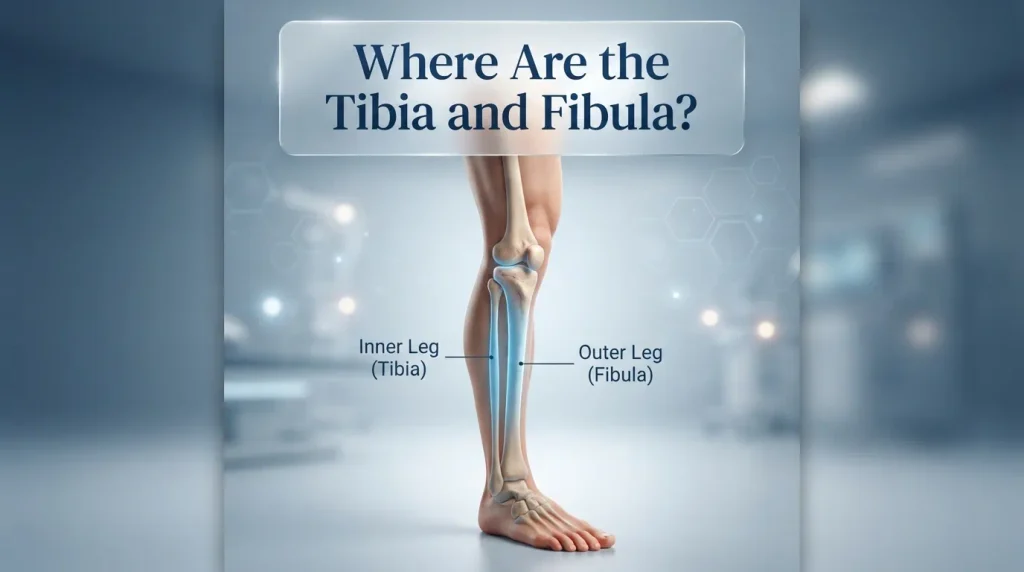
Both bones are found between the knee and the ankle.
The tibia is on the inner side of the lower leg. The fibula is on the outer side. They run next to each other.
When you look at the front of your leg, the tibia is the bone you can feel along your shin. The fibula is thinner and lies more to the outside.
Both bones help your lower leg work well.
You can also explore https://lengovia.com/myheritage-or-ancestry/
Why Are People Confused About Tibia or Fibula?
People often confuse these words because both names describe bones in the same part of the body.
They also work together. Both bones help the leg move and support the ankle.
However, their size and jobs are different. The tibia is bigger and carries most of the body’s weight. The fibula is smaller and helps keep the ankle steady.
A simple way to remember them is this:
- Tibia = thick bone.
- Fibula = fine, thin bone.
Nature and Function of the Tibia and Fibula
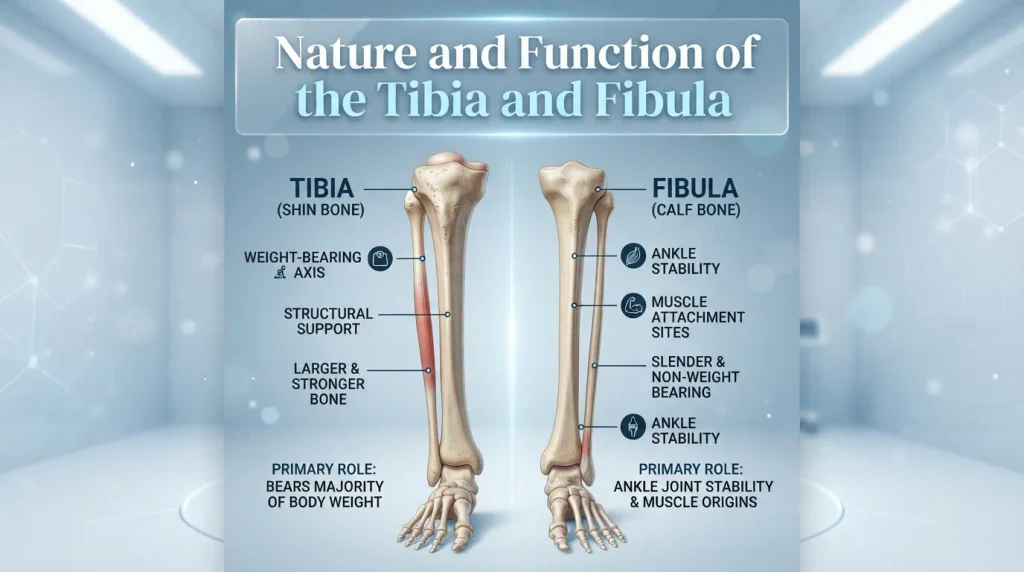
The tibia is strong and thick. It supports your body when you stand, walk, or run. It also helps form the knee and ankle joints.
The fibula is long and thin. It helps support the ankle and gives muscles a place to attach. It works with the tibia to help the lower leg move.
Both bones are important. Each one has a special job.
Common Mistakes
Here are some common mistakes people make when learning about these bones.
❌ The fibula is bigger than the tibia.
✅ The tibia is bigger than the fibula.
❌ The tibia is on the outer side of the leg.
✅ The tibia is on the inner side of the lower leg.
❌ The fibula carries most of the body’s weight.
✅ The tibia carries most of the body’s weight.
❌ The tibia and fibula are the same bone.
✅ The tibia and fibula are two different bones.
Tibia or Fibula in Everyday Use
Doctors and nurses use the words tibia and fibula when they talk about leg injuries. These words also appear in books, school lessons, and medical reports.
For example, a doctor may say that a person has a tibia fracture. This means the tibia bone is broken. If the fibula is broken, the doctor may call it a fibula fracture.
These words help people understand which bone is hurt.
Can the Tibia or Fibula Break?
Yes. Both bones can break after a fall, accident, or sports injury.
A broken tibia may make it hard to stand or walk because the bone carries most of the body’s weight. A broken fibula can cause pain and swelling near the outer leg or ankle.
A doctor can check an injury and may use an X-ray to see the bone. A person with strong pain, swelling, or trouble putting weight on the leg should get medical help.
Do not try to decide which bone is broken by yourself.
Why Do the Tibia and Fibula Matter?

The tibia and fibula help your lower leg work properly. They support movement and help keep the ankle steady.
Without healthy leg bones, walking and running can become difficult. The tibia supports most of your weight, while the fibula helps support the outer part of the lower leg and ankle.
Learning their names can also help you understand health lessons and medical information.
Which Word Should You Use?
Use tibia when you mean the larger shinbone in the lower leg.
Use fibula when you mean the thinner bone beside the tibia.
For example:
- “The doctor checked my tibia.”
- “The X-ray showed a break in the fibula.”
Both words are correct. The right word depends on which bone you mean.
Fill in the Blanks
Complete each sentence with tibia or fibula.
- The __________ is the larger bone in the lower leg.
- The __________ is thinner than the tibia.
- The tibia is also called the __________.
- The __________ helps keep the ankle steady.
- The tibia carries most of the body’s __________.
- The tibia and fibula are found in the lower __________.
Answers:
- Tibia
- Fibula
- Shinbone
- Fibula
- Weight
- Leg
Multiple-Choice Questions
1. Which bone is larger?
- A. Fibula
- B. Tibia
- C. Finger bone
- D. Arm bone
2. What is another name for the tibia?
- A. Shinbone
- B. Skull
- C. Rib
- D. Thumb
3. Where is the fibula?
- A. In the head
- B. In the arm
- C. Beside the tibia
- D. In the hand
4. Which bone carries most of the body’s weight?
- A. Fibula
- B. Tibia
- C. Finger bone
- D. Rib
5. How many bones are the tibia and fibula?
- A. One bone
- B. Two different bones
- C. Three bones
- D. Four bones
Answers: 1-B, 2-A, 3-C, 4-B, 5-B
Possible Questions
1. What is the tibia?
The tibia is the large bone in the lower leg. It is also called the shinbone.
2. What is the fibula?
The fibula is the thin bone beside the tibia.
3. Is the tibia bigger than the fibula?
Yes. The tibia is larger and carries most of the body’s weight.
4. Are the tibia and fibula in the same leg?
Yes. Both bones are found in each lower leg.
5. Can the fibula break?
Yes. A fall or accident can break the fibula.
6. Which bone helps support the ankle?
Both bones help form and support the ankle. The fibula helps keep the ankle steady.
7. Are tibia and fibula the same?
No. They are two different bones with different sizes and jobs.
Conclusion
The tibia or fibula are two important bones in the lower leg. The tibia is large and strong. It carries most of the body’s weight and is also called the shinbone. The fibula is thinner and sits beside the tibia. It helps support the lower leg and keeps the ankle steady. Both bones help us stand, walk, and move. They also give muscles a place to attach. Although the tibia and fibula work together, they are not the same. Remember this easy rule: the tibia is the bigger bone, and the fibula is the thinner bone beside it. This will help you understand the difference between tibia or fibula.

Mahnoor Afzal is an educator, researcher, and English language content specialist focused on grammar, vocabulary, word differences, and meanings. I combines research, teaching, and SEO expertise to create clear and reliable English learning content at Lengovia.











1 thought on “Tibia or Fibula: Key Differences Between Leg Bones”